Artist page
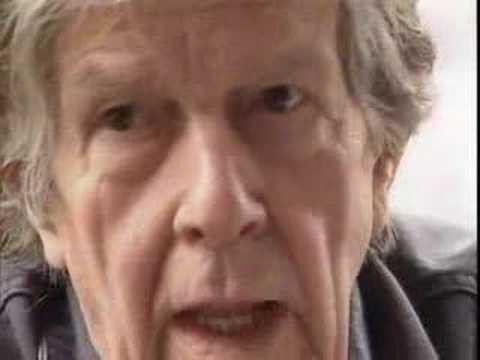
John Cage (September 5, 1912 – August 12, 1992) was an American composer, music theorist, writer, philosopher, and artist, renowned as a pioneer of post-war avant-garde composition. Born in Los Angeles, California, he left Pomona College early to travel in Europe and later studied in New York and Los Angeles. His first published compositions emerged during this period, characterized by a rigorous atonal system of his own. In 1937, Cage moved to Seattle to work as a dance accompanist, founding a percussion orchestra in 1938. His music began to focus on filling units of time with ostinatos, exemplified by works like "First Construction in Metal" (1939). He also innovated the 'prepared piano,' creating a percussion orchestra using objects placed between the strings of a grand piano. Cage relocated to San Francisco in 1939, then to Chicago in 1941, and returned to New York in 1942, consistently composing music for dance companies, particularly for Martha Graham, with whom he developed a lifelong relationship. His notable concert works from this era include "A Book of Music" (1944) and "Sonatas and Interludes" (1948) for prepared piano. During this time, he became interested in Eastern philosophies, especially Zen. Cage sought to remove creative choice from composition by employing coin tosses to determine events, as seen in "Music of Changes" (
For any edit requests, please reach out to info@rovr.live