

“
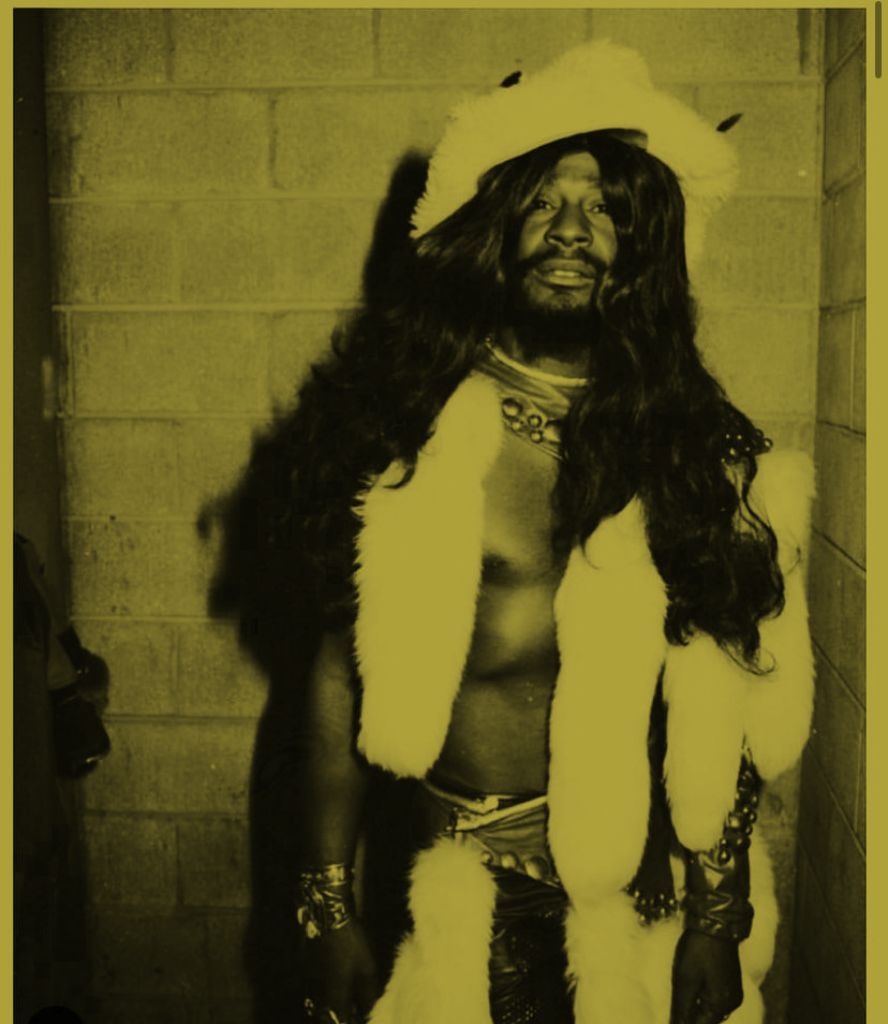
We couldn't use the name Parliament because the record company went out of business, so we made a group called Funkadelic, which was our band from Plainfield. It was a bunch of young kids that played bass guitar and drums. They became Funkadelic and we became their backup singers”
George Clinton
Few musical collectives have been as influential, ambitious or creatively prolific as the P-Funk empire created by George Clinton. P-Funk became an interconnected musical universe that encompassed Parliament, Funkadelic, numerous solo artists and a remarkable series of spin-off groups. Between the early 1970s and the early 1980s, this ever-expanding collective revolutionised funk by combining psychedelic rock, gospel, soul, jazz, science fiction, humour and theatrical performance into one of popular music’s most distinctive artistic movements.
The story began in Plainfield, New Jersey, where George Clinton formed the doo-wop vocal group The Parliaments during the late 1950s. While working as a barber, Clinton built the group around fellow vocalists Fuzzy Haskins, Calvin Simon, Ray Davis and Grady Thomas. Their breakthrough came in 1967 with the Motown-inspired hit “I Wanna Testify.” However, contractual disputes left Clinton temporarily unable to use the Parliaments name.
George Clinton
Rather than stopping, Clinton focused attention on the group’s backing musicians, who evolved into Funkadelic, a harder, more experimental ensemble blending psychedelic rock with deep funk grooves and coded drug references in keeping with the late-sixties/early seventies zeitgeist.
“
"It was psychedelic from a black perspective. … We believed where the funk was going to take us. We've got philosophy to back up the music.”
Pedro Bell - P. Funk artist
Early Funkadelic was driven by an extraordinary rhythm section featuring bassist Billy “Bass” Nelson, drummer Tiki Fulwood and guitarist Eddie Hazel. Hazel quickly established himself as one of rock’s most expressive guitarists, drawing equally from Jimi Hendrix and blues traditions while developing an emotionally charged improvisational style heard on classics such as Maggot Brain.
Alongside keyboardist Bernie Worrell, whose classical training enabled him to introduce synthesizers, orchestral harmony and groundbreaking Minimoog bass lines, Funkadelic pushed far beyond conventional soul music into lengthy psychedelic explorations. Also key to the P. Funk sound was the rhythmic emphasis on the "one" as Bootsy Collins explained:
“
you hit on the one... And then you would try to fit your different notes, what you felt, in between that space... It's however you feel, but you just have to fit it between that space... And there you go. You got your basic funk formula there. You can do anything you want to do with it.”
Bootsy Collins
By 1974 Clinton had regained the rights to the Parliament name, allowing two distinct but overlapping bands to operate simultaneously. Parliament became the polished, horn-driven, dance-oriented side of the organisation, while Funkadelic remained the guitar-heavy experimental counterpart. In reality, both groups shared many of the same musicians, recording sessions and personnel, becoming collectively known as Parlia-Funkadelic-ment. Clinton cleverly used whichever name best suited the material, allowing extraordinary creative freedom.
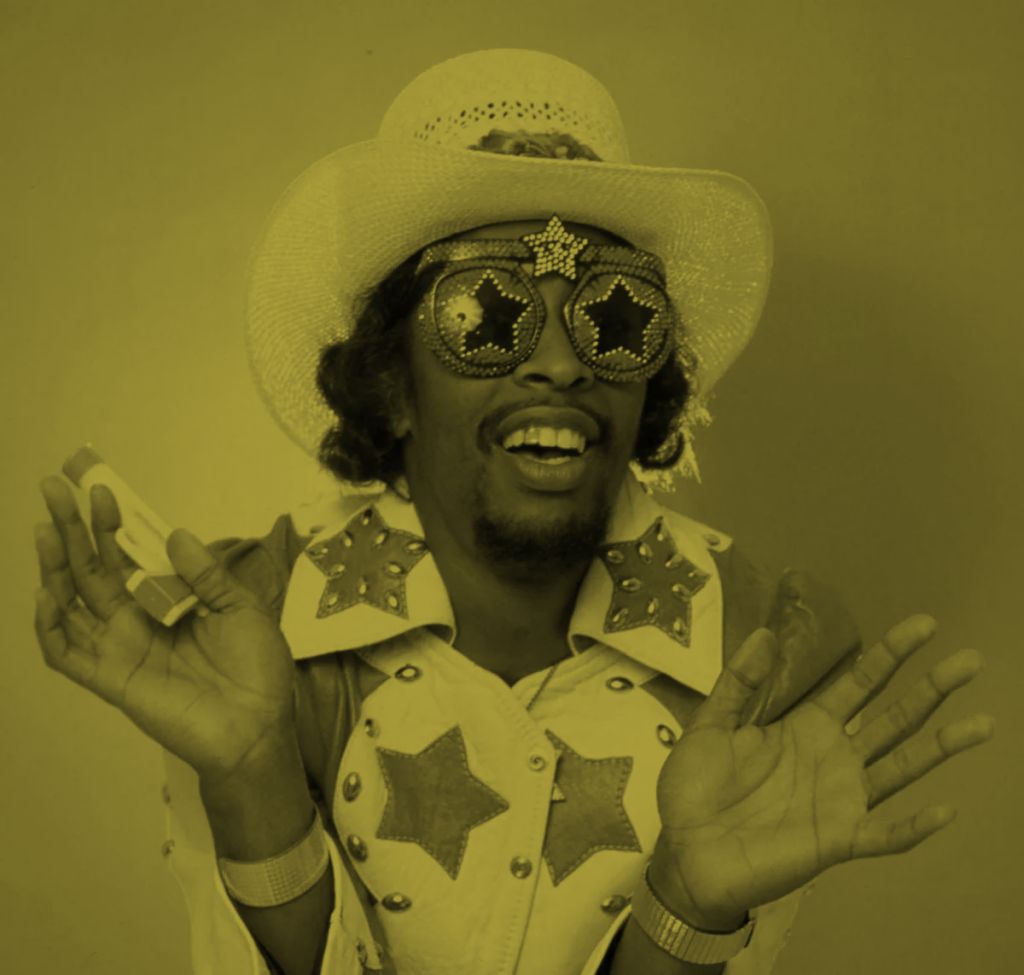
The arrival of Bootsy Collins transformed the collective. Having first achieved fame alongside his brother Catfish Collins in James Brown’s backing band, Bootsy joined Clinton following disagreements within Brown’s organisation and a brief solo career which saw a couple of rare 7” single releases. His elastic bass playing, playful stage persona and instantly recognisable “space bass” sound - created with clever usage of the Mutron III filter pedal - became central to P-Funk’s identity. Additionally, Parliament classics including “Flash Light,” had a bass line that was actually performed on Bernie Worrell’s Minimoog synthesizer rather than electric bass, further demonstrating the group’s willingness to challenge convention and spark trends that became commonplace in funk and boogie into the eighties.
Pedro Bell cover art for Funkadelic
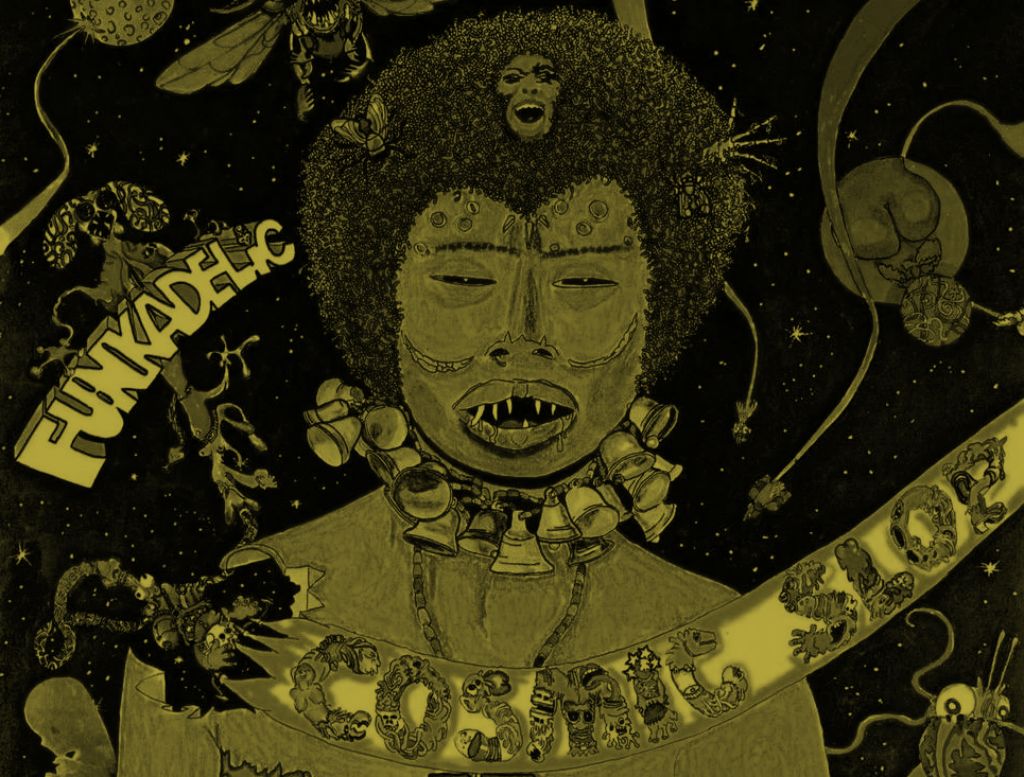
P-Funk’s mythology grew alongside its music. Albums such as Mothership Connection, The Clones of Dr. Funkenstein and Motor Booty Affair introduced a comic-book universe populated by characters including Starchild, Sir Nose D’Voidoffunk and Dr. Funkenstein. The famous Funkadelic sleeves, with their surreal, outrageous and highly detailed artwork, were created by artist Pedro Bell, whose visual imagination became inseparable from the group’s identity.
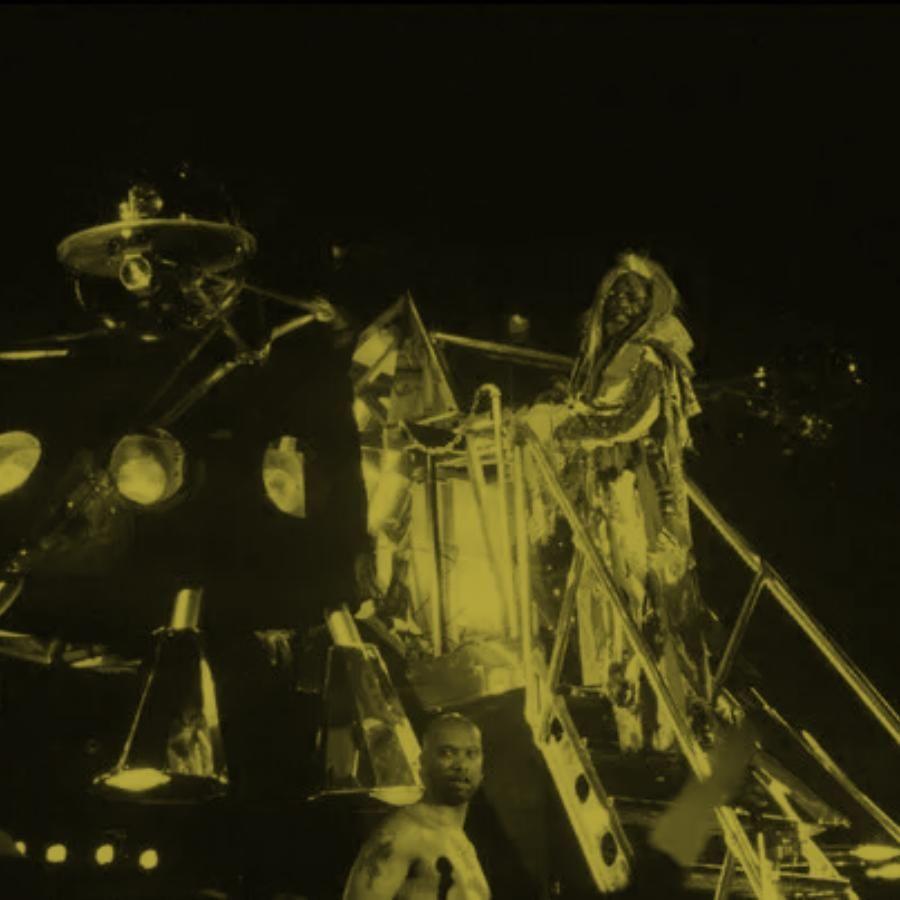
Lavish and wildly expensive stage productions featured the famous Mothership UFO descending from the ceiling amid elaborate costumes and futuristic imagery. Clinton’s Afrofuturist vision celebrated Black creativity by placing funk musicians at the centre of an imaginative science-fiction narrative that echoes Sun Ra and remains enormously influential today.
Bootsy Collins
As the collective expanded, Clinton encouraged individual members to develop their own projects. Bootsy’s Rubber Band became the most commercially successful spin-off. Albums including Ahh… The Name Is Bootsy, Baby! and Bootsy? Player of the Year combined irresistible grooves with Bootsy’s eccentric humour, cartoon voices and infectious catchphrases. While remaining unmistakably P-Funk, Bootsy’s records showcased his own songwriting personality and established him as one of funk’s greatest stars.
“
Wherever George propels himself, that's funk... You're not getting a stage act, you're not getting somebody pretending to be somebody. You're getting exactly what George is. He personifies funk..”
Bootsy Collins
Female vocal groups became another important branch of the P-Funk family tree. The Brides of Funkenstein fused powerful gospel-influenced vocals with theatrical stage presentation. Their albums Funk Or Walk and Never Buy Texas From A Cowboy balanced sophisticated vocal harmonies with the collective’s signature humour and dance-floor energy. Parlet offered a lighter, more vocal-oriented approach - their albums Pleasure Principle and Invasion of the Booty Snatchers expanded the P-Funk universe while maintaining strong links to Parliament’s sound.
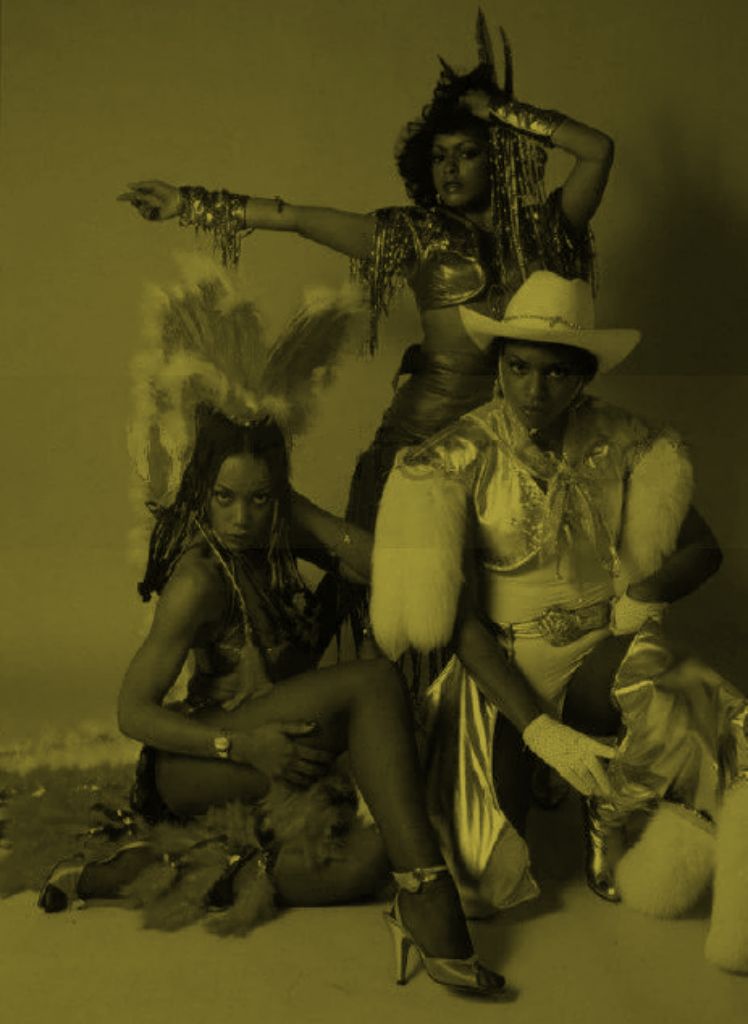
Brides Of Funkenstein
Among the lesser-known but highly respected offshoots was Quazar, created by Glenn Goins and his brother Kevin Goins after Glenn departed Parliament-Funkadelic. Glenn had been one of the collective’s finest singers and guitarists, contributing memorable vocals to classics including “Bop Gun.” Although his untimely death from lymphoma at just 24 curtailed Quazar’s potential, their lone 1978 album remains a cult favourite.
Another overlooked project was Sweat Band. Featuring Bootsy Collins, Worrell and numerous P-Funk regulars, their sole 1980 album blended Parliament’s polished funk with disco and boogie. Similarly, Godmama represented another satellite project connected to Clinton’s expanding network. Factor in P Funk adjacent projects such as Zapp, Eramus Hall, Junie Morrison later projects and its evident P-Funk functioned as an entire funk ecosystem.
“
Can't nobody push me to do anything. I choose to do what I want at all times—what instruments I use and what I'm playing. It just happened that way. I said, 'Let's try this on this piece.' I put the approach on when I hear what we're doing”
Bernie Worrell
Several individual members also produced significant solo recordings. Bernie Worrell’s All The Woo In The World demonstrated his extraordinary keyboard virtuosity, blending funk with jazz, electronic experimentation and progressive rock. Eddie Hazel’s Game, Dames and Guitar Thangs highlighted his lyrical guitar playing.
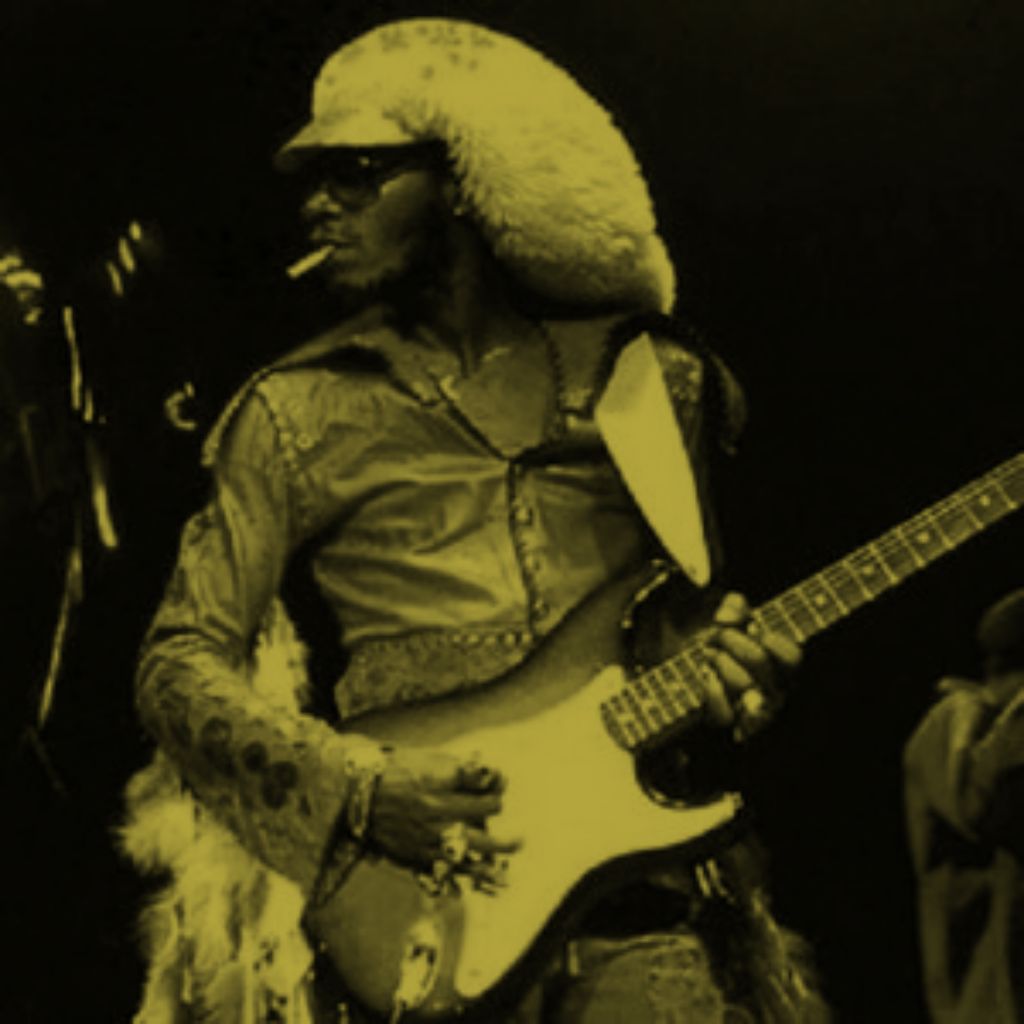
Eddie Hazel
“Junie” Morrison, formerly of the Ohio Players, joined P-Funk in the late 1970s as an accomplished songwriter, keyboardist and producer, contributing heavily to One Nation Under A Groove and Parliament’s later recordings. His sophisticated harmonic approach added further depth to an already formidable creative team. Fuzzy Haskins, one of the original Parliaments vocalists, also released a solo project on Westbound Records, reflecting the extraordinary breadth of talent within Clinton’s organisation.
Other essential contributors included Garry Shider, whose energetic guitar work and instantly recognisable “diaper” stage costume made him a fan favourite; Michael Hampton, who astonishingly replaced Eddie Hazel as a teenager after impressing Clinton by performing “Maggot Brain” note-for-note; drummer Jerome Brailey; bassist Cordell “Boogie” Mosson; horn legends and James Brown band alumni Fred Wesley and Maceo Parker; and countless session musicians whose names regularly shifted between projects. The fluid membership became one of P-Funk’s defining characteristics, with musicians freely moving between Parliament, Funkadelic, Bootsy’s Rubber Band and numerous affiliated recordings.
By the early 1980s financial pressures, management disputes and changing musical tastes slowed the original P-Funk machine. Nevertheless, Clinton continued recording under his own name for Capitol releasing the huge hits Loopzilla and Atomic Dog which ventured into the Electro sound of the day whilst keeping the P. Funk vibe intact.
Hip-hop producers enthusiastically sampled Parliament and Funkadelic records throughout the 1980s and 1990s, particularly within West Coast G-funk, where artists such as Dr. Dre, Snoop Dogg and Warren G built new musical landscapes upon P-Funk grooves.
Today, P-Funk stands as far more than Parliament and Funkadelic. It represents an interconnected creative universe in which dozens of exceptional musicians contributed to a shared artistic vision while simultaneously developing their own identities. Whether through Bootsy’s Rubber Band, Brides of Funkenstein, Parlet, Quazar, Sweat Band, Godmama or the remarkable solo careers of Bernie Worrell, Eddie Hazel, Junie Morrison and Fuzzy Haskins, George Clinton created one of popular music’s richest and most influential ecosystems. The Mothership may have landed decades ago, but its musical legacy continues to inspire generations of musicians across funk, rock, jazz, electronic music and hip-hop.