

From the pews of Black America came one of the great sounds of the twentieth century. Gospel grew out of spirituals, church singing and the blues. As Black families moved north during the Great Migration, choirs and quartets found new audiences, and churches trained generations of singers, pianists, organists and drummers.
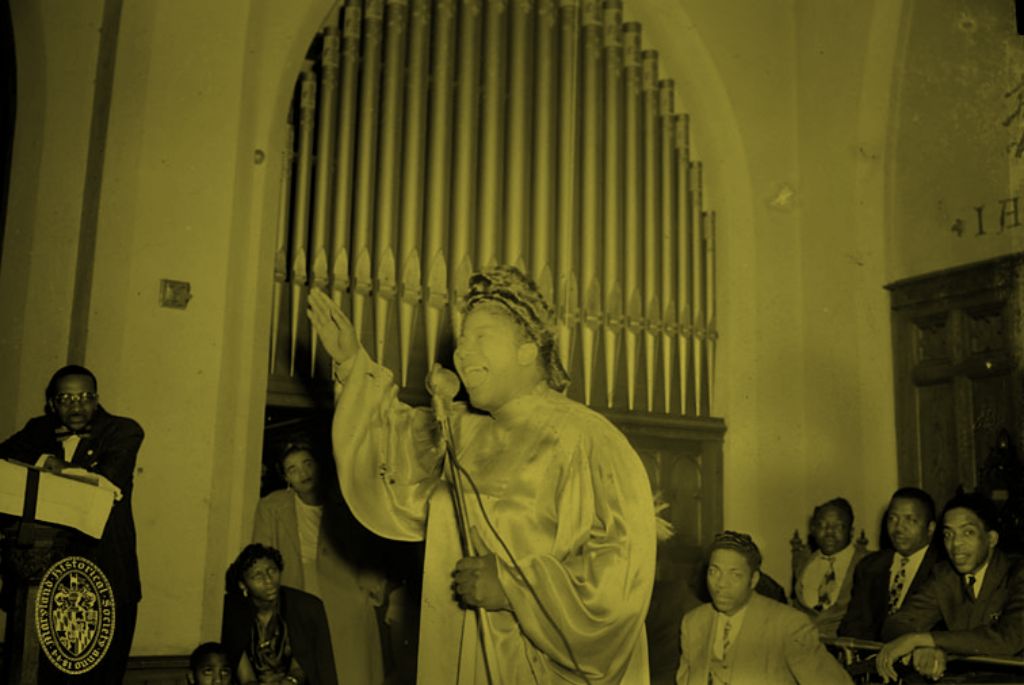
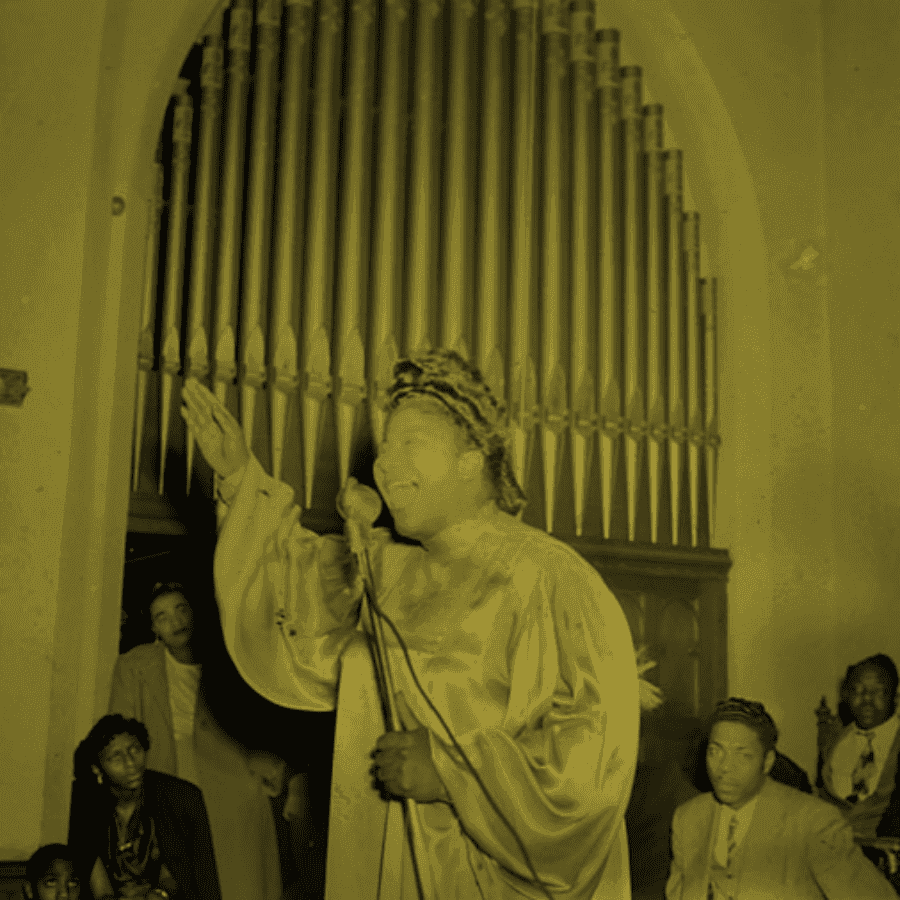
Mahalia Jackson
A lead singer calls out and the choir answers. The drummer holds the groove while the singer stretches a single word across the bar. Then the whole room comes in. That exchange is at the heart of gospel soul, and it helps explain why the music travelled so far.
In the Black churches where it developed, a song could lead people into prayer, give someone room to testify or help a congregation voice its grief. Moving into the studio to spread the word, a generation of gospel musicians put soul, funk and disco to work for those same purposes.
Modern Black gospel drew on spirituals, hymns and the exchanges between preacher and congregation. During the Great Migration, Black Southerners carried those practices into growing congregations in northern cities.
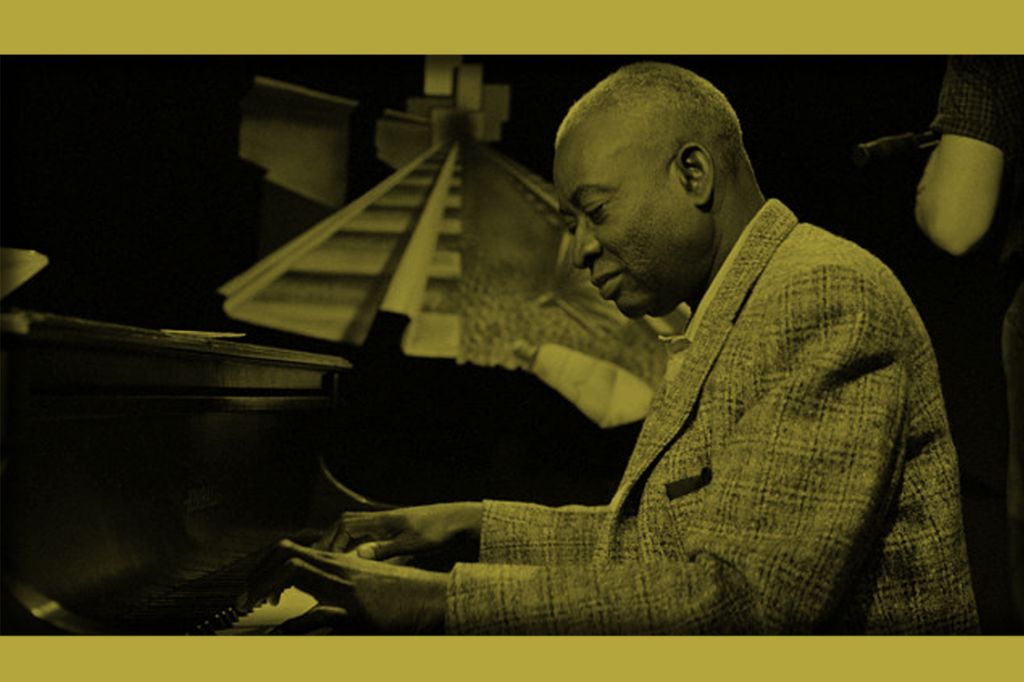
Thomas A. Dorsey
In Chicago, Thomas A. Dorsey, a Georgia preacher’s son who had worked as a blues musician, brought blues phrasing and rhythm into sacred composition. Some church leaders initially resisted the sound because they associated it with secular entertainment.
Singers such as Mahalia Jackson helped give the new repertoire a national audience. Touring quartets developed their own dramatic language, with a lead voice free to plead, rasp or shout against a tightly coordinated harmony.
The scale of church life helps explain how much talent came through it. A historical survey counted 54 Black churches in Atlanta in 1900, including 29 Baptist and 21 Methodist congregations. In Sweet Auburn, Ebenezer Baptist later became central to the civil rights movement through Martin Luther King Jr. and his congregation.
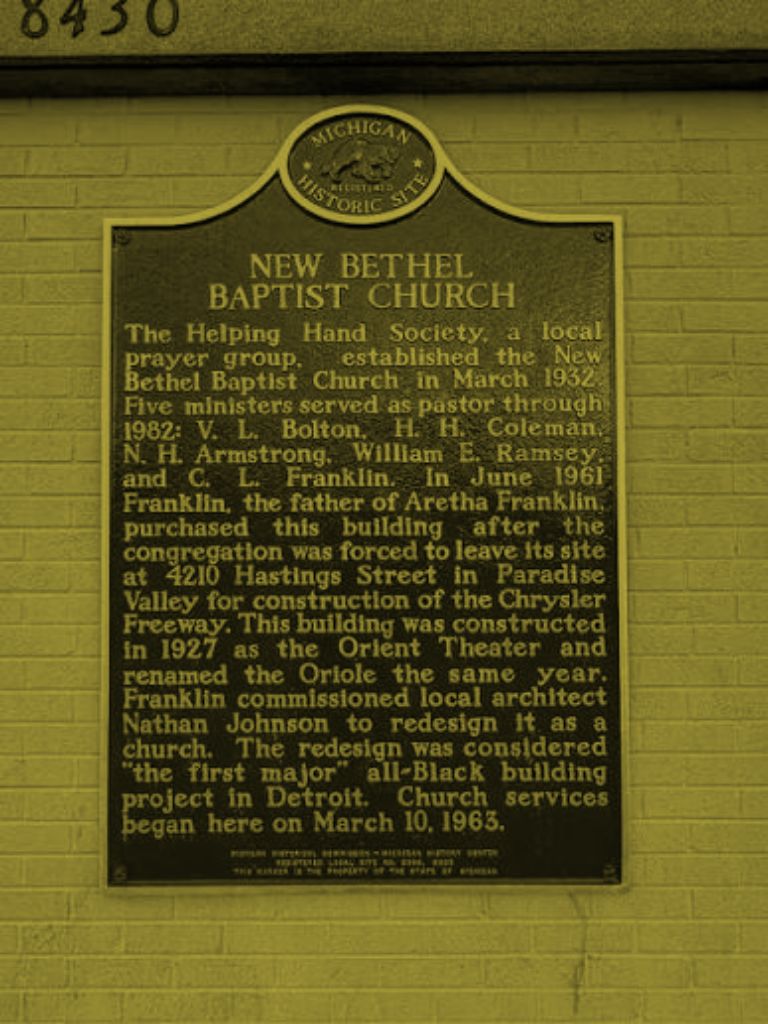
By the early 1950s, Black migrants in Detroit had alone established more than 200 churches, alongside dozens of worship spaces in storefronts and homes. Among them was New Bethel Baptist, where the Reverend C. L. Franklin preached and his daughter Aretha sang and made her first recordings. Every week, churches gave young musicians a room to learn in and a congregation to learn from.
Those same congregational habits served civil rights organisers. At mass meetings, demonstrators could pick up a refrain by ear and change a verse to fit the work at hand. In Albany, Georgia, and elsewhere, freedom songs drew on hymns, spirituals and gospel. A familiar melody let new people join in immediately. The lead singer could set the words and the pace, then hear the room answer: the famous “call and response” which became a commonplace musical device across a range of genres but mostly associated with gospel influenced soul.
Another device which became incorporated into the the R&B, soul and rock tradition was a lead singer improvising over a driving, repeated gospel-like backing vocal refrain with an uplifting intensity - from Janis Joplin to Joe Cocker, this communal vocal setup dominates much of modern vocal music.
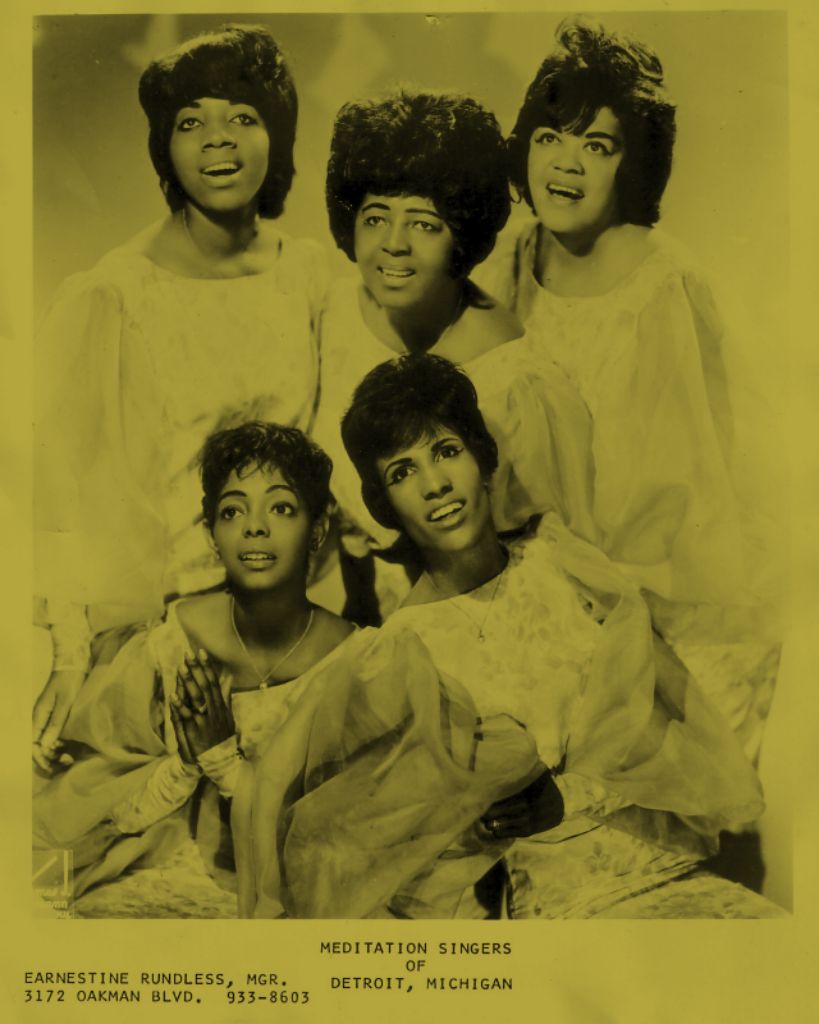
Detroit’s Meditation Singers, led by Earnestine Rundless, counted Della Reese, Laura Lee and James Cleveland among their alumni. Mattie Moss Clark helped organise the Church of God in Christ choir, and her work as a director helped make Detroit a centre of massed gospel singing. She also trained her daughters, the Clark Sisters.
“
I've been a vocalist & entertainer since 6 years old. I started singing in church and a chain of events, some of this, some of that, but all God led me to where I am now.”
Della Reese
Sam Cooke carried the intimate phrasing he had honed with the Soul Stirrers into accessible soul. He put out his first such single, “Lovable,” as Dale Cooke, a measure of how much he stood to lose with the gospel audience that knew him.
Ray Charles borrowed from the Southern Tones’ “It Must Be Jesus” for “I Got a Woman,” and drew criticism for redirecting the fervour of worship towards romantic desire. For some believers, using music associated with testimony to sing about sex or entertain a nightclub audience raised a question of religious obligation.
Aretha’s career shows how often musicians moved between those settings. In 1972, already a soul star, she recorded Amazing Grace with James Cleveland and the Southern California Community Choir in a Los Angeles church. Carole King’s “You’ve Got a Friend” and the title hymn belonged to the same service.
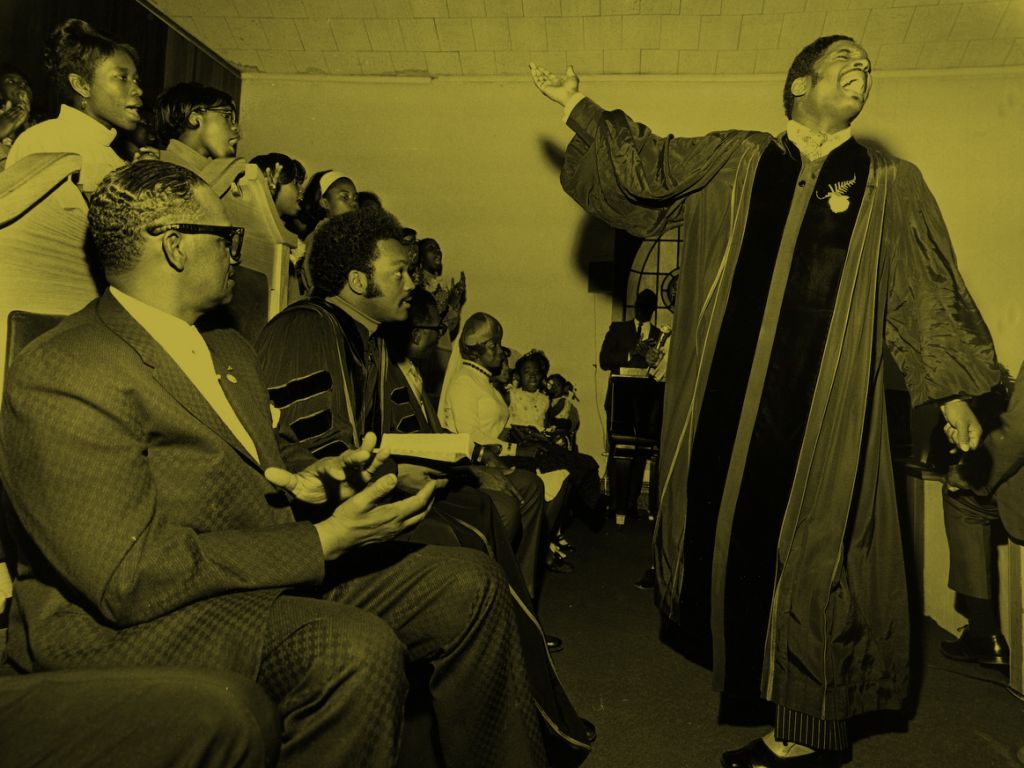
Pastor T. L. Barrett
The influence went both ways. Pastor T. L. Barrett recorded “Like a Ship” in Chicago with his Youth for Christ Choir and players including local music industry arranger Richard Evans and sessionist Phil Upchurch.
“
That which comes from the heart reaches the heart. It obliterates the race issue, financial distances, all differences. It doesn't matter where you come from—music will touch you if it comes from deep in there.”
Pastor T. L. Barrett
Youth choirs could travel far beyond their home churches. Edwin Hawkins and the Northern California State Youth Choir recorded “Oh Happy Day” as part of a fundraising project, and in 1969 it reached the American pop and R&B top five.
Independent labels kept all kinds of gospel in circulation. Don Robey’s Houston label Peacock recorded the Loving Sisters amongst a gospel roster and its subsidiary Songbird carried the Jackson Southernaires, who turn “Don’t Let Him Catch You (With Your Work Undone)” into a two-minute sermon on vinyl.
Checker and Jewel issued sides by the Meditation Singers, and Jewel also released the Hopson Family’s “Prayer Will Take You There.” The Birthright labels catalogue explores gospel-soul from several angles including the East St. Louis Gospelettes putting Stevie Wonder’s “Have a Talk with God,” firmly into a spiritual setting.
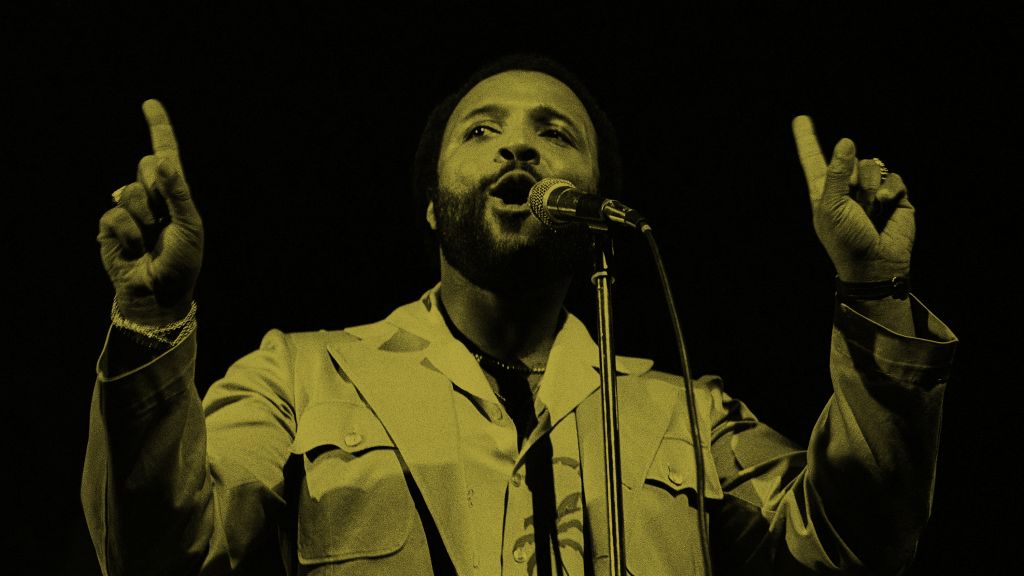
Andraé Crouch
Light Records gave Andraé Crouch and the Disciples a home for music that drew on gospel, pop and R&B. Crouch’s group was a school in its own right including singers Danniebelle Hall and Bili Thedford.
“
A lot of the gospel music today is based on emotion, and that's good to have a good time; but when the storm comes, that's not going to work. If I can't find it in the Word, I won't write it—it won't be complete. I have to be able to verify everything that I sing by the Word.”
Andraé Crouch
Major labels recognised the large market for gospel soul with Warner Bros. recording Crouch turning a biblical story into an entire musical arrangement with “Handwriting on the Wall.”
By the end of the seventies, the 12” single enabled long form gospel workouts - recreating the lengthy Sunday church service marathons, often with a disco groove carrying the extended vocal testimony. Gloster Williams & Master Control take more than nine minutes over “No Cross, No Crown,” giving a familiar expression of Christian sacrifice the scale of a dance-floor record.
The Mighty Clouds of Joy bring quartet roots to “Glow Love” on another key gospel soul label Myrrh. Their earlier “Mighty High” topped the American disco chart, putting a touring gospel quartet into heavy rotation in clubs. Brothers Johnson’s Louis Johnson formed gospel side project Passage in 1981 bringing a sophisticated soul production reminiscent of their recent disco smash ‘Stomp’.
Even on a record heard alone, you can hear what generations of singers and players learned in church: what it means for somebody else to answer. Gospel’s influence on modern music is foundational beyond measure.