


“
From the beginning, even when I started, Detroit's always been a fertile ground for creativity. Especially for dance music. It's the surroundings. We've got a rich history. And there's something about the factories, the smoke from the factories probably gets in our lungs and does something to us.”
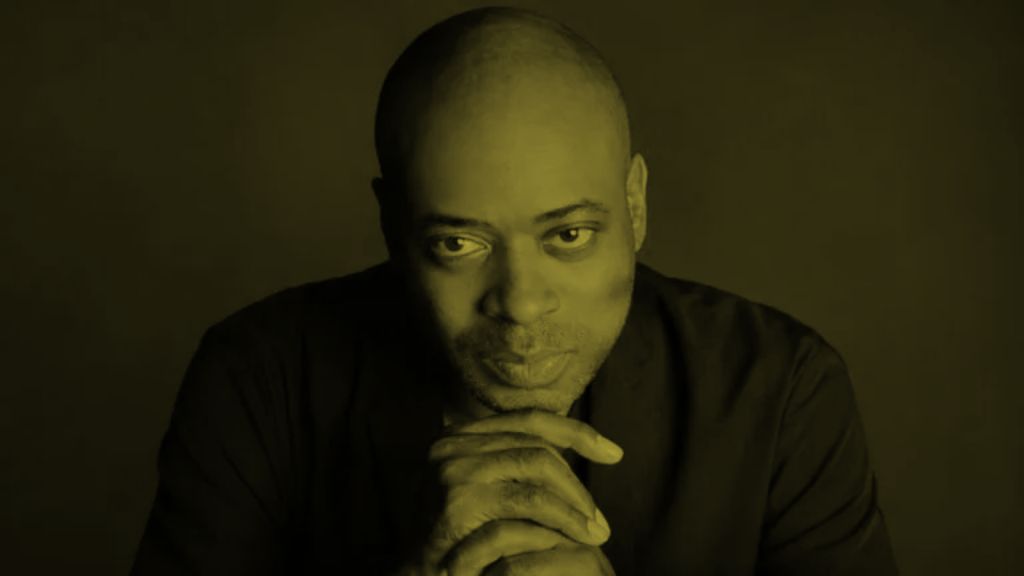
Juan Atkins, who died in Mexico City aged 64, could suggest an entire futurist city with a bass line, a drum pattern and a few words through a microphone. On “Night Drive (Thru-Babylon),” the bass keeps moving as his voice slips in and out of the arrangement. The record gives you the sensation of travelling through a future Detroit after dark, with the dashboard lit and the road opening ahead. Released as Model 500 in 1985, it sits near the beginning of a career that carried the sound of Detroit’s Black dance underground into clubs around the world.
Born in Detroit in 1962, Atkins spent his early years on the city’s east side and moved to nearby Belleville in his teens. On Detroit radio, the Electrifying Mojo made room for Parliament-Funkadelic, Prince, Kraftwerk and electronic music from Europe. Atkins took in the synthesiser’s many voices through those broadcasts. At Belleville High School, he befriended Derrick May and Kevin Saunderson, the other members of what came to known in later years as the Belleville Three. Atkins began DJing in the Deep Space collective, giving their circle a place to hear how those records worked together at a party. Meantime at Washtenaw Community College, Atkins met Richard “Rick” Davis, a Vietnam veteran who recorded as 3070 and had already put out his own esoteric and idiosyncratic vision of electronic music with the 1978 single Methane Sea.
“
You know, we were just having fun, we didn't think about stardom or being famous. We were just kids doing what we liked to do.”
Atkins and Davis shared an interest in futurism and began exchanging pieces of music, adding parts to each other’s tracks. Atkins recalled bringing in the foundations of “Alleys of Your Mind,” “Cosmic Cars” and “Clear,” with Davis contributing synth parts and writing many of the duo’s lyrics. They issued “Alleys of Your Mind” on their own Deep Space label in 1981. Its clipped beat and uneasy vocal made it a local radio record. “Cosmic Cars,” released the following year, put Detroit’s traditional assembly line car manufacturing culture into a sci-fi context.
By “Clear,” on the 1983 album Enter, Atkins was triggering the sequencer in a Sequential Circuits Pro-One from a Roland TR-808. You can hear what that connection made possible in the way the ascending figure locks to the drums. Each repetition gives the ear a chance to catch a different detail. Clear had an interesting beginning with the original Detroit version being released only on a few hundred initial first pressings of the album Enter - released by the California label Fantasy who took a chance on the band’s blend of European synth wave and Detroit funk.
“
When I was ten or eleven years old I had dreams of being like a big mega pop star. I'd put on my father's motorcycle helmet and pull the visor down over my face as he had one of those futuristic helmets. I'd run around and play guitar and pretend I was like this mega pop star!”
With the Electro-boom in full flow after the success of Planet Rock a few months prior, Fantasy hired New York’s WKTU DJ Jose ‘Animal’ Diaz to put some East Coast polish and more of a funk energy to the synth wave leaning original. The remix was a worldwide hit and remains a favourite with Electro nostalgists. Its appearance on the UK Street Sounds Electro compilation series ensured its classic status and all subsequent repressing of the album Enter swapped out the original raw version in favour of the remix. This led to Detroit Techno collectors scouring used record stores hoping to find a copy without the suffix RE on the inner groove which indicated it was a first pressing containing the elusive first version.
The album and subsequent releases such as Industrial Lies confused fans of Clear with the darker European synth wave direction and it wasn’t until 1985’s R9 that Cybotron once again came properly on the radar. Perhaps there were musical differences over the this split direction and whatever the case, Atkins and Davis parted ways with Juan founding his own Metroplex label that same year.
Metroplex M-001 was initially issued with a beige label and hand drawn logo before the iconic futurist Metroplex logo was subsequently used. No UFO’s and the flip side Future clearly indicate Atkins was the funk side of Cybotron. Despite being popular locally, the 12” did not have the major distribution network a label like Fantasy could provide and very few if any original copies made their way over to Europe. Similarly an eight-minute D-Mix of “No UFO’s” was issued on the label’s second 12-inch due to local demand, where it backed “Night Drive (Thru Babylon)” - the instrumental of which was named Time, Space, Transit and gave Derrick May the name for his forthcoming label.
“
...you have to embrace the change as its coming because if you don't you'll get left behind so it's the nature of the beast...”
Detroit had its own audience for these records, and Chicago radio and clubs also helped carry “No UFO’s” into the city’s emerging house scene. Metroplex soon became an outlet for other Detroit artists, issuing early pioneer of Detroit Techno and Atkins associate Eddie “Flashin’” Fowlkes’s “Goodbye Kiss” in 1986.
By 1987, Atkins was putting out records under several names. As Audio Tech, he released “I’m Your Audio Tech” on local Detroit label Express run by Clifton Thomas of local Buy-Rite distribution and record store, giving his studio alter ego a voice. Back on Metroplex, the instrumental of “Sound of Stereo” shares a 12-inch with the rave classic “Off to Battle” which along with other Detroit Techno classics such as The Dance, The Groove That Just Won’t Stop became anthems on the UK orbital rave scene of the late-eighties.
Detroit’s distinctively unique brand of electronic club music got the commercial spotlight that changed the lives of so many with the 1988 Virgin Records compilation Techno! The New Dance Sound of Detroit giving a wider audience a way into the city’s scene. Compiled by Derrick May and Neil Rushton, it included Atkins’s “Techno Music,” issued under his own name. It’s still unclear who came up with the idea of recycling the term Techno for the Detroit based music but it stuck and became the global name for a genre that conquered the world’s clubs.
Atkins never stopped making music - collaborating with German artists Moritz Von Oswald, Thomas Fehlmann and releasing on local label Red Planet, Belgium’s legendary R&S, May’s Transmat, Berlin’s Tresor, EMI subsidiary New Religion and more. His DJ appearances and live performances as Cybotron and Model 500 were always eagerly awaited by techno fans worldwide.
ROVR Research pays tribute to Techno’s founding father - Juan Atkins.