

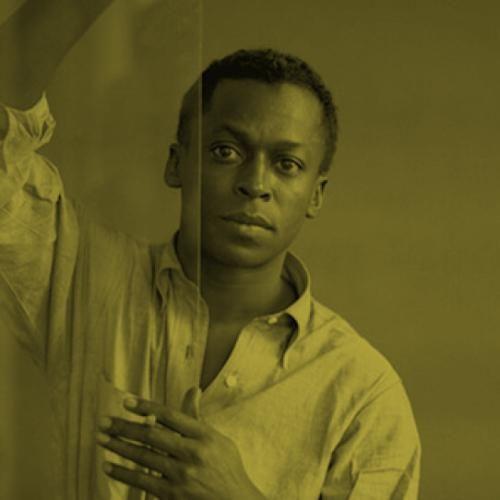
MILES DAVIS AT 100
In 2026, the world celebrates the 100th anniversary of the birth of Miles Davis, one of the most influential musicians of the twentieth century. Few artists in any genre transformed their field as many times as Davis. Across five decades, he helped shape bebop, cool jazz, hard bop, modal jazz, jazz fusion, and jazz-funk, while inspiring generations of musicians in jazz, rock, funk, electronic music, and hip-hop.
To mark this “milestone” - ROVR Research presents Miles Davis’ acoustic era. It traces one of the most extraordinary artistic journeys in twentieth-century music. Covering the years 1950 to 1967, it follows Miles Davis through nearly two decades of constant reinvention. Unlike many jazz artists who refined a single style throughout their careers, Davis repeatedly transformed both his own music and the direction of jazz itself. These recordings document his acoustic period, before the electric revolution of Bitches Brew, and reveal how he moved from the cool jazz experiments of the late 1940s to the avant-garde edge of the Second Great Quintet.
Born in 1926 in Alton, Illinois, and raised in East St. Louis in a middle class family, Davis arrived in New York in 1944 to study at the Juilliard School. Yet his real education took place in the clubs of Harlem and 52nd Street, where he joined the orbit of bebop pioneers such as Charlie Parker and Dizzy Gillespie. Bebop had revolutionised jazz through complex harmonies, rapid tempos, and virtuosic improvisation. Although Davis lacked the fiery technique of Gillespie, he possessed something equally valuable: a unique musical imagination, a gift for space and a wonderfully attuned ear. His economical phrasing and lyrical tone would become his trademark.
“
Miles had his own sound...”
Charlie Parker
By the time of “Tempus Fugit” and “Budo,” Davis was firmly immersed in the hard-bop era. These recordings show the influence of his apprenticeship with Charlie Parker while revealing his growing individuality. His trumpet tone had become more economical and lyrical than Parker’s explosive bebop language. Davis understood that silence could be as expressive as notes, a concept that distinguished him from many of his contemporaries.
“
Miles started where I left off.”
Dizzy Gillespie
One of Davis’s earliest major contributions came with the recordings later collected as the album Birth of the Cool. Recorded between 1949 and 1950, these sessions introduced a more relaxed, orchestral approach to jazz, the music prioritised subtlety, texture, and ensemble interplay. While the recordings were not immediate commercial successes, they became foundational documents of what later came to be known as cool jazz. Working alongside arranger Gil Evans and a nonet that included unusual instruments such as French horn and tuba “Deception” demonstrates the orchestral sophistication that occurred whenever these two great musical minds worked together over the decades.
“
Miles was different from everybody else. He could play one note and make it mean something”
Gil Evans
Miles’ first major emotional peak arguably arrived with “It Never Entered My Mind” from Workin’. Featuring the legendary first great quintet with John Coltrane, Red Garland, Paul Chambers, and Philly Joe Jones, the performance showcases Davis at his most intimate. His muted trumpet sounds almost conversational, turning a standard ballad into a deeply personal statement. Few musicians have ever conveyed vulnerability with such restraint.
“‘Round Midnight” followed as one of the defining recordings of Davis’s career. Written by Thelonious Monk, the piece became closely associated with Davis after its appearance on his Columbia debut album as he showed his ambition by moving away from jazz independents such as Blue Note and Prestige over to the major label setup. The dramatic arrangement and haunting atmosphere announced his arrival as a major artistic force. It remains one of the most iconic interpretations in jazz history.
A fascinating detour appears with Miles’ recording of the soundtrack to Louis Malle’s ‘Elevator to the Gallows’ noir cinematic classic. Recorded in Paris while improvising to projected scenes from the film, Davis created one of cinema’s earliest and most influential jazz soundtracks. The music’s nocturnal mood, sparse textures, and sense of melancholy would influence film composers for decades. It also demonstrated Davis’s ability to create compelling music outside traditional jazz contexts.
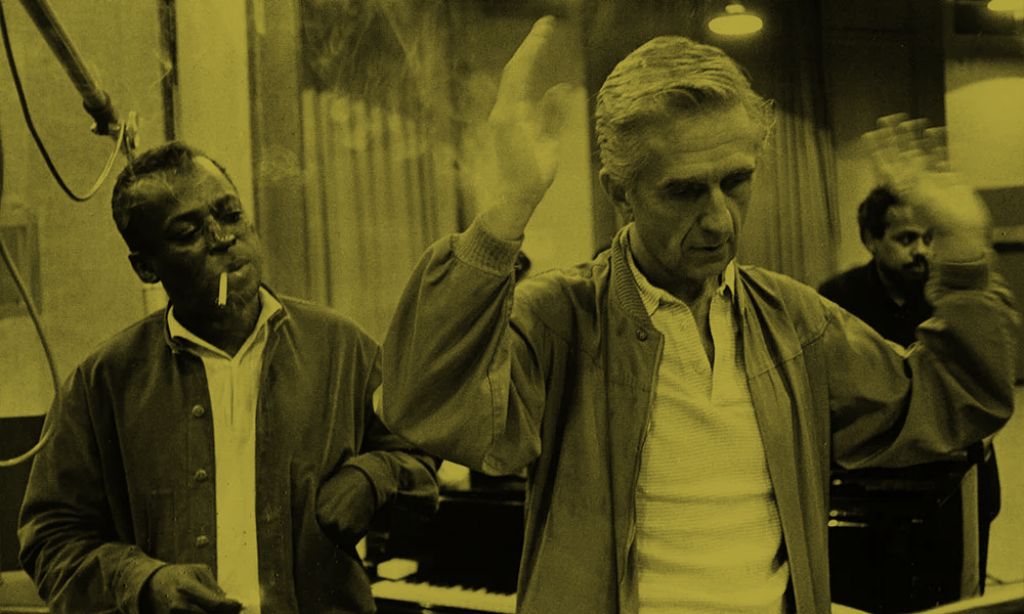
Miles with Gil Evans
The collaborations with Gil Evans reach their peak in “I Loves You, Porgy” and “The Pan Piper.” These recordings reveal Davis’s fascination with orchestral colour and global musical influences. Porgy and Bess and Sketches of Spain expanded jazz beyond nightclub performance into something approaching modern concert music. Evans’s arrangements and Davis’s lyrical trumpet created a partnership comparable to the great composer-conductor collaborations of classical music.
Davis had an extraordinary ability to identify young musicians who would become future stars. Throughout his career, his bands functioned as incubators for new ideas and new talent. Musicians such as John Coltrane, Cannonball Adderley, Herbie Hancock, Wayne Shorter, Ron Carter, Tony Williams, Chick Corea, and Joe Zawinul all passed through his ensembles before becoming major innovators themselves.
Perhaps Davis’s most significant achievement was his role in the development of modal jazz. In 1959, he released Kind of Blue, widely regarded as one of the greatest jazz album ever recorded. Rather than relying on rapidly changing chord progressions, Davis and his collaborators based much of the music on scales, or modes. This approach created greater freedom for improvisers and produced a spacious, contemplative sound. Featuring Coltrane, Adderley, Bill Evans, and others, Kind of Blue remains one of the best-selling jazz albums of all time and continues to serve as an entry point into jazz for millions of listeners.
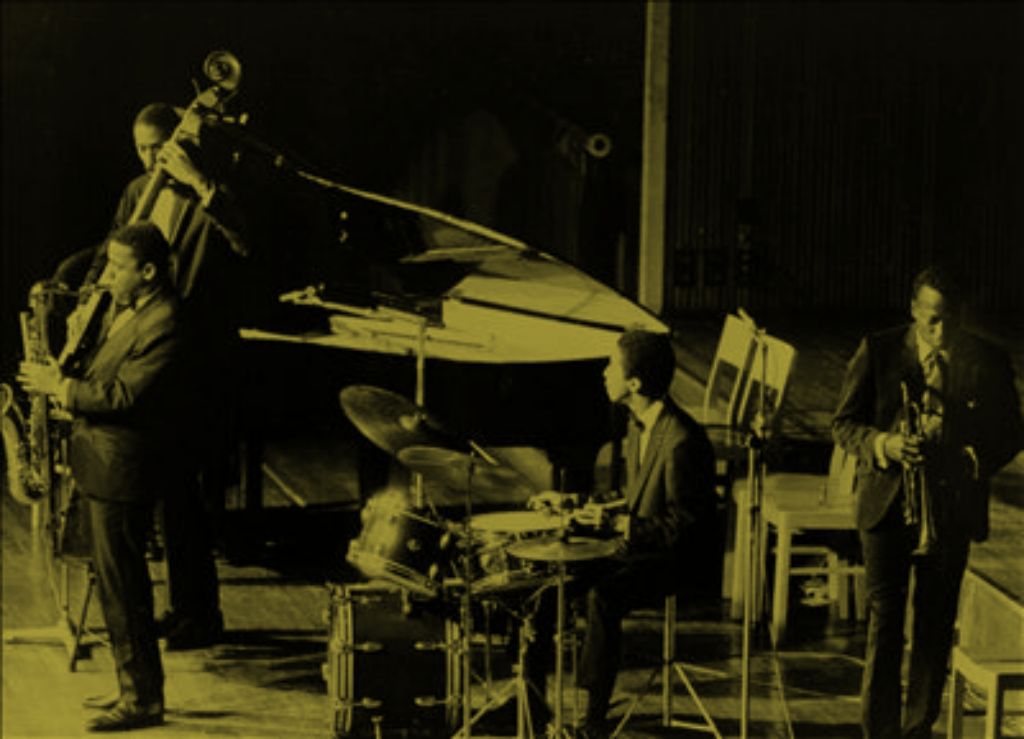
Miles Second Great Quintet
Davis refused to remain associated with a single style. During the 1960s, his “Second Great Quintet” pushed jazz into new territory. With Hancock, Shorter, Carter, and Williams, Davis developed a highly modern, sophisticated approach. Traditional harmonic structures were loosened, rhythms became more fluid, and improvisation became increasingly interactive. Albums such as E.S.P., Miles Smiles, and Nefertiti remain landmarks of post-bop jazz.
“
Don’t play what’s there, play what’s not there.”
Miles Davis
As rock music became the dominant popular form of the late 1960s, Davis once again reinvented himself. Inspired by artists such as Jimi Hendrix and Sly and the Family Stone, he began incorporating electric instruments, studio editing techniques, and funk rhythms into his work. The result was Bitches Brew, released in 1970. The album challenged traditional definitions of jazz and helped create the genre now known as jazz fusion. Though controversial among some jazz purists, Bitches Brew opened the door for countless musicians to explore the intersection of jazz, rock, funk, and electronic music.
As the world marks the centenary of his birth, Miles Davis remains more than a jazz icon. He represents artistic courage, curiosity, and reinvention. While many great musicians perfect a single style, Davis repeatedly abandoned success in pursuit of new ideas. He changed the direction of jazz multiple times, mentored generations of innovators, and expanded the possibilities of modern music itself.