

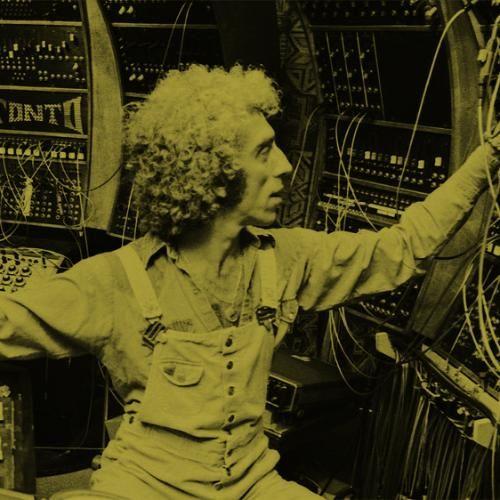
“
The reason that I got into (Tonto) was that I had ideas in my head and I wanted those ideas to be heard”
Stevie Wonder.
The story of T.O.N.T.O. and its creators Robert Margouleff and Malcolm Cecil, occupies a strange position in the broader electronic music narrative. It is often told as a technological footnote—“the big modular synth Stevie Wonder used”—but this radically understates its significance and influence on musical history.
T.O.N.T.O. was not simply an instrument; it was a philosophy of sound, one that quietly rewired how Black music, West Coast rock, jazz-fusion and introspective singer-songwriting could imagine the future without abandoning the the groove, or the song.
T.O.N.T.O. (The Original New Timbral Orchestra) was not a synthesiser in the conventional sense, but a hand-built modular system assembled incrementally by Malcolm Cecil and Robert Margouleff from disparate manufacturers and custom modules.
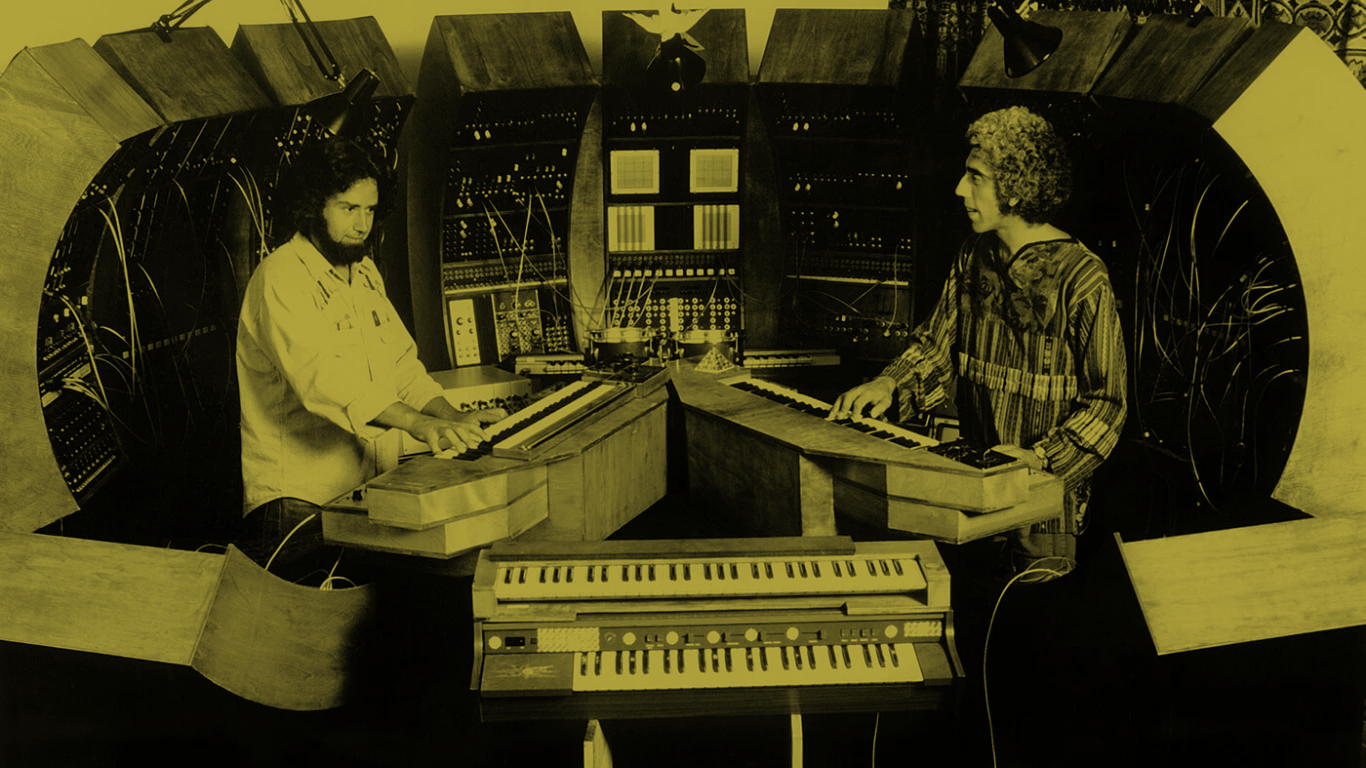
Robert Margouleff (left) and Malcolm Cecil at T.O.N.T.O.
Cecil and Margouleff assembled it over several years, beginning in the late 1960s, integrating Moog, ARP, Serge and EMS components into a single, continuously evolving system. Where most modular systems of the era sought internal consistency by requiring matched voltages and predictable control standards, T.O.N.T.O. demanded customisation and a certain amount of continuous problem-solving.
The earliest backbone of T.O.N.T.O. consisted of Moog modular components, prized for their warmth and voltage predictability. Moog oscillators provided foundational timbral mass: thick, harmonically rich waveforms that could be detuned and layered. Moog ladder filters, with their characteristic resonance and low-end retention, were paired with Serge Oscillators which added an enhanced level of pitch stability without totally sacrificing analog drift. Serge Tcherepnin’s designs rejected traditional module categories altogether, favouring function blocks—circuits capable of multiple roles depending on patching context.
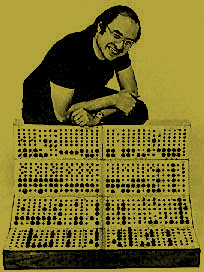
Serge Tcherepnin
Yet T.O.N.T.O. never remained Moog-dominant for long. ARP components - particularly those from the 2500 lineage - introduced a slightly edgier quality. Their faster envelopes and less saturated oscillators complemented the Moog’s roundness. Rather than smoothing over these differences, Cecil and Margouleff exploited them, using mismatched response times and tracking behaviours.
Universal slope generators, for example, allowed self-triggering envelopes to become oscillators, LFOs to become audio-rate modulators, and control voltages to blur into sound. Integrating this West Coast approach to synthesis which eschewed traditional keyboards with the more traditional East Coast musical language of Moog and ARP was no small achievement.
Whilst T.O.N.T.O. could interface with keyboards—including custom Moog controllers—it was deliberately configured so that no sound depended on traditional pitch triggering. Control voltages originated from sequencers, envelope followers, oscillators modulating oscillators, and even external audio sources.
This design philosophy explains why T.O.N.T.O. based recordings feel grown rather than played. Upon first sitting down at T.O.N.T.O. Wonder reportedly exclaimed:
“
What's wrong with this instrument? It only plays one note at a time!”
It can be assumed Stevie’s thick jazz chords were possible due to meticulous overdubbing of monophonic lines or customised routing utilising with the sheer number of oscillators available .
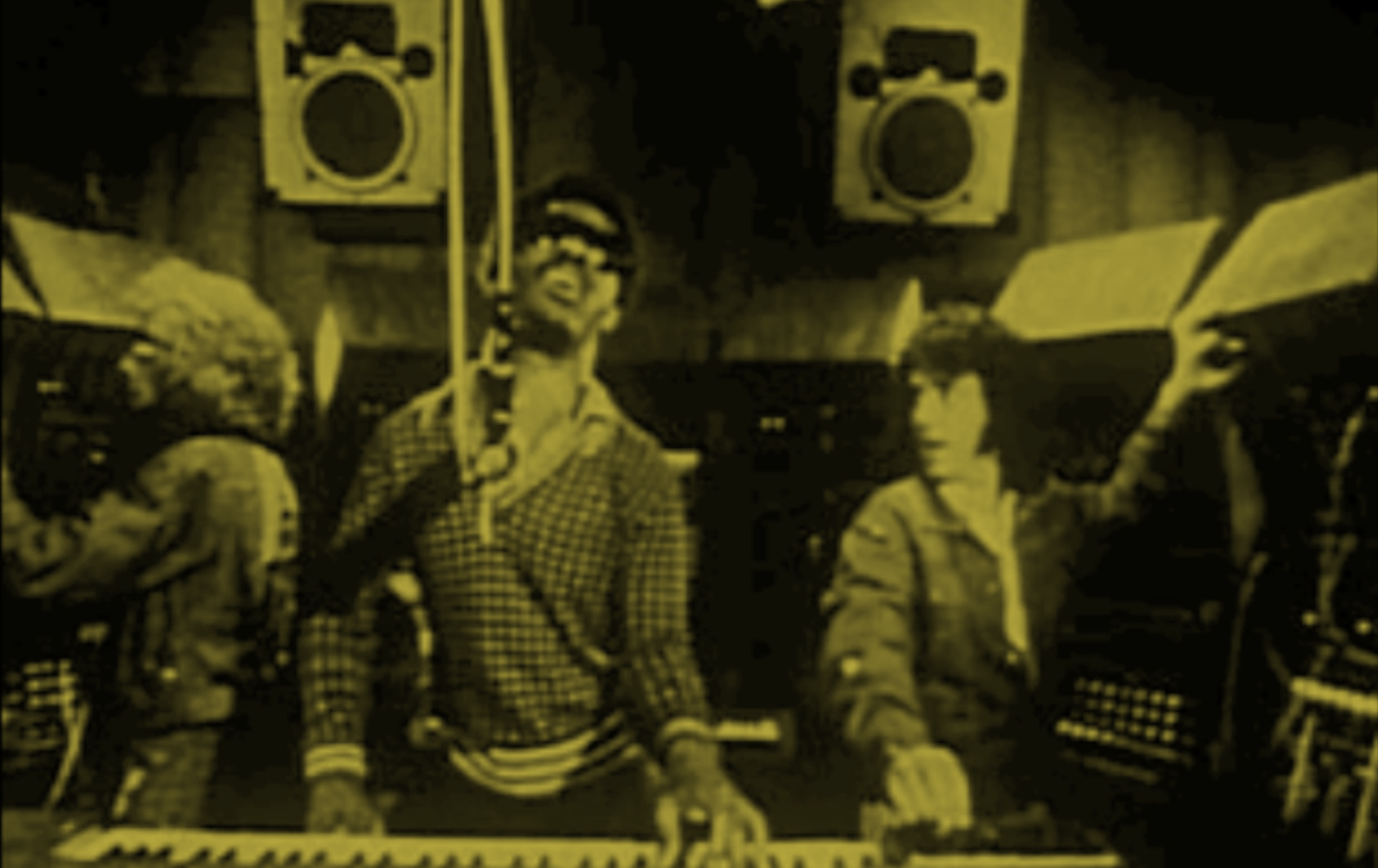
Stevie Wonder with Margouleff & Cecil at T.O.N.T.O.
At the beginning of T.O.N.T.O. 's recording history inevitably is Tonto’s Expanding Head Band (Margouleff & Cecil) and their debut album Zero Time (1971). Unlike the multitude of gimmicky 'Moog' albums of the time, Zero Time isn't so much a showcase for technology as T.O.N.T.O. is used to generate organic sounding warmth, pulse and spatial depth. The music unfolds patiently, utilising modulated repetition resulting in subtle harmonic evolution.
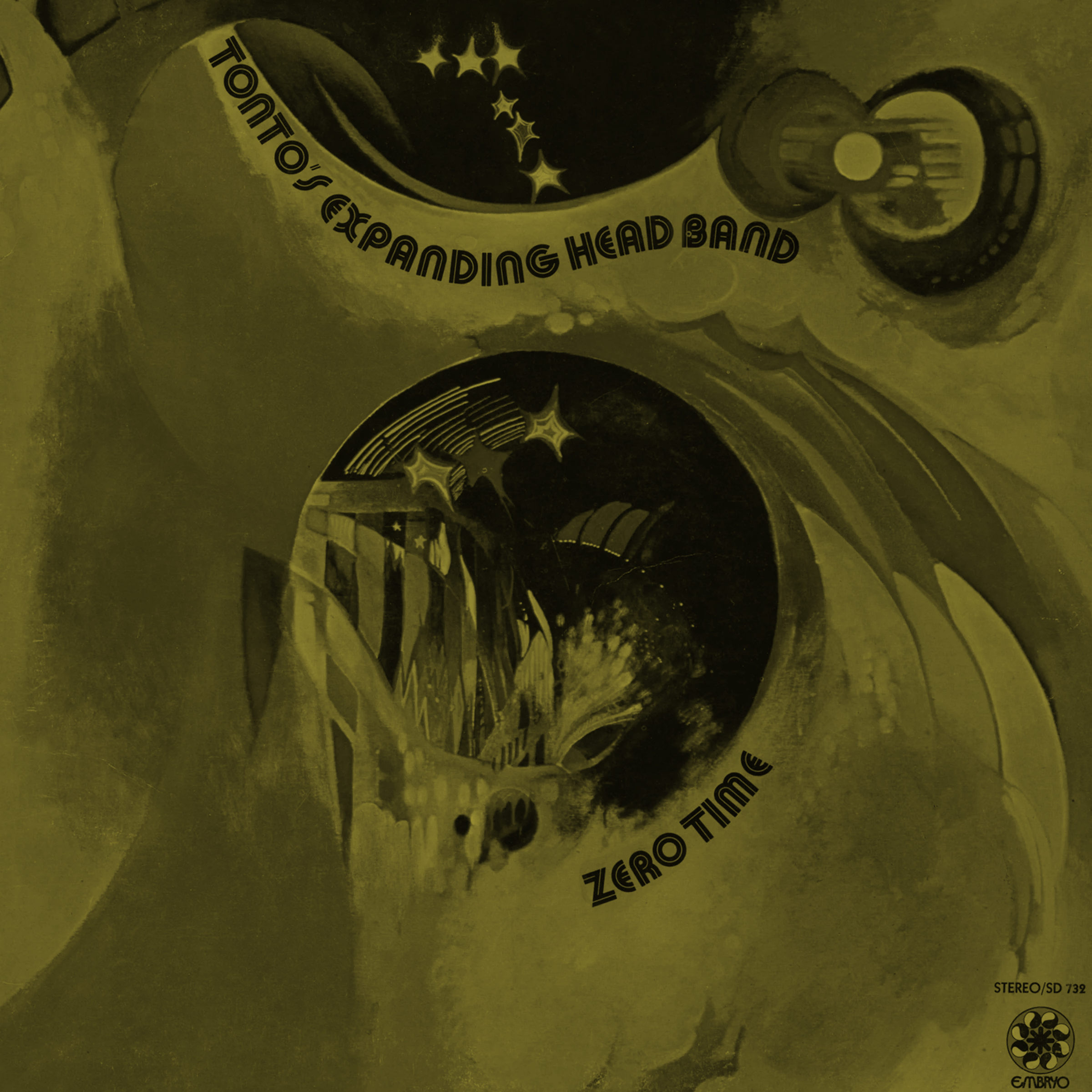
Tonto's Expanding Head Band: Zero Time (Embryo 1971)
In retrospect, the record feels less like prog or psych than a missing link between cosmic jazz, ambient, electronic soul and what would later be called “fourth world” music. Importantly, it established an aesthetic that Margouleff and Cecil would carry into all their collaborative work. Soaring pads are soft and rounded, floating atop a bass so deep the listener can swim in it.
Stevie Wonder first heard T.O.N.T.O. via the aforementioned Zero Time album leading hij to seek out its creators, British-born jazz bassist Malcolm Cecil and American engineer Robert Margouleff. Soon after, they would begin the sessions that produced his T.O.N.T.O.- influenced classic albums from 1972-1974: Music of My Mind, Talking Book, Innervisions and Fulfillingness’ First Finale.
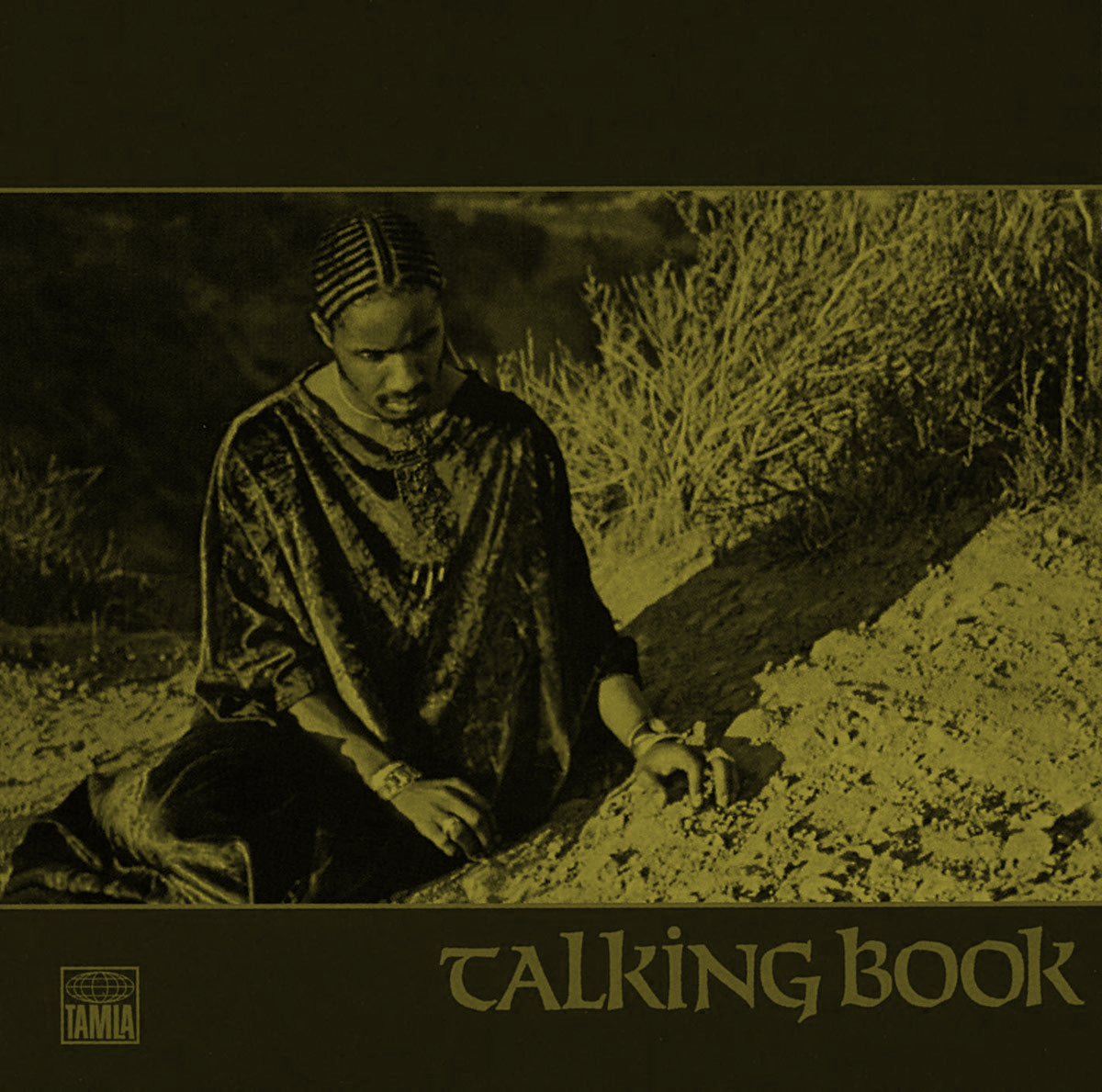
Stevie Wonder 'Talking Book' (1972 Tamla) - photographed by Robert Margouleff.
Resonant bass lines pulse and squelch driving the tracks along, whilst Stevie’s innovative clavinet and synth-lines converse rather than compete. Songs such as “Visions” or “Living for the City” still feel organic, not engineered - the technology serving Wonder’s melodic and rhythmic intelligence, not the other way around.
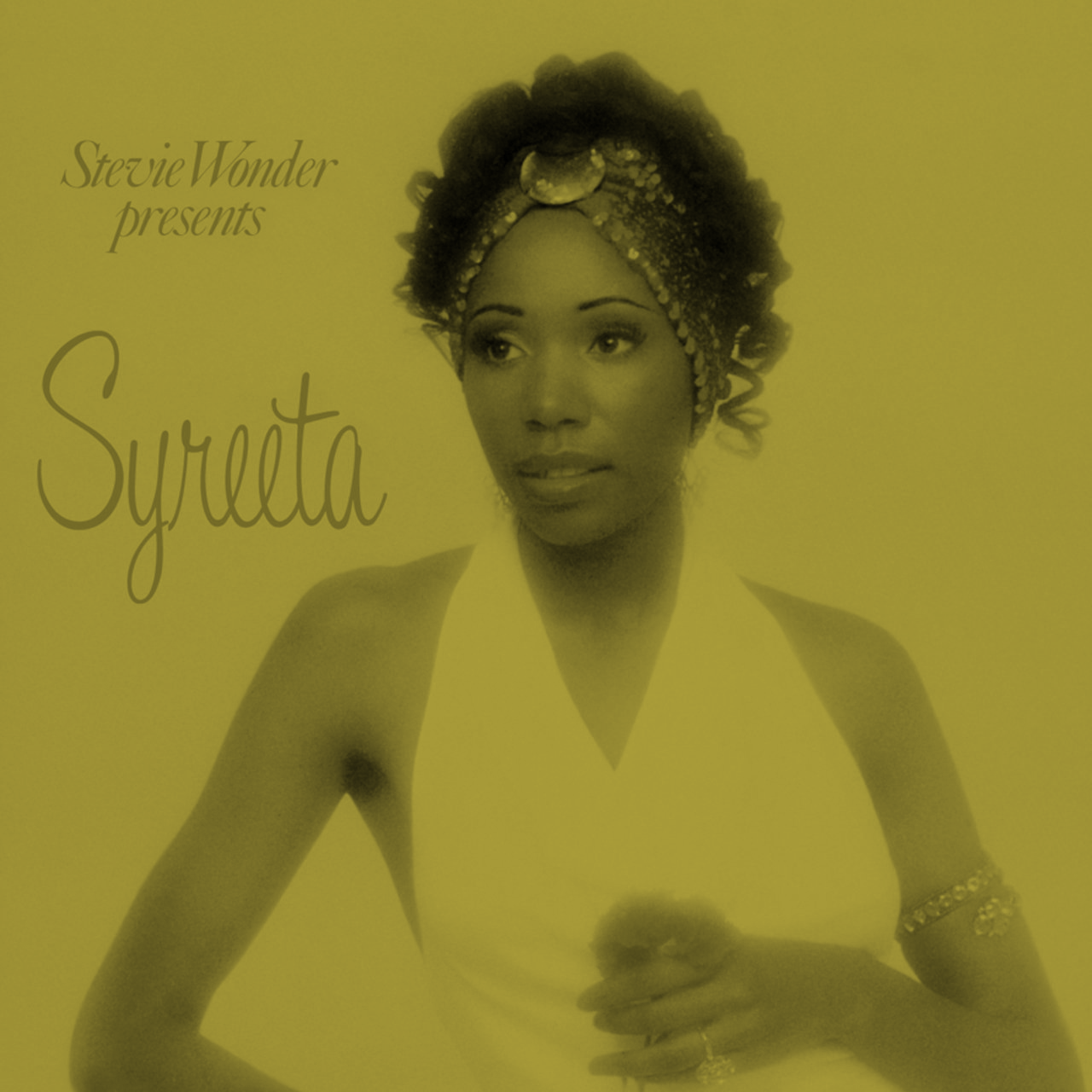
Syreeta’s recordings from the same period extend this approach into a more explicitly interior space. Her voice sits within electronic environments that feel natural rather than alienating. The synths do not signify futurity so much as an enhanced soulfulness.
Aside from the landmark Wonder recordings, the T.O.N.T.O. aesthetic found its way into less expected terrain. Richie Havens, whose folk-rooted intensity might seem antithetical to synthesisers, benefits enormously from Margouleff/Cecil’s touch on the beautifully delicate In These Flames with its electronically created Eastern riffs and fills.
Similarly, James Taylor’s engagement with synthesised textures suggests how deeply Margouleff and Cecil understood restraint. The electronics function as harmonic support rather than dominating, gently destabilising the naturalism of a singer-songwriter idiom.
The same philosophy applies to rock-adjacent projects such as Manassas, Little Feat, and Steve Hillage. In each case, synthesisers are woven into existing musical styles rather than imposing themselves. Hillage’s work is perhaps the most overtly psychedelic, yet even here the electronics feel fluid rather than monumental.
Where T.O.N.T.O.’s influence becomes particularly striking is in soul and funk contexts. Billy Preston, The Isley Brothers, Gil Scott-Heron in particular all utilised Margouleff & Cecli’s production/engineering skills to incorporate synthesised textures into compositions firmly in Black music traditions. The combination of deep synth bass and delicate lead electronic lines became particularly iconic on the work of The Isley Brothers and Gil Scott-Heron.
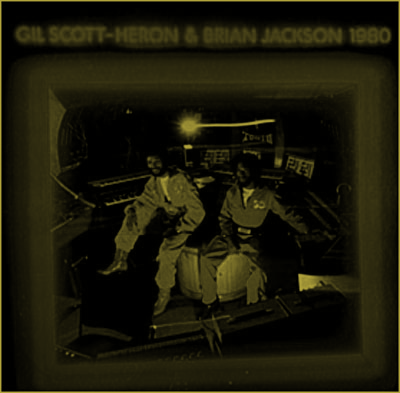
Gil Scott-Heron (Left) and Brian Jackson at T.O.N.T.O.
What emerges from this body of work is a distinct alternative history of electronic soul. Margouleff and Cecil did not use synthesisers to escape the human aspect; they used them to extend it. Their productions suggest that the most radical innovation of the early seventies was not louder amplification or stranger timbres, but a new relationship between synths and songs. Sadly Malcolm Cecill passed away in 2021. Robert Margouleff meanwhile enjoyed huge success producing the band Devo in the eighties and continues to work in the industry.
In retrospect, the TONTO lineage feels prophetic. It anticipates ambient soul, neo-psychedelic R&B, G-Funk and electronic jazz. More importantly, it models an ethic: technology as collaborator. The effect might not have shocked in the way Donna Summer’s ‘I Feel Love’ announced electronics in Disco - but the timeless classic status rightly given to the T.O.N.T.O. crafted works of Stevie Wonder, Isleys, Gil Scott-Heron and others are a self-evident vindication of Margouleff and Cecil’s respectful approach.
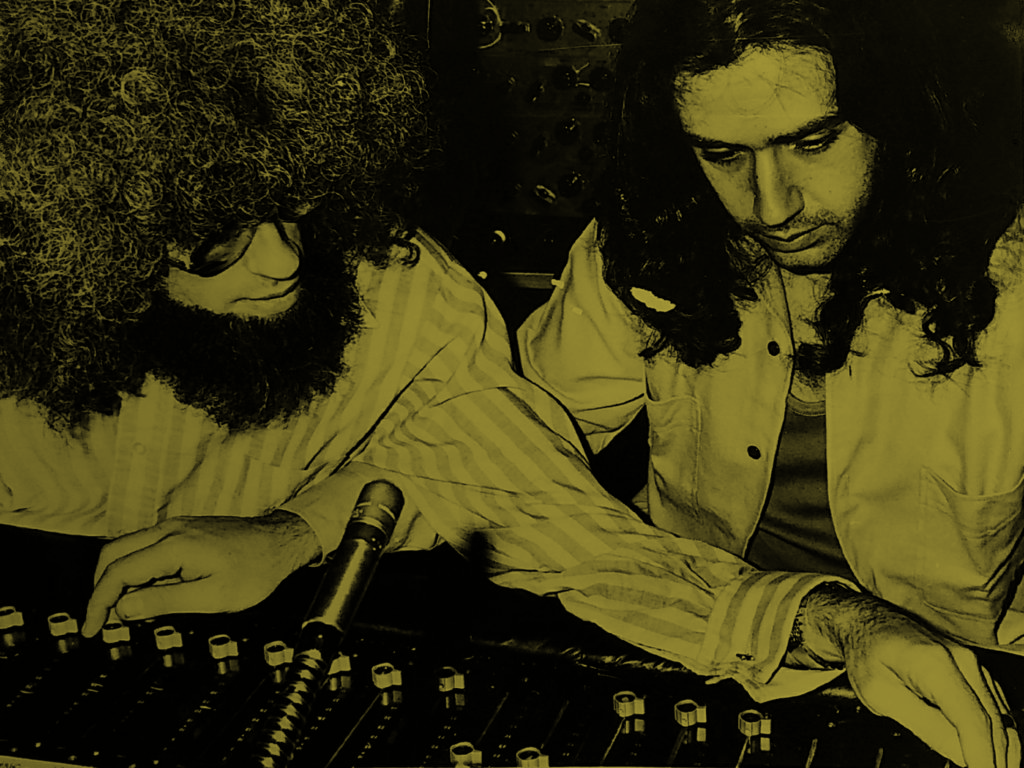
Malcolm Cecil & Robert Margouleff