

“
"It don't mean a thing, if it ain't got that go-go swing”
Chuck Brown
Emerging out of the Washington D.C. funk scene in the 1970’s, Go-Go is a distinctive style of percussive Black music. It’s commercial heyday and golden age came in the mid-eighties as Go-Go fever reached its peak with global tours for its local bands, major record label exploitation and a poorly conceived and received crime movie thriller.
“
Go-go is the heartbeat of the city... It's a percussion-driven groove that never stops. It's interactive, it's tribal, it keeps GOING”
Chuck Brown
From the late-sixties, the nations capital became known as Chocolate City. Its majority black population and growing political power were immortalised by Parliament on their 1975 album - and its local music scene in particular became a source of immense pride for the black working class neighbourhoods.
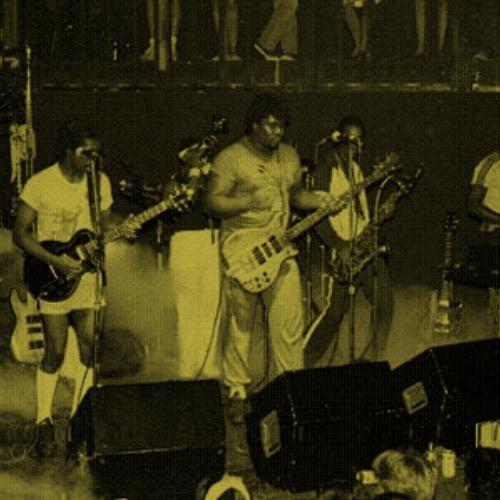
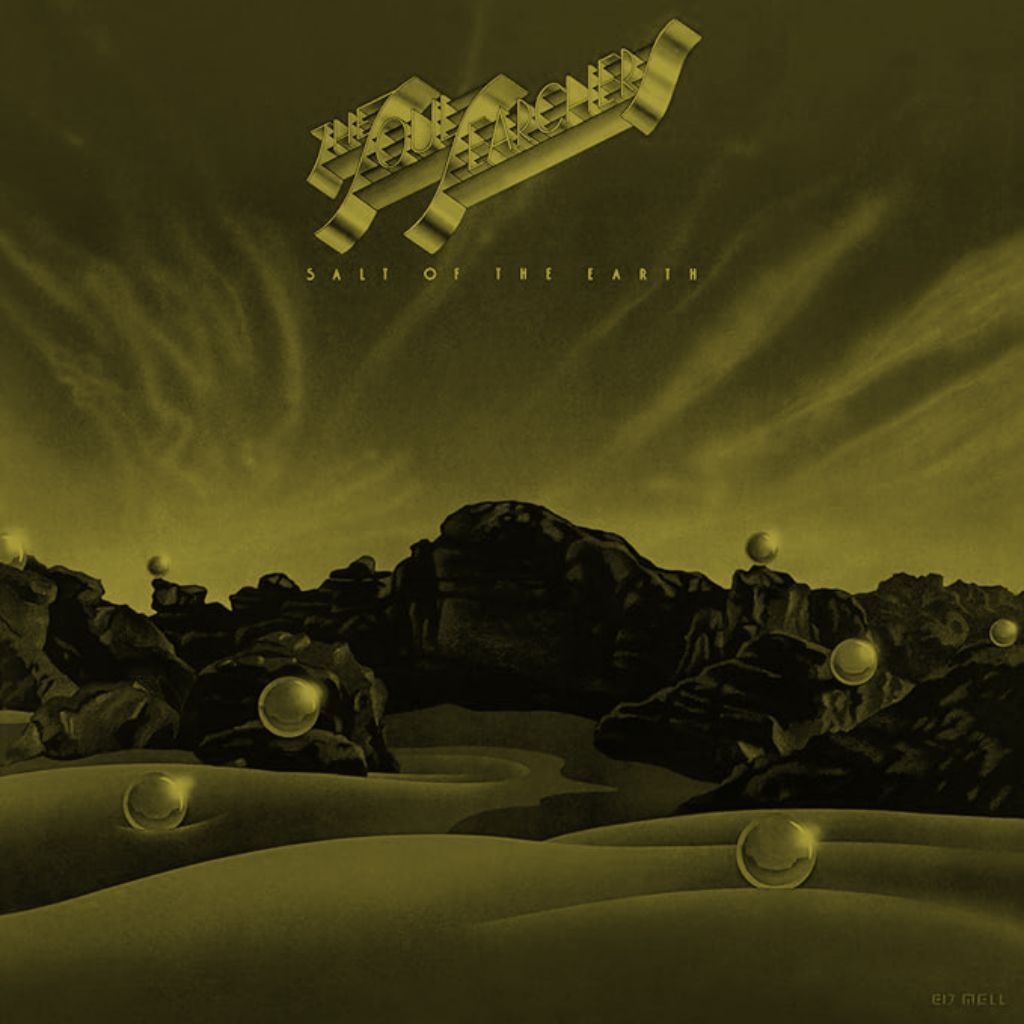
Local musician Chuck Brown and his funk outfit the Soul Searchers began performing with extended conga and drum breaks between songs to keep the crowd moving around 1975. The blueprint for the later Go-Go sound evident in their early seventies albums We The People and Salt Of The Earth. The famous break on the track Ashleys Roachclip became the framework upon which Go-Go’s rhythm was based. Legend has it that the audience reacted so well to the percussive interludes that local bands began to replicate the sound creating “The Beat”.
Go-Go was especially a live event phenomena. Various venues around the city hosted large gatherings with “Talkers” hyping up the crowd or engaging in call and response - resulting in many famous Go-Go chats that appeared on hits by Redds & The Boys, E.U., Trouble Funk and others as the genre grew from its local origins to become a worldwide trend.
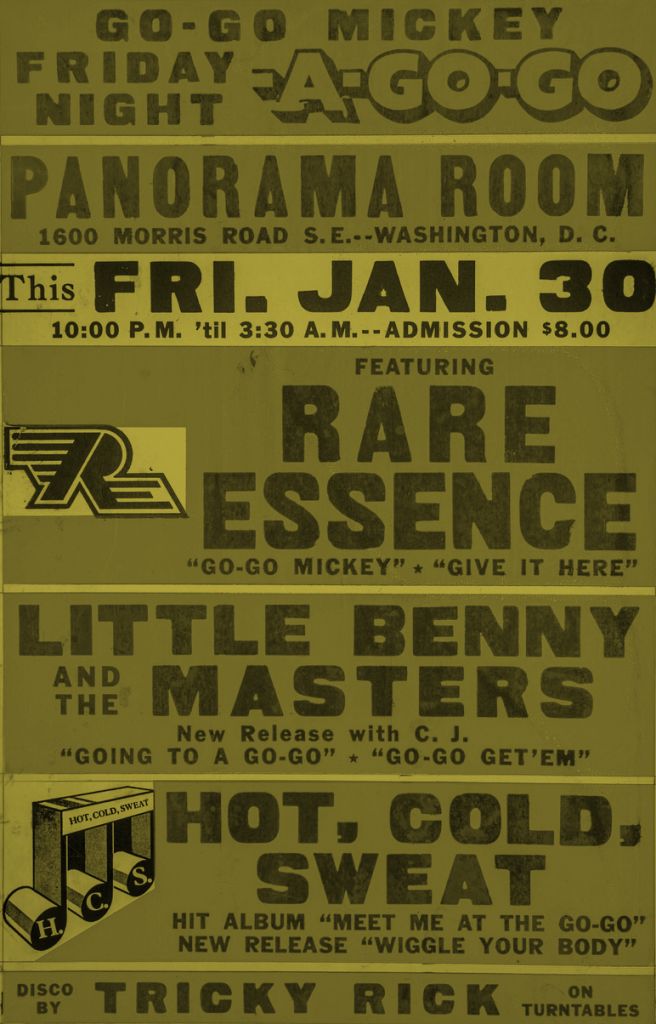
Being an isolated funk genre almost exclusively located in DC - with small in-roads into Maryland and Virginia - the vinyl sales potential was small enough to dictate releases on tiny independent local-run imprints rather than being picked up by larger established black music labels or majors with limited licensing overseas.
The Disc-AZ label in France picked up the 7” version of Trouble Funk’s Pump Me Up from the bands own imprint TF in 1981, but the genre really started taking off overseas after the ever sharp Sylvia Robinson at Sugar Hill spotted the same energy and similar production values in Go-Go as early Rap and put together a six track Trouble Funk album called Drop The Bomb in 1982.
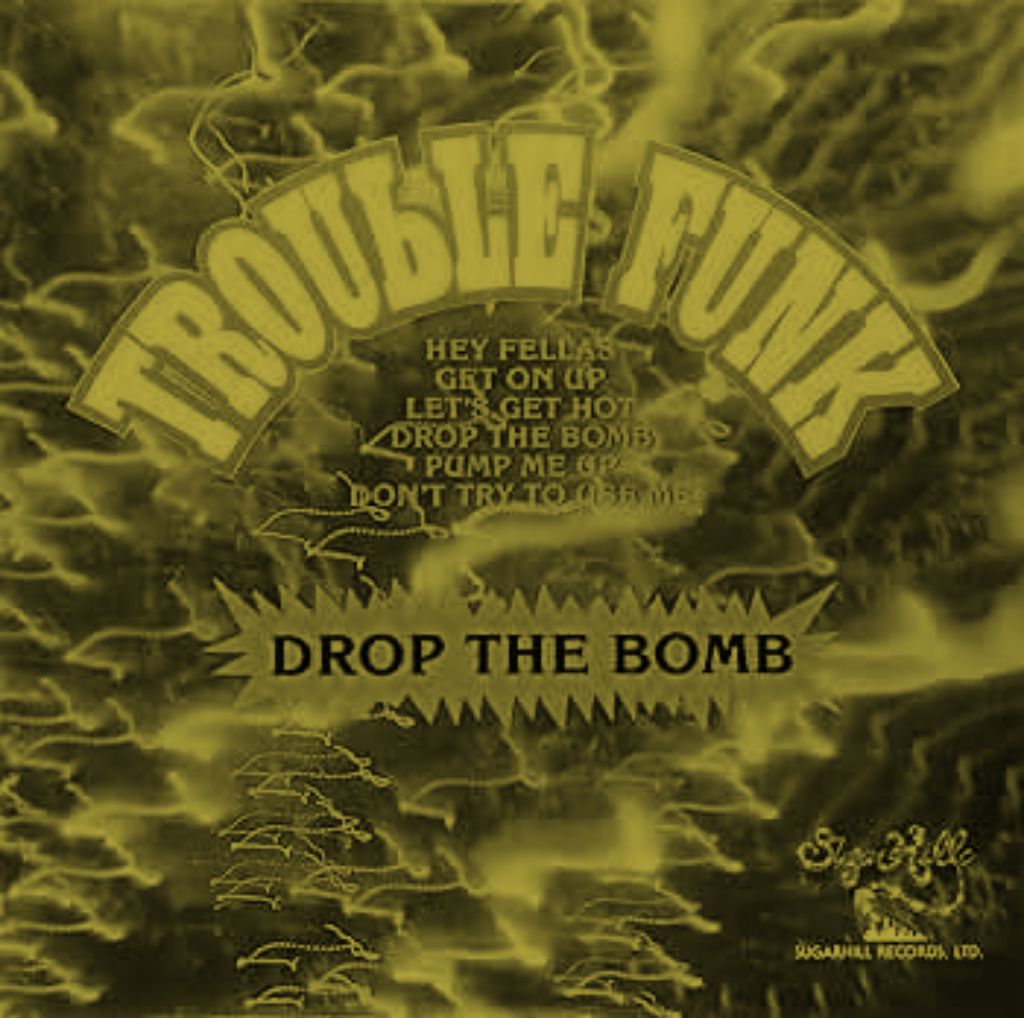
Sugar Hill releases were always hot property at this time and Drop The Bomb via both import and domestic licenses in Europe, was inevitably snapped up by specialist black music DJs. The album proved especially popular with Electro fans - an example being UK Hip-Hop crew Mastermind cutting up two copies of “Say What?” on a live performance aired direct from London’s Lyceum.
More overseas DJ’s started spinning go‑go imports in clubs leading to Slim’s 1982 “It’s In The Mix” being licensed by the Greyhound label in the UK from DC label D.E.T.T. Greyhound was one of the few UK labels at that time comfortable with pushing niche Black US dance music as proved by their earlier licensing of Prince Charles & The City Beat Band and they enjoyed enough success to also license the Go-Go/Electro crossover Trouble Funk Express shortly after.
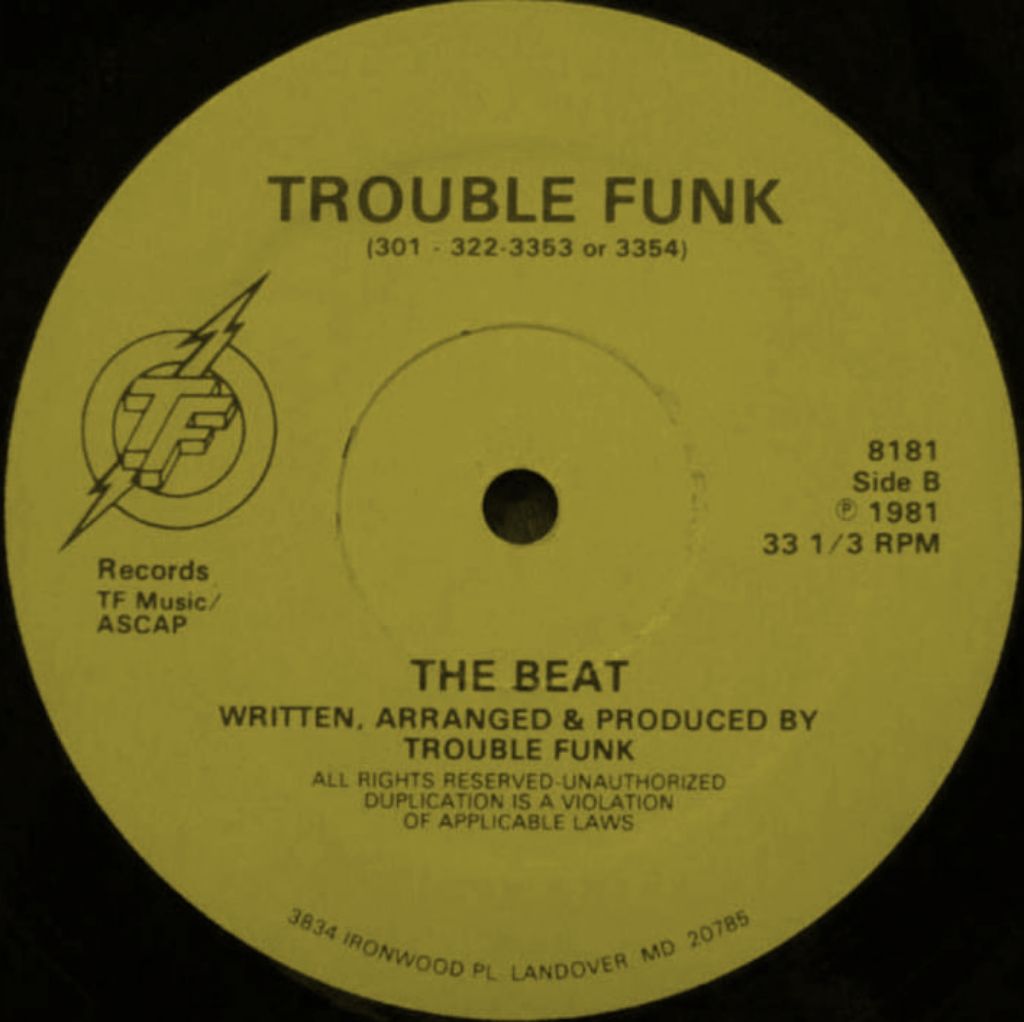
Its worth mentioning the evolution of this Go-Go/Electro classic as it possibly involves a nod to Kraftwerk’s ‘Trans Europe Express’ prior to the release of Planet Rock. Trouble Funk Express fleshes out a more stripped down previous workout simply called ‘The Beat’. Released a year earlier in 1981 on both TF and New Jersey imprint Jamtu, the B-side contains the rising Kraftwerk motif before exploding into synth explosions. The influence is expanded upon with Trouble Funk Express exploring both drum rhythms and more synth hooks from TEE.
The main architects of recorded Go-Go production were a fairly tight circle of producers, label owners, engineers, and bandleaders. Some tracks would be released on more than one label - such as Al & The Kidd, Moneytown and D.E.T.T. all releasing Trouble Funk’s ‘E Flat Boogie’ in the same year of 1980.
If Chuck Brown was the originator, Maxx Kidd was crucial for getting Go-Go on the local airwaves, in the DC live venues and on the independent labels. Maxx Kidd’s genius was that he understood go-go was local first, national second.
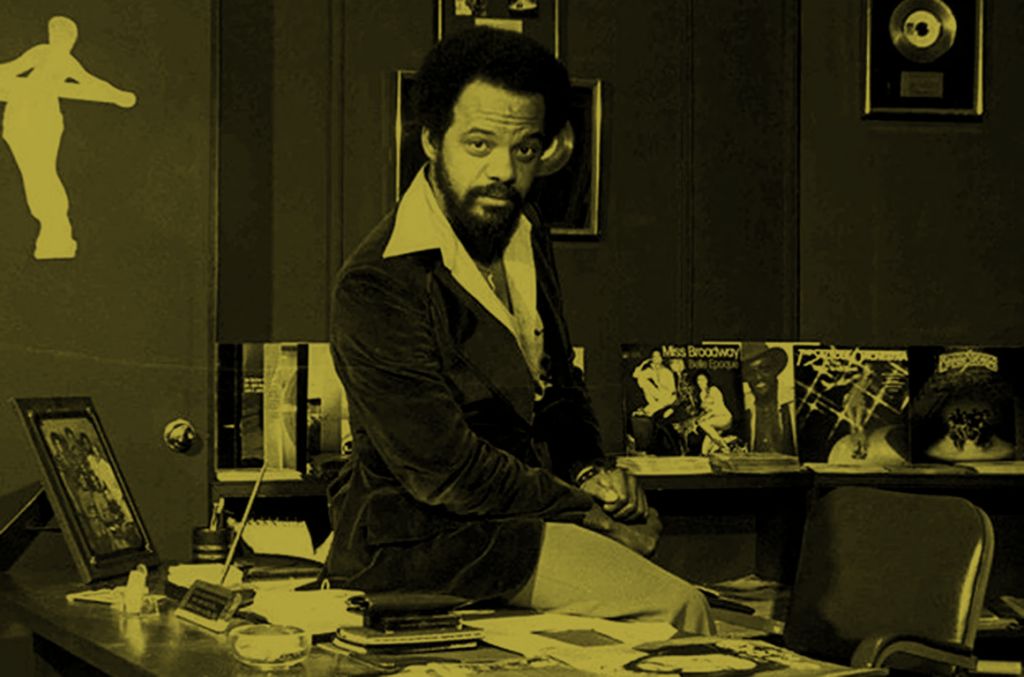
Maxx Kidd (1941-2017)
Trouble Funk released the first title to acknowledge the genres name in 1981’s “Straight Up Funk Go Go Style”. Followed by Live Volume 2 - these releases capture the essence of Go-Go. The music really expressed itself in its purest most intense form as a live experience - with tracks often extending for thirty minutes or more.
It took the intensity of Trouble Funk and the arrangement skills of the band-leaders to distill this essence down onto the necessary shorter vinyl releases for commercial potential. It was an element of Go-Go’s entry into the vinyl market that always sat uneasy with its origins as a live phenomenon.
Although displaying a Maryland address on its labels, D.E.T.T. and its sister label T.T.E.D., were the main labels for Trouble Funk related releases. Continuing the Go-Go/Electro crossover success, Tilt and Arcade Funk released synth laden vocoder jams whilst Hot, Cold Sweat and Go-Go All-Stars also released on the label.
Musically, Go-Go relies on “The Beat” - the steady drummer, holding a pattern with enough space for congas, roto-toms, timbales, woodblocks and cowbells. Its an infectious rhythm made for lengthy jams - made the more intense with an MC known in Go-Go as a ‘Talker’ hyping up the crowd and engaging in call and response. Chants are commonplace and appear on vinyl releases. “What do you want to do…? We wanna Go-Go!”, “Put Your Right Hand In The Air, and Put Your Left Hand Down In Your Underwear”, “Love Boat, Love Boat”, etc.
This final chant is a reference to the rather odd drug of choice in DC during Go-Go’s development and subsequent heyday, ‘Love Boat’ was the local term for a joint dipped in PCP - a quite brutal drug for any kind of musical environment - but one that was prevalent in the city and Go-Go’s power came partly from the fact that it never fully sanitized itself.
Cheaper than alternatives, PCP could be a volatile component at a music venue - but although the crowds chanted about it - the scene was not the origin of its usage. DC was experiencing a wave of drug and gun crime throughout this period and the music scene - full of young black attendees - was a convenient scapegoat for the authorities.
Go-Go continued to be successful outside of its point of origin throughout the mid-eighties. Chris Blackwell of Island records involvement led to high profile releases on 4th & Broadway for local band E.U. and a misguided movie ‘Good To Go’ which chose to focus on the crime aspect of DC life, furthering its association with the music scene.
Media hype and over-exposure together with the emergence of House impacted Go-Go worldwide as its popularity declined and retreated back to become a beloved local musical identity where it continues to be a thrilling live experience for those lucky enough to catch ‘The Beat” in its natural environment.
“
We made money, we had fun, we partied, we expanded it, but not with the thought or the vision that this could come about to what it looks like it's going to be.”
Maxx Kidd
ROVR explores the heyday of Go-Go - the sound of Washington D.C.