

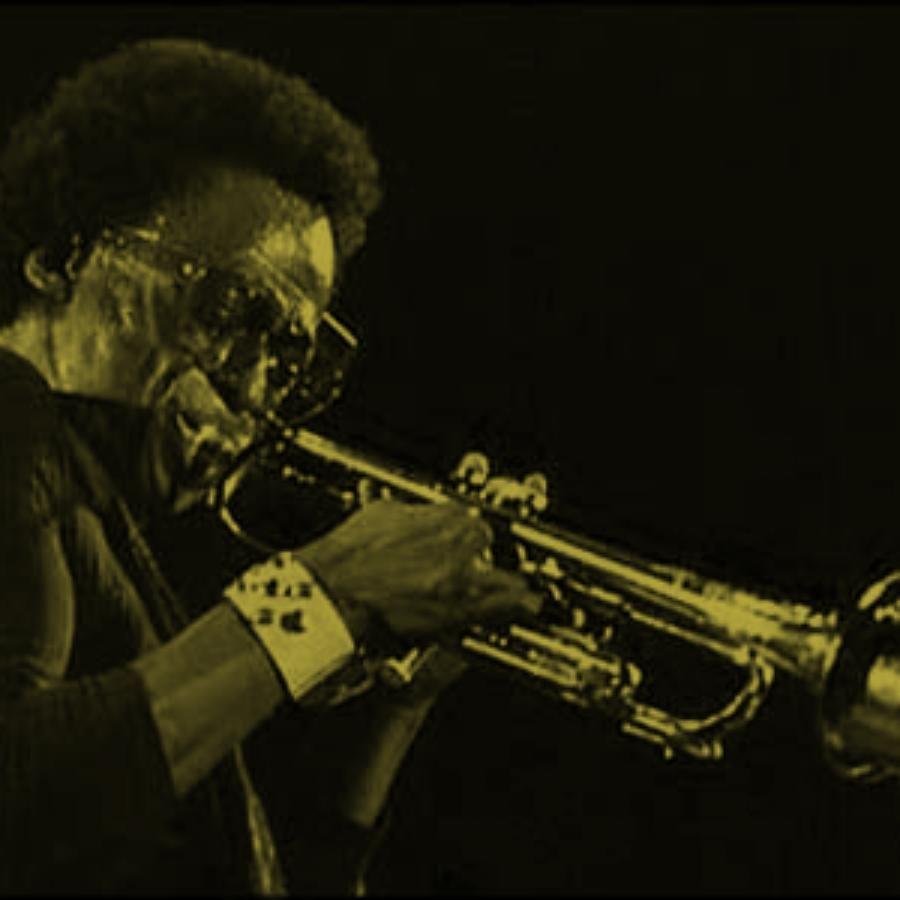
“
There are a bunch of purists out there predicting that electric instruments will ruin music. No sir. What will ruin music will be bad music, not the instruments the musicians choose to play.”
Miles Davis
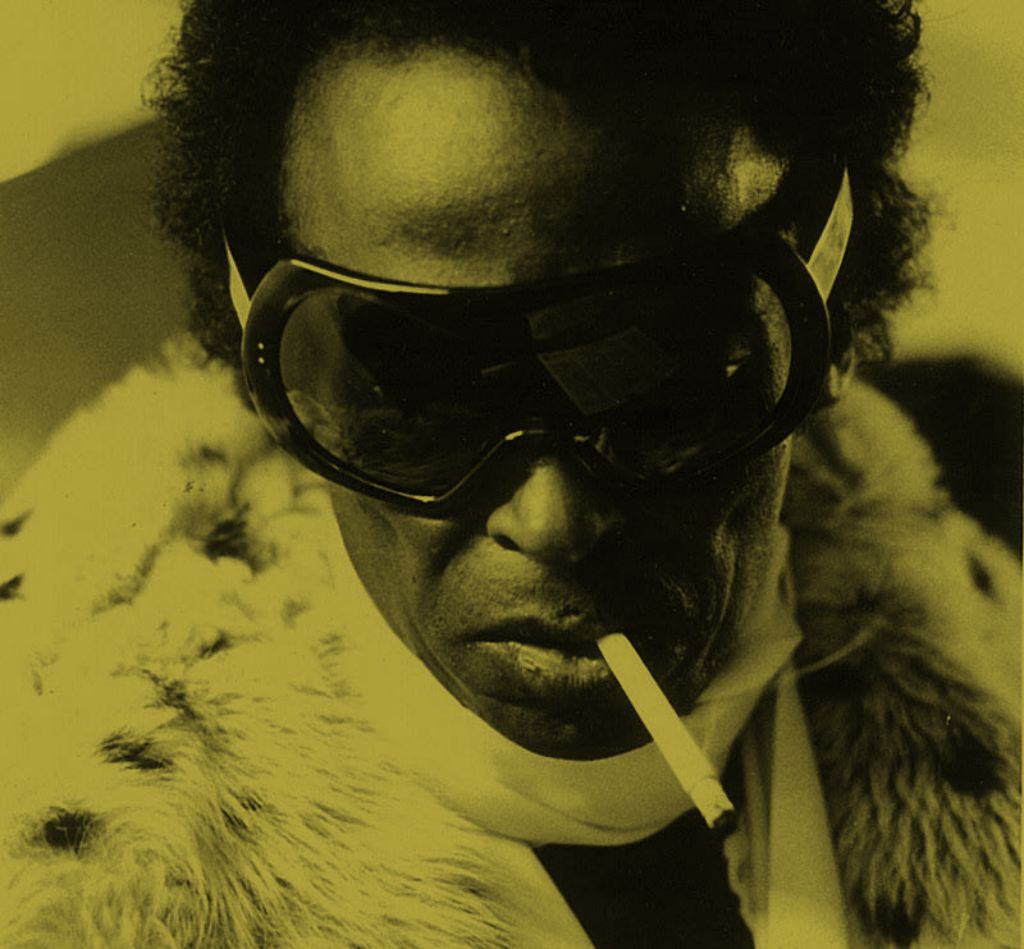
Miles Davis’s electric period is one of the most extraordinary transformations in twentieth-century music. What began in 1967, with Davis encouraging Herbie Hancock to play an electric keyboard, developed within just a few years into Bitches Brew, On the Corner and Get Up With It — music that absorbed rock, funk, soul, tape splicing, African and Indian modes and percussion.
Miles Davis
The first decisive step came with the arrival of the Wurlitzer and Fender Rhodes electric pianos. Davis had heard the new electric sound through musicians such as Joe Zawinul, but initially as part of the second great Quintet, it was Herbie Hancock who became central to its development in Miles’ band.
Hancock later recalled that Davis essentially pointed him towards the electric keyboard and told him to play it. Hancock initially regarded the instrument with some suspicion, but Davis heard possibilities in its amplified, sustained and slightly unreal tone and Hancock was the perfect keyboardist for a match made in jazz heaven.
“
I walked into the studio, and the acoustic piano wasn’t there. I looked around, and in the corner, there was this little instrument on legs. I said, 'Miles, what do you want me to play?' He said, 'Play that.' I looked at it, and it looked like a toy. I plugged it in, and turned it on, and struck a chord... and it sounded beautiful! And I could turn it up! I didn't have to fight the drummer anymore.”
Herbie Hancock
It was typical of Miles to push musicians out of their comfort zone and challenge them in search of new musical textures and change the behaviour of the musicians. The Rhodes did precisely that. Its ability to sustain notes and chords encouraged a more static, textural approach, while its amplification allowed the keyboard to become part of the rhythm section rather than simply accompanying the horn.
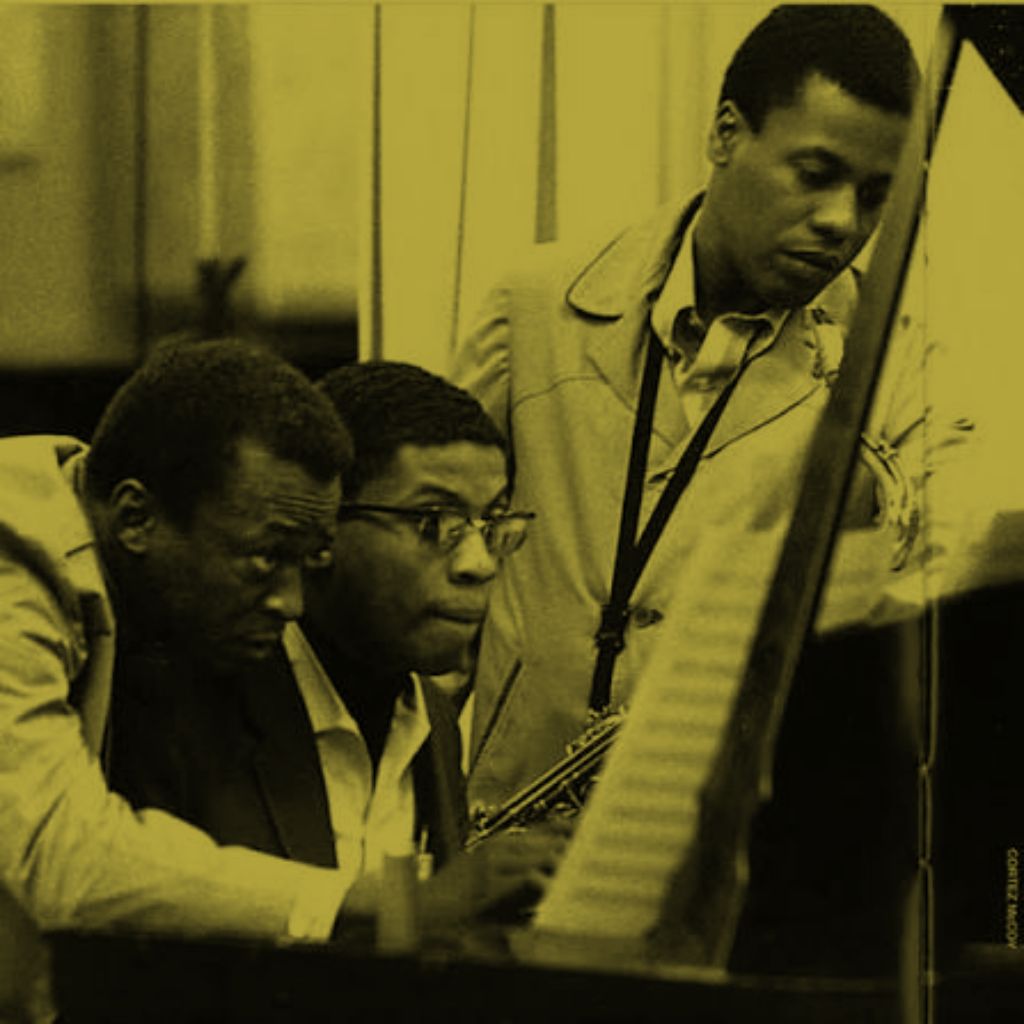
Miles with Herbie Hancock and Wayne Shorter
Herbie Hancock and Ron Carter were gradually replaced by Chick Corea and Dave Holland, while Tony Williams would soon give way to Jack DeJohnette. John McLaughlin appeared, bringing an entirely different conception of electric guitar. The old quintet’s intricate post-bop language was beginning to dissolve into something more open, repetitive and rhythmically ambiguous.
Then came In a Silent Way in February 1969. Its importance is difficult to overstate. Davis assembled an extraordinary studio ensemble: Wayne Shorter, Dave Holland, Tony Williams, Chick Corea, Herbie Hancock, Joe Zawinul and John McLaughlin. Davis and producer Teo Macero began treating extended open-ended sessions as part of the compositional process by post-recording tape splicing and even looping particular sections. Macero edited and assembled long takes into the long, flowing structures that became “Shhh/Peaceful” and “In a Silent Way/It's About That Time”.
“
I had carte blanche to work with the material. I could move anything around and what I would do is record everything... and take all those tapes back to the editing room and listen to them and say: 'This is a good little piece here, this matches with that, put this here,' etc”
Teo Macero
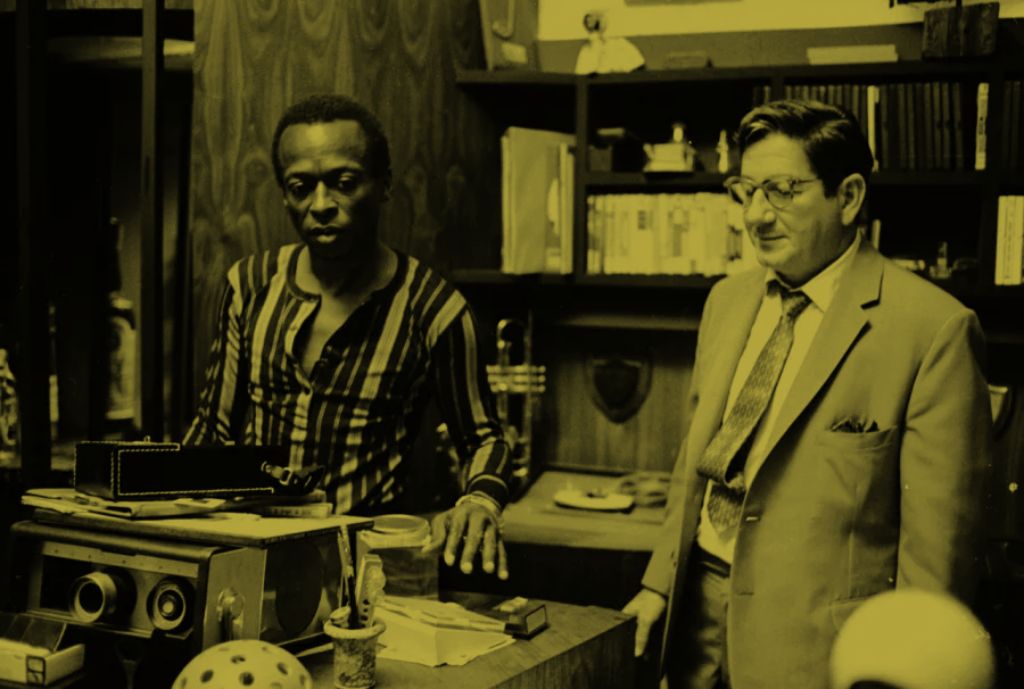
Miles with Teo Macero
Sustained Rhodes chords, organ, bass and drums create a huge, floating sound field over which Davis and Shorter appear almost suspended. The album was the beginning of Davis’s fully electric period, but it was also a warning that the traditional idea of a jazz recording was about to be challenged forever and ushered in the era of fusion.
The personnel changes following In a Silent Way were equally important. Davis increasingly abandoned the notion of a fixed band. Chick Corea, Dave Holland and Jack DeJohnette formed the core of what became known retrospectively as the “Lost Quintet”, with Wayne Shorter still present. The unique genius of Keith Jarrett subsequently entered the orbit of the group, despite initially resisting the idea of playing electric keyboards alongside another keyboard player.
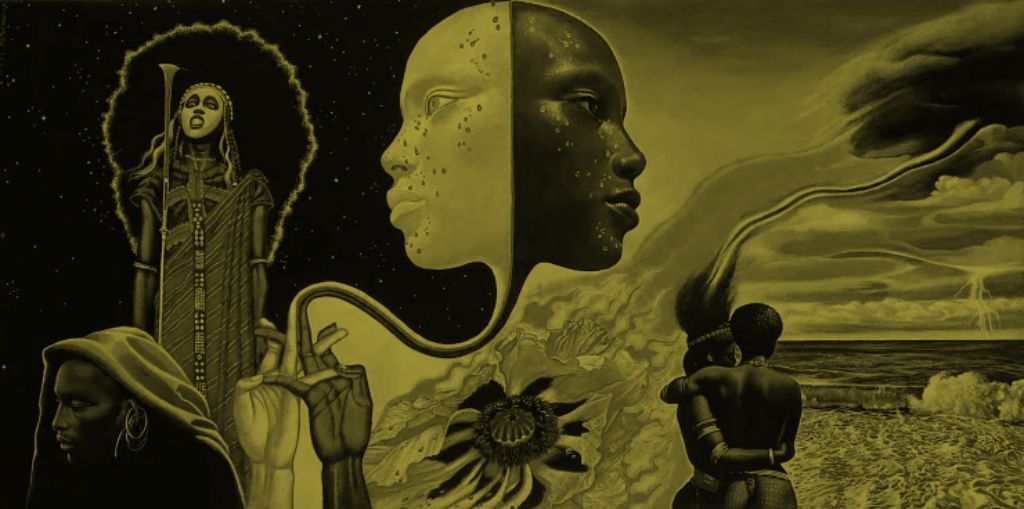
Bitches Brew artwork by Mati Klarwein
By the time Davis recorded Bitches Brew in August 1969, the music had become something else entirely. The album expanded the In a Silent Way concept into a dense, rhythmically fragmented environment. Electric keyboards multiplied, McLaughlin’s guitar became another source of texture, and the rhythm section became a constantly shifting merger of various world music rhythms from Africa, Brazil and India.
Jack DeJohnette, Lenny White and Billy Cobham were among the drummers associated with the sessions; Harvey Brooks played electric bass and Bennie Maupin brought snake-like bass clarinet lines, while Joe Zawinul, Chick Corea and Herbie Hancock created a dense and complex keyboard wash.
Miles had already mastered the modal approach way back with Kind Of Blue - and he combined that experience with the new electric sounds and young musicians to take the modal approach to new levels of originality. Instead of conventional harmonic progressions, the music increasingly revolved around vamps, bass patterns and rhythmic cells. The musicians could then improvise vertically — exploring sound and rhythm within a limited harmonic space — rather than moving through a succession of chords.
Bitches Brew was controversial in the purist jazz-world but a commercial successful for a jazz album. It attracted a younger audience and helped inspire an entire generation of musicians. Former Davis sidemen subsequently founded or led groups including Weather Report, the Mahavishnu Orchestra and Return to Forever. Davis, meanwhile, was already moving on.
The next stage was darker, heavier and more rhythmic.
A Tribute to Jack Johnson and Live-Evil show Davis increasingly fascinated by rock guitar and electric blues. Michael Henderson’s bass playing became particularly important. Rather than functioning like Ron Carter’s acoustic bass, Henderson’s electric bass locked into funk rhythms, creating a foundation over which Davis could place fragments of trumpet, organ, guitar and percussion. Like many of Miles’ various band members - Henderson was ‘poached’ from another working outfit - in his case Stevie Wonder’s touring band.
With On the Corner, recorded in 1972, Davis targeted the sound of Black urban America whilst absorbing the musical ideas of Karl-Heinz Stockhausen. One of the most fascinating figures in this transformation was British arranger and cellist Paul Buckmaster. Buckmaster - most famous at the time for his arrangements for Elton John - worked with Davis during the On the Corner sessions, arranging some of the material and playing electric cello. More importantly, he introduced Davis to aspects of Karlheinz Stockhausen’s electronic and tape-based thinking. Stockhausen’s idea of music as a process of addition and subtraction — sounds entering, disappearing and being transformed — fitted perfectly with Davis’s developing conception of the studio.
“
Miles Davis and I collaborated on many ideas, some of which he developed further, and others that were exactly what we worked out together”
Paul Buckmaster
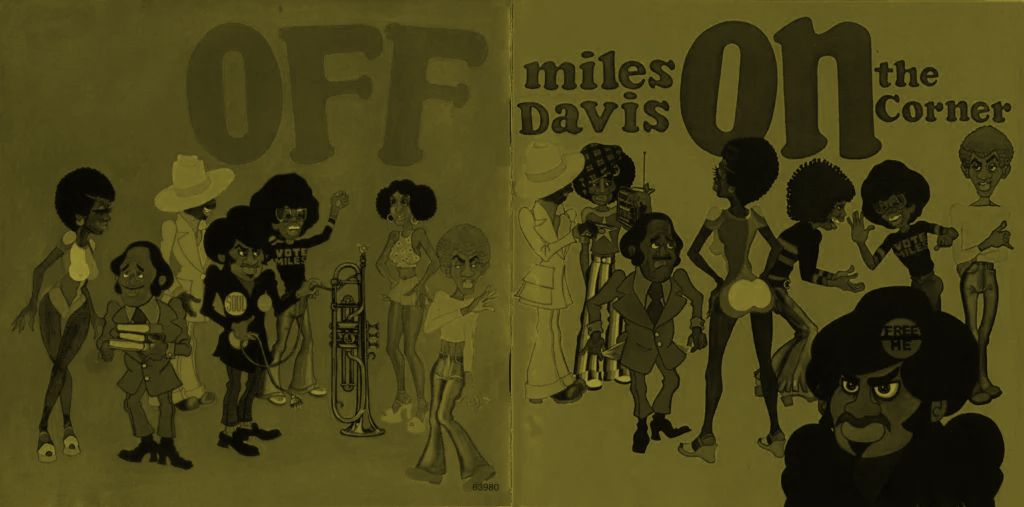
On The Corner artwork by Corky McCoy
The album was initially received with bewilderment and hostility by much of the jazz establishment. Yet its influence has proved enormous. Its combination of funk bass, percussion, electric keyboards, guitar, tabla, sitar and studio manipulation would eventually resonate with hip-hop, electronic music, drum & bass and experimental dance music.
Davis was effectively inventing a new philosophy of music that transcended jazz: the composition did not necessarily have to be written before the musicians entered the studio; the musicians did not have to constitute a permanent band; improvisation did not have to follow conventional harmony; and the recording itself could become part of the performance. By the time Davis stopped performing in 1975, he had travelled from acoustic post-bop to a form of music that was barely recognisable as jazz.