

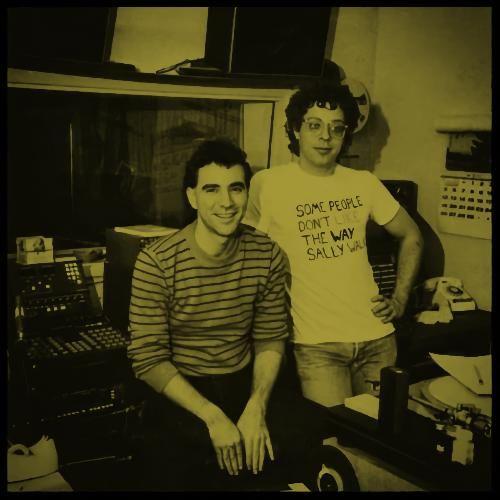
In the early 1980s, a new kind of record emerged: tracks built from mixing and editing other records together to form a kind of DJ megamix.
Medleys and even proto-megamixes such as Calibre Cuts in the UK existed previously but the trend really kicked off with pioneers like Grandmaster Flash with his The Adventures on the Wheels of Steel in 1981 — one of the first commercially released DJ mixes constructed from live turntable performance, cutting between Chic, Queen, Blondie and more in real time.
Calibre Cuts was the brainchild of UK music business pioneer Morgan Khan. More than just a showcase medley of releases licensed by the Calibre label, the uncredited mixer included short edit loops and some unlicensed additions were added by a UK in-house band from a ‘recreated’ Disco compilation - a trend common in the seventies when licenses could not always be legally obtained.
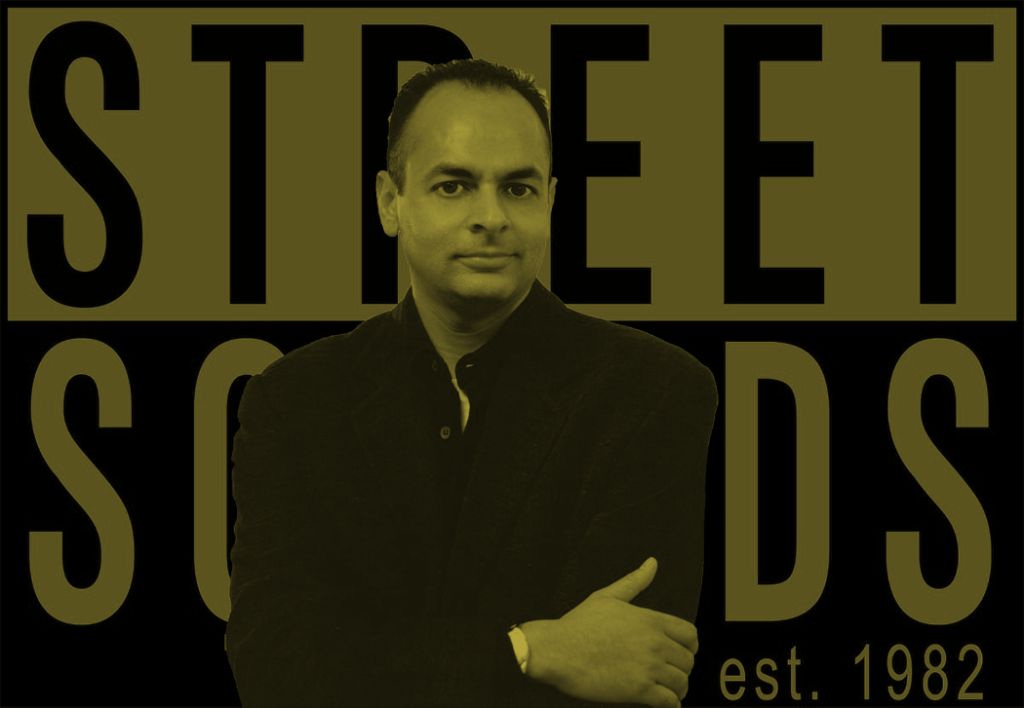
Morgan Khan
Whilst Calibre Cuts was an interesting and impactful UK release, it was overshadowed in its influence on DJ culture by the 1981 release of Grandmaster Flash ‘Adventures On The Wheels Of Steel’. After the success of ‘Rapper’s Delight’, Sylvia Robinson’s label was closely watched for the very latest in street trends and this release was another example of Robinson’s genius A&Ring.
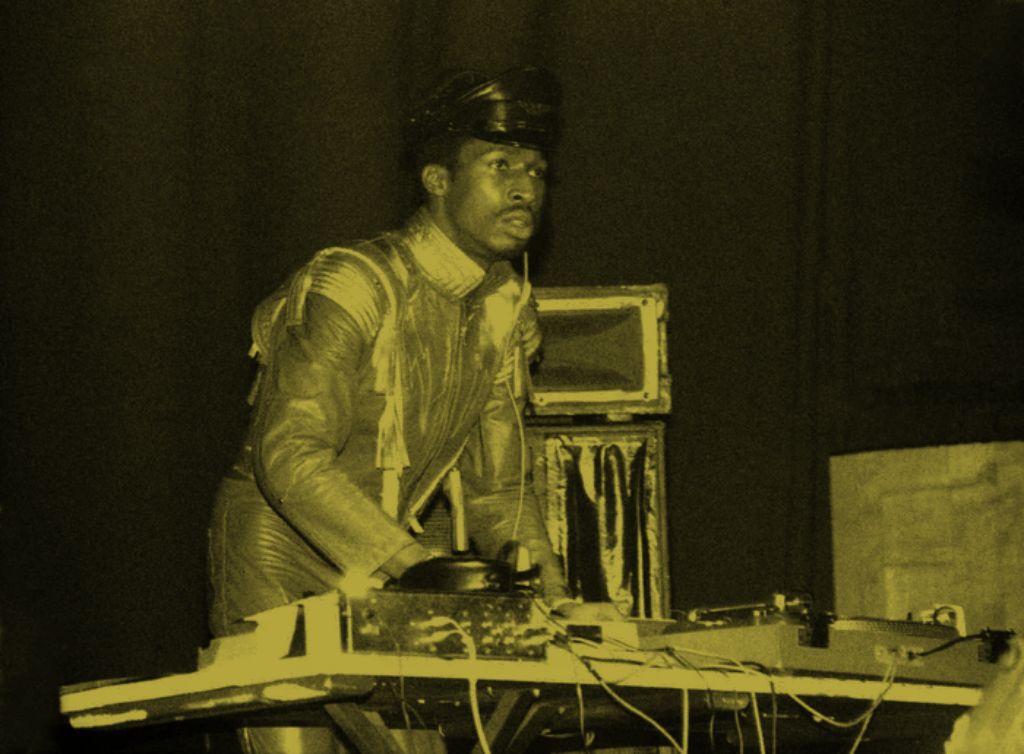
Grandmaster Flash
Bronx DJ Joseph Saddler - aka Grandmaster Flash had taken the Hip-Hop DJ techniques of quick-cutting of breaks using two turntables and a mixer to levels of sophistication that made his name throughout New York. Yet even Saddler himself was skeptical of releasing a commercial vinyl edition of his live performance techniques.
“
I wouldn’t even know how to ask a record label, ‘Let me make a record with records”
Grandmaster Flash
Robinson however was convinced of the appeal to the wider world outside of Bronx street culture and it was another revolutionary moment for the Sugarhill label becoming not just a moderate commercial success but becoming the blueprint for a series of ‘cut-up’ mixes over the coming decade. A couple of days in the studio and a after a dozen live takes to get it perfected, Adventures On The Wheels Of Steel confused and inspired listeners in equal measure.
“
The only country that understood that record was the UK”
Grandmaster Flash
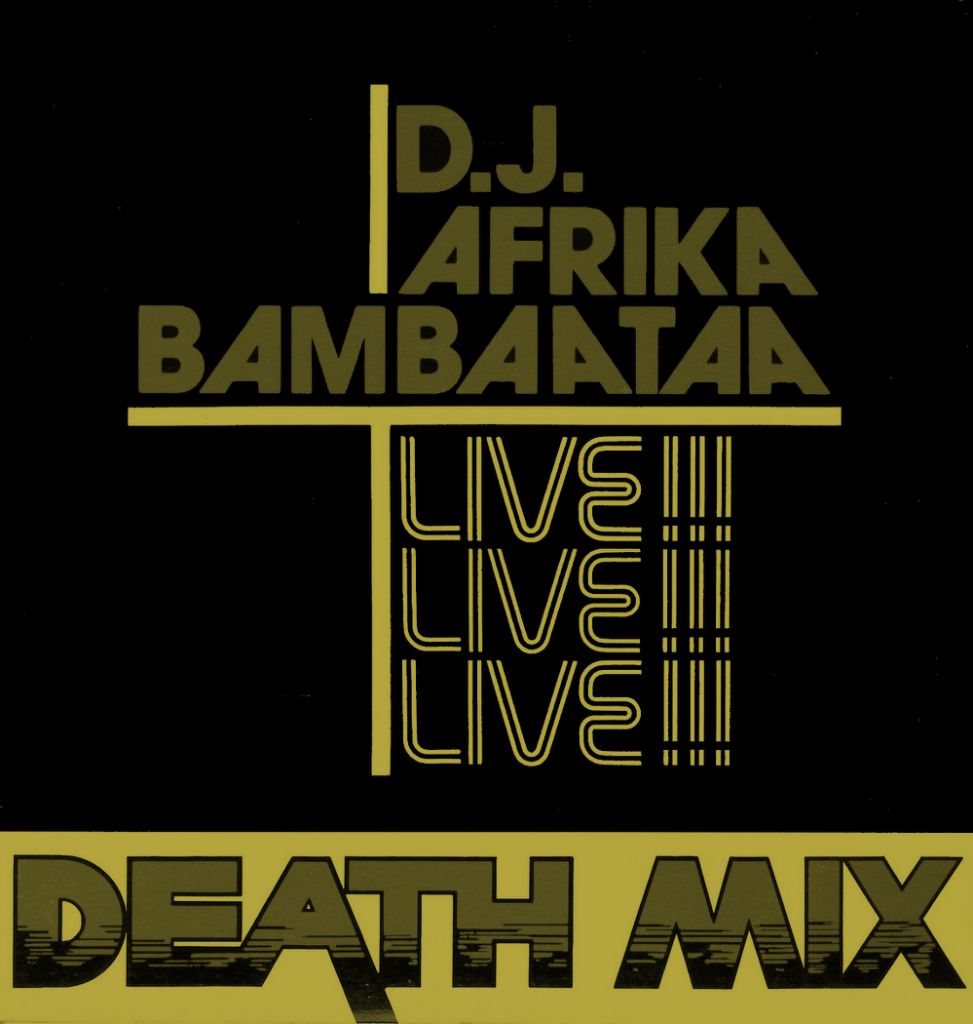
Cassette recordings of Bronx block parties had been circulating throughout the late seventies. One such recording was selected by New York label owner Paul Winley featuring a 1979 live performance by DJ’s Jazzy Jay and Afrika Bambaataa, Of poor sonic quality, Bambaataa in particular was not enamoured of its being commercial released on vinyl.
“
It was jive….like, suppose she came to my party and made a tape and she made a copy for you and you made a copy for me and I took the tape and gave it to him and he put it on record….It was really a bootleg type of mess”
Afrika Bambaataa
Although 4 years separated the release and its original recording and despite its low fidelity, Death Mix has become an important marker in Hip-Hop history for the digging culture typical of Bambaataa’s eclectic taste. Whilst Adventures On The Wheels of Steel was all about technique - Death Mix was about the selection.
By including well-known hits by Chic, Blondie and Queen - Adventures On The Wheels Of Steel was commercially self-validating on the merits of ‘making a record from other records’. This paved the way for more turntable experiments being commercially viable and the bridge between underground hip hop and wider pop culture arrived via punk music impresario Malcolm McLaren.
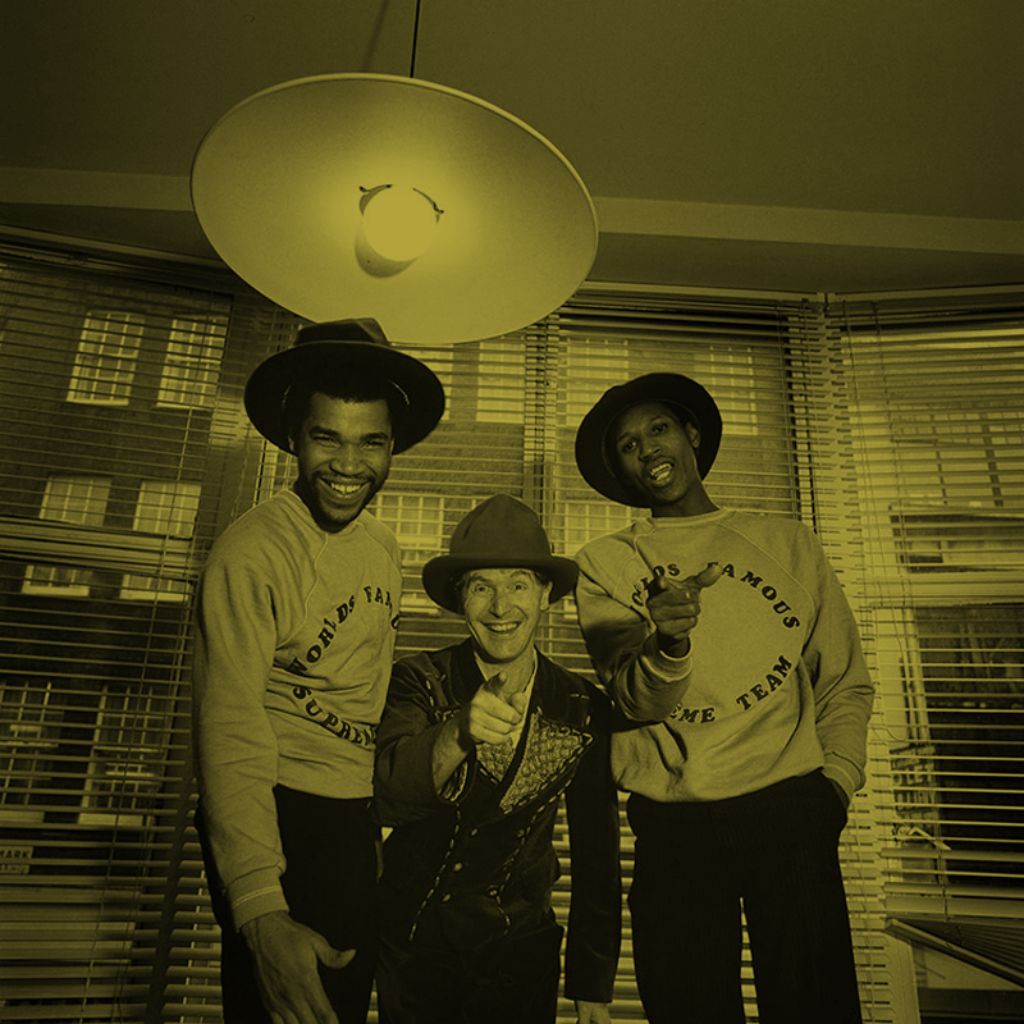
Malcolm McLaren & The World Famous Supreme Team
McLaren teamed up with New York DJ’s The World Famous Supreme Team in 1982. The team were actually a radio show duo Sedivine the Mastermind (Larry Price) and Just Allah the Superstar (Ronald Larkins Jr.). Broadcasting from a small a Newark station WHBI-FM 105.9, the duo’s infectious call-in style approach and adoption of Hip-Hop DJ vinyl skills such as scratching the records back and forth - Buffalo Gals introduced ‘turntablism to many listeners outside New York due to its major label backing from Island records.
McLaren understood that turntablism was not merely a novelty but a new avant-garde art form. The record fused hip hop DJ techniques with downtown art culture, country references and electro rhythms. It helped internationalise scratching, particularly in the UK and Europe, where many future electronic musicians first encountered hip hop through McLaren’s records.
Following on from Buffalo Gals independent electro-funk label released tracks like “Two, Three, Break” by The B Boys and “Scratch Dance” by Chris ‘The Glove’ Taylor pushed scratching into increasingly rhythmic and percussive territory. The turntable and scratching in particular was maturing into a true instrument.
The 1983 Tommy Boy label release “Play That Beat Mr. DJ” by G.L.O.B.E. & Whiz Kid was not just another high quality electro jam - it inspired an idea for a competition that took cut-up skills to increasingly sophisticated compositional levels. The idea was to open up the remixing of the hit electro single to a wider audience of entrants.
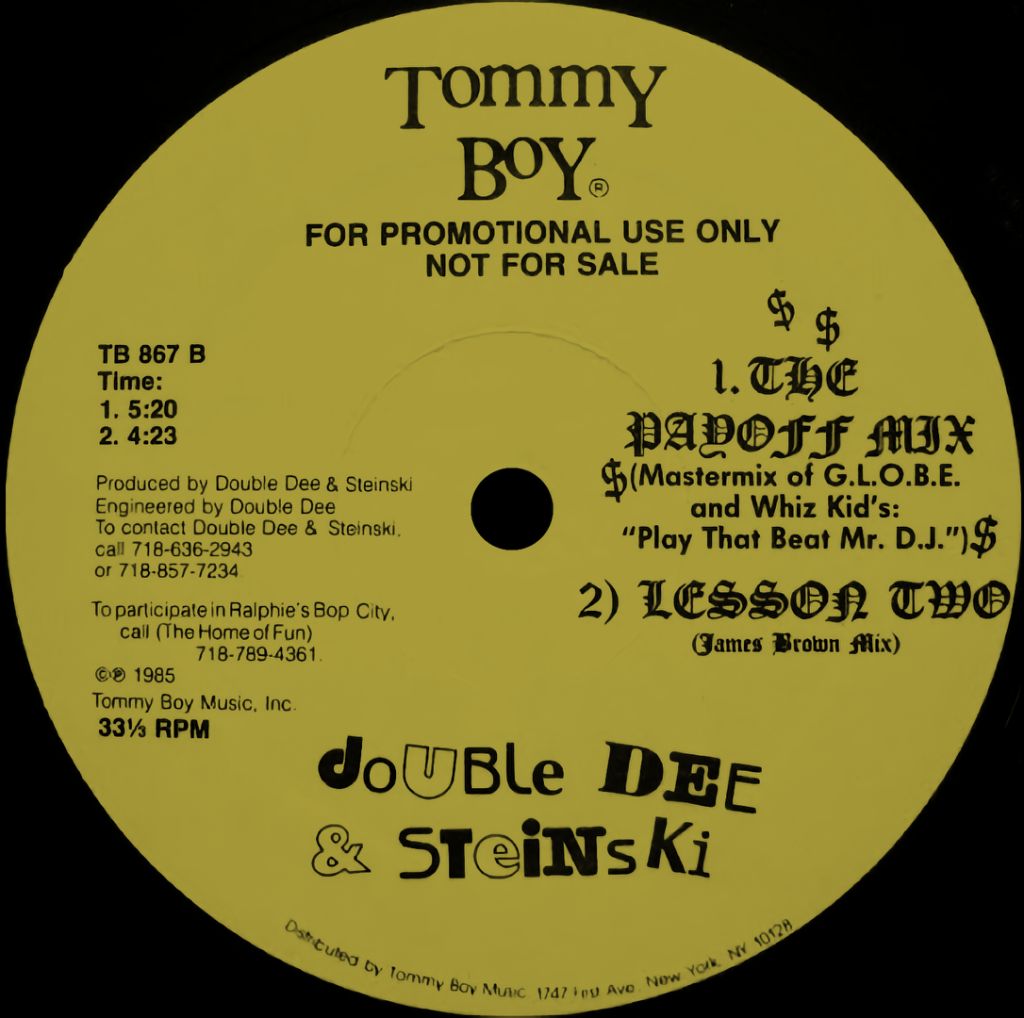
Double Dee & Steinski were Hip-Hop enthusiasts who entered the competition with a collage of snippets ranging from movie dialogue to Motown anthems and disco classics. A jury of Bambaataa and DJ/Producer’s John Jellybean Benitez and Shep Pettibone awarded their diverse and daring mix “Lesson One - The Payoff Mix” first place.
Lesson One was legal minefield due to copyright issues and its commercial release always faced difficulties. It was self-released in very limited quantity by Double Dee & Steinski themselves in 1984 with a follow-up mix of James Brown hits getting the collage treatment. Only a few hundred were circulated due to the risk of copyright action.
“
it was the first record that we pressed up on our own. We put our own phone numbers on it 'lets see who calls'. And we really didn't get that many calls”
Double Dee
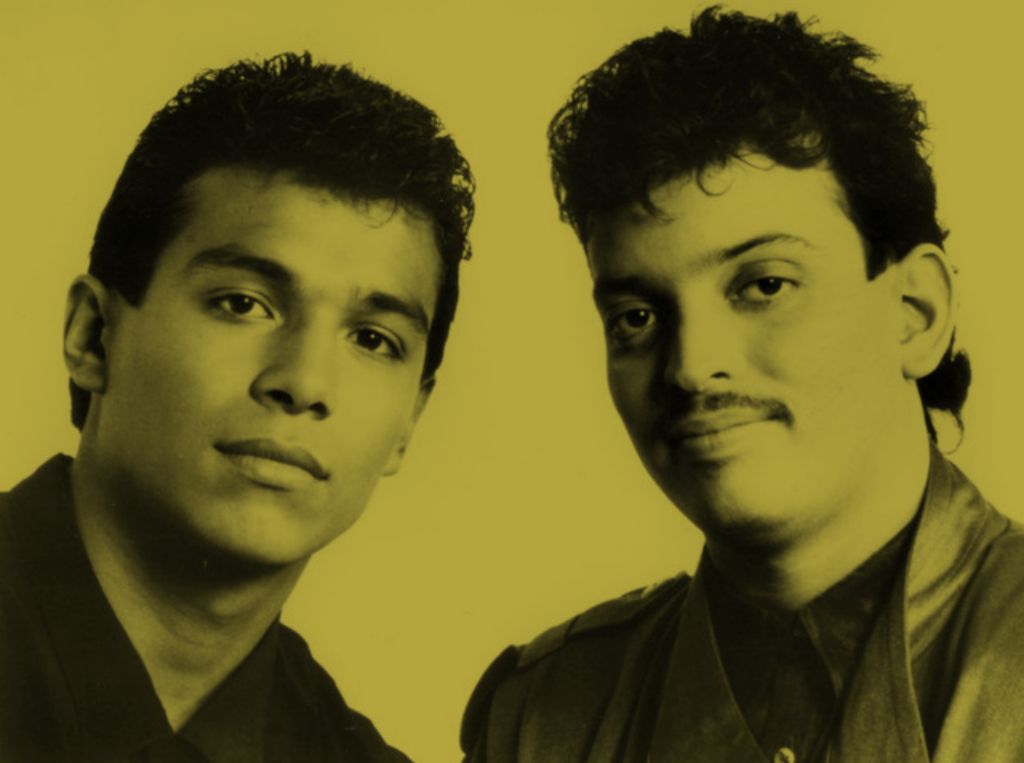
Latin Rascals
Meanwhile, the art of editing itself was reaching new sophistication through remix crews such as Latin Rascals. “Big Apple Production Vol II: Genius At Work” on Brazilian-New Yorker's J&T Records, is less about scratching and more about razor-blade tape editing, rhythmic reconstruction and studio wizardry. Before digital samplers and DAWs, edits were physically assembled on magnetic tape, making these productions astonishing feats of patience and precision. The Latin Rascals helped invent the grammar of modern remixing: stutter edits, loop manipulations and hyperactive rearrangements that would later dominate dance music.
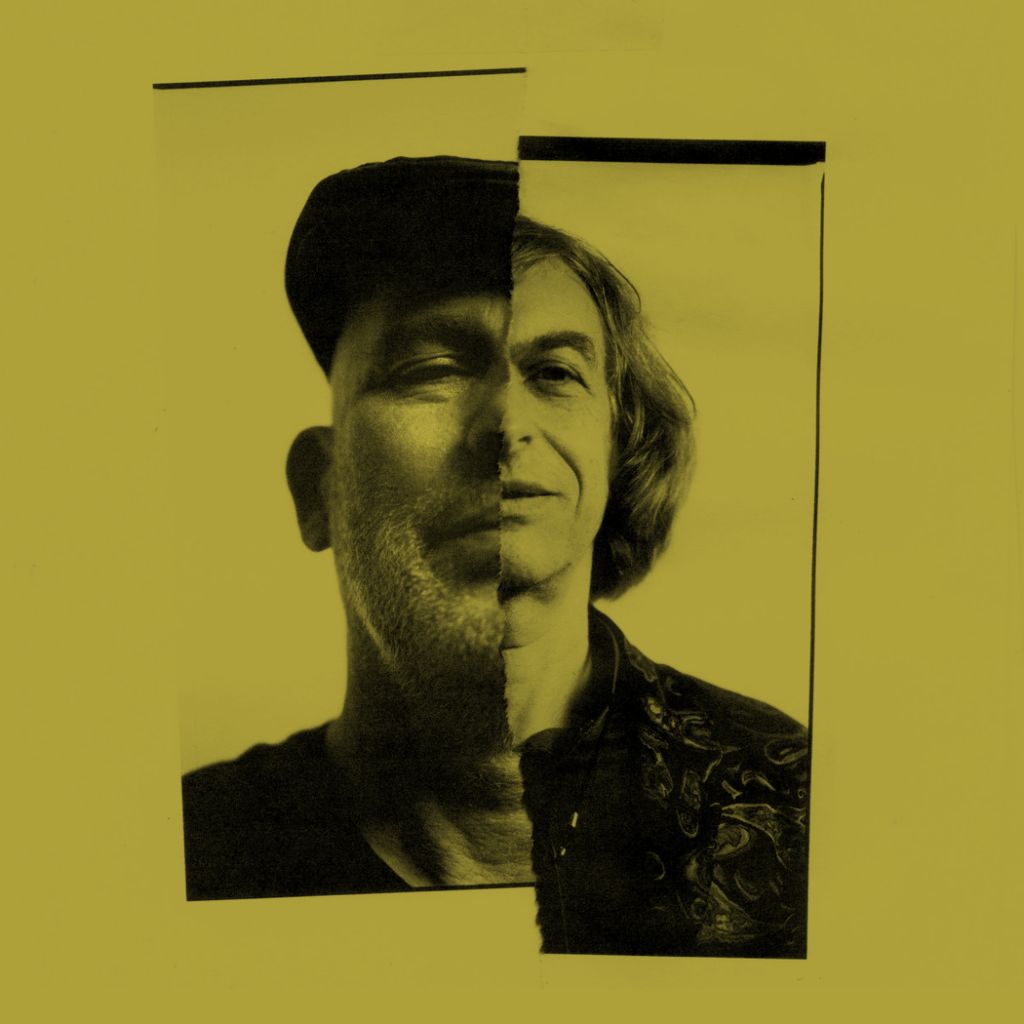
Coldcut
By the late 1980s, these ideas had spread internationally and merged with emerging electronic dance music. Coldcut’s “Beats & Pieces” translated hip hop cut-up logic into the UK’s underground dance scene. Coldcut combined sampling technology with irreverent collage aesthetics, directly inspired by Steinski and New York DJ culture. Their work became foundational for British electronic music, influencing acid house, big beat and sample-heavy experimental pop.
These releases chronicle the transformation of the DJ from someone who played records into someone who made records out of records. These tracks pioneered live scratching, tape editing, sampling, remix culture and audio collage long before digital technology made such processes easy. Every modern remix, mashup, DJ set and sample-based production owes something to these experiments. What began in Bronx parks and downtown clubs became one of the defining artistic revolutions of late twentieth-century music.