

“
...we released everything on tape by ourselves.”
Dirk Ivens - Absolute Body Control
The compact cassette was introduced in 1963 by the Philips company as a small, portable alternative to reel-to-reel tape. Originally intended primarily for dictation and office recording, the format used 1/8” magnetic tape housed inside a protective plastic shell, making it far more convenient and durable than open reels. Philips made the crucial decision to license the format freely rather than restrict it through expensive patents, allowing manufacturers around the world to adopt the cassette rapidly. By the late 1960s the compact cassette had evolved from a voice-recording medium into a viable music format.
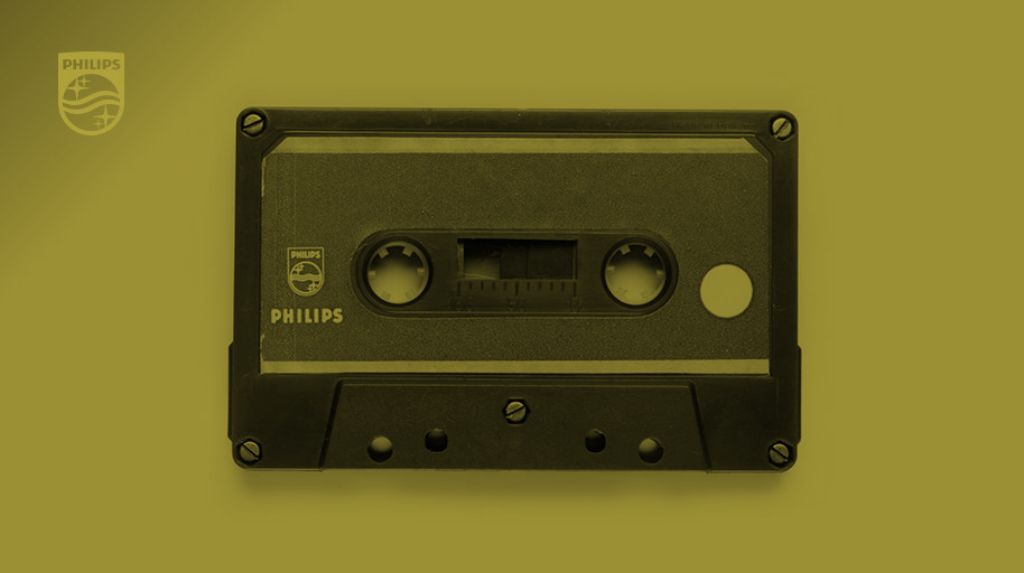
Philips first ever compact cassette - 1963
Whilst many home music enthusiasts purchased battery powered portable cassette recorders with external or built microphones to record radio shows or live recordings, record labels releasing albums on cassette format alongside vinyl became the norm by the mid-seventies as technological improvements related to noise level and playback durability dramatically increased quality and reliability.
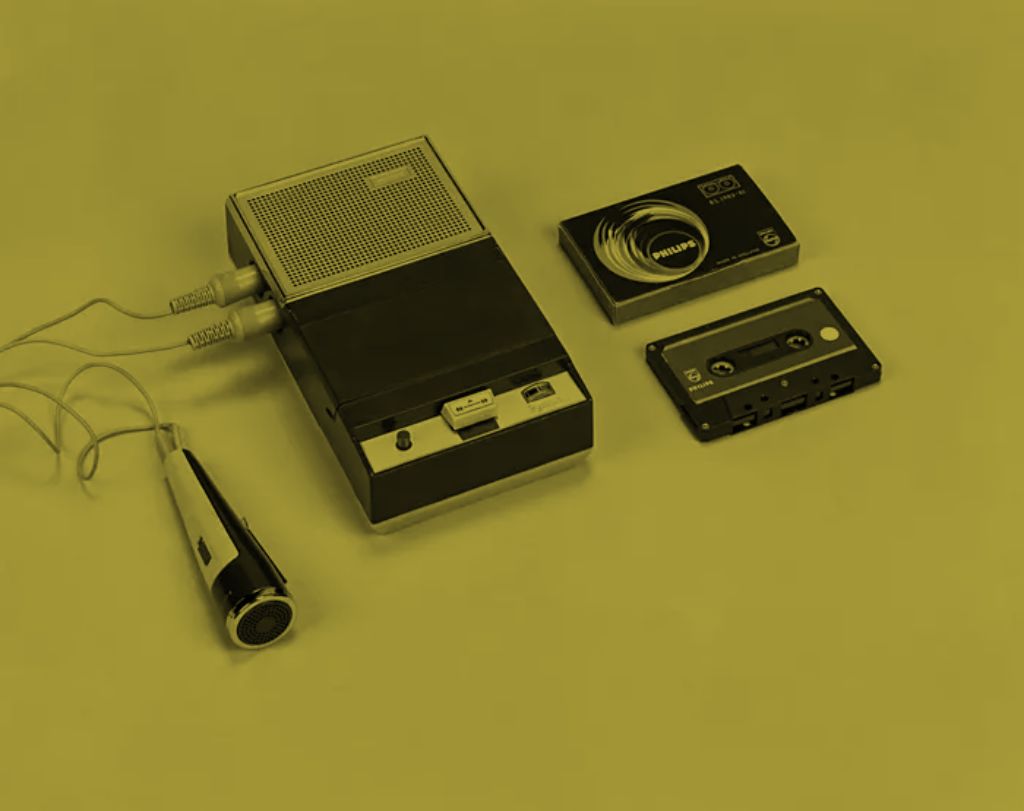
Philips portable cassette recorder with microphone.
Japanese tape manufacturers played a major role in improving cassette fidelity during the 1970s. TDK, Maxell and Memorex competed aggressively to produce higher quality tape formulations with lower noise and greater frequency response. Early ferric oxide tapes sounded dull and hissy compared to vinyl or reel-to-reel, but advances in tape chemistry dramatically improved performance.
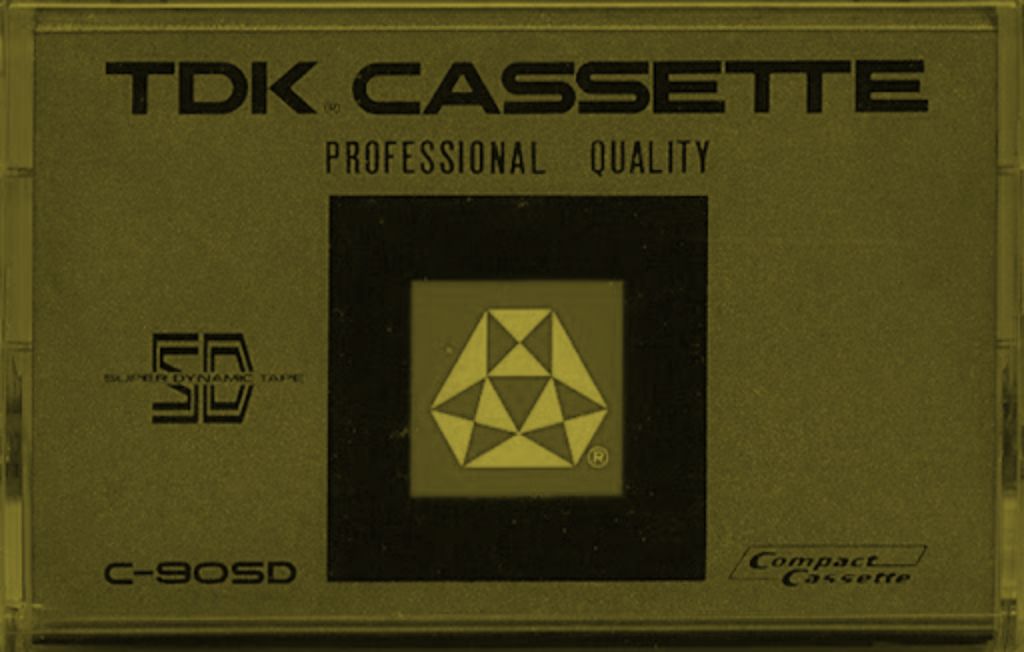
TDK Cassette late 1960's.
A major breakthrough came with Dolby noise reduction. Dolby Laboratories introduced Dolby B in the late 1960s, reducing tape hiss by boosting and then attenuating high frequencies during recording and playback. Later systems such as Dolby C and Dolby S offered even cleaner sound. Combined with better cassette decks featuring three-head monitoring, improved motors, and precision transports, the cassette became a serious hi-fi format by the late 1970s.
Tape formulations also evolved. Standard ferric tape was joined by chrome (CrO₂) tape, which offered brighter high frequencies and lower noise, followed by ferrochrome hybrids and eventually metal tape in the late 1970s. Metal cassettes provided the widest dynamic range and best durability, becoming the premium format for audiophiles and professional recording.
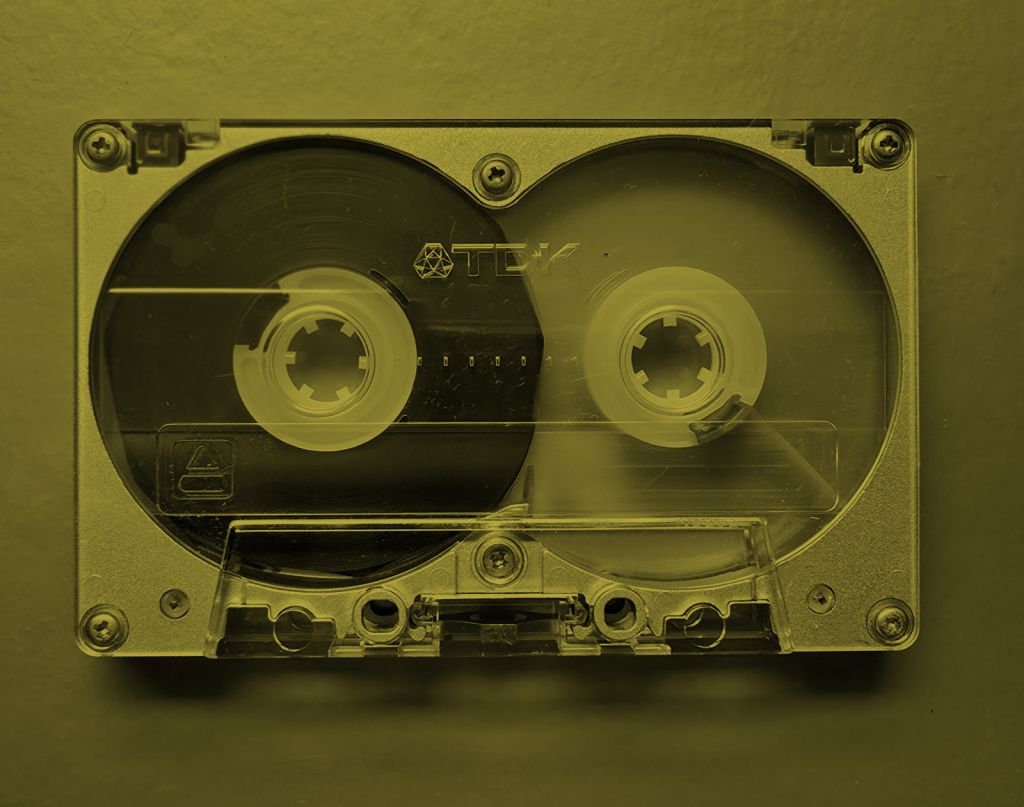
TDK, metal cassette tape.
Durability still remained an issue however with many a music enthusiast left heartbroken by the dreaded tape spooling and getting chewed up by the playback head. Many an hour was spent straightening out the fragile tape and using a pen or finger to re-spool the tape without too much stretching or crinkling to ruin audio playback.
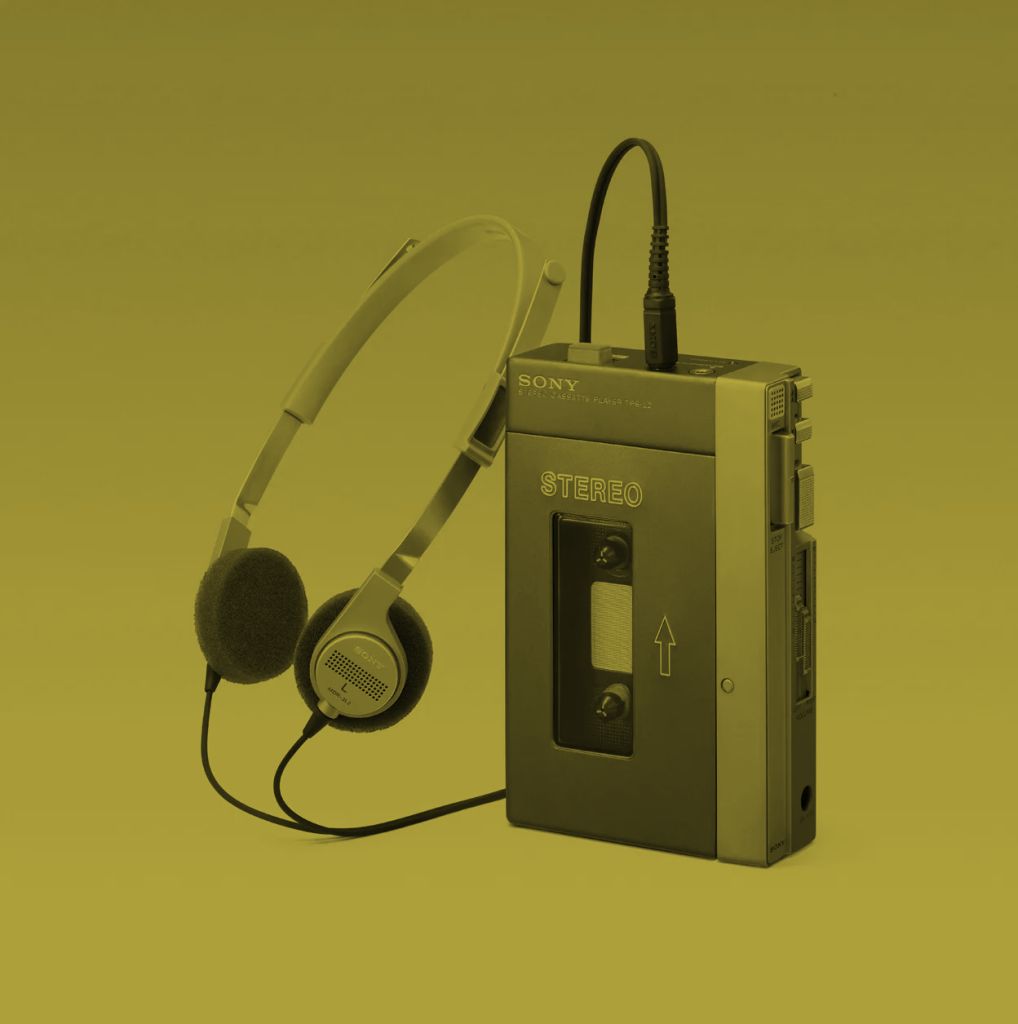
Sony Walkman 1979
By the 1980s the cassette dominated commercial music sales globally. Its portability, low manufacturing cost, and recordability transformed listening habits. Home taping, mixtapes, car stereos, and portable players such as the Sony Walkman turned the compact cassette into one of the defining music technologies of the twentieth century.
In fact, record labels were so threatened by home recordists taping popular radio stations or borrowed vinyl releases, warnings that home taping was effectively breaking copyright law and illegal were issued on vinyl releases with the words ‘home taping is killing music’. Studies proved the opposite however, with cassettes often being a gateway for younger people in particular to eventually purchase a vinyl copy of their favourite taped songs.
By the late seventies and early eighties, musicians no longer needed expensive studios or major labels to release music. Artists could record at home on four-track machines, duplicate tapes themselves, design handmade covers, and sell cassettes directly through mail-order networks, fanzines, and independent record shops.
“
Sales were small… maybe 100 or so.”
Ian Boddy
The compact cassette became revolutionary because recordings could be copied cheaply and easily without access to professional pressing plants. Unlike vinyl manufacturing, which required expensive mastering, metal plating, and industrial pressing facilities, cassette production could happen almost anywhere: bedrooms, garages, rehearsal rooms, art studios, or tiny independent labels operating on almost no budget.
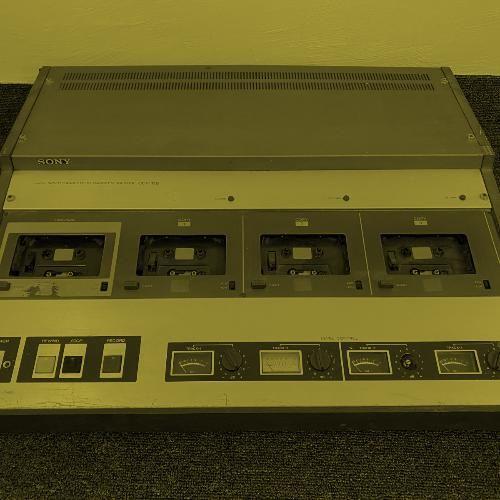
The earliest independent cassette labels of the late 1970s often duplicated tapes manually using domestic hi-fi equipment. A common setup involved two cassette decks connected together: one playback machine containing the master tape and one recording deck copying it in real time. This was slow — a sixty-minute cassette required a full hour to duplicate — but it allowed complete independence from the traditional music industry. Small labels could produce editions of twenty, fifty, or one hundred copies themselves.
The development of the dual cassette recorder in the late 1970s and early 1980s transformed this process. Manufacturers such as Sharp Corporation, Panasonic, Sony, and Aiwa began producing “double cassette” or “twin deck” machines designed specifically for dubbing tapes. These units contained two cassette transports inside a single device: one deck for playback and the other for recording. With the press of a button, users could duplicate entire albums at home.

Sharp dual-cassette boombox.
An added creative usage of the double cassette deck was the ability to use the pause button to create custom edits without the need of traditional reel-to-reel tape, a razor blade and splicing plate. These ‘pause-button mixes’ became popular and a budget conscious was to creative mixes for bedroom DJ’s for whom two vinyl decks and a mixer was prohibitively expensive.
Many double cassette decks also introduced high-speed dubbing. Instead of recording in real time, the tape could be copied at double speed or faster, dramatically reducing duplication time. Audio fidelity suffered slightly during high-speed copying, but for underground labels the trade-off was worthwhile. DIY labels valued affordability and speed over pristine sound quality. The slight degradation, tape hiss, and saturation often became part of the cassette underground aesthetic.
As cassette culture expanded internationally in the early 1980s, more specialised tape duplication systems emerged. Small labels that outgrew domestic dubbing equipment sometimes purchased semi-professional cassette duplicators from companies such as Telex Communications or Tapematic. These machines used a master cassette loop and multiple slave decks, allowing several copies to be produced simultaneously. Some systems duplicated at very high speeds — 8x, 16x, or even 32x normal playback speed — making small-scale commercial production viable.
Even so, many underground labels deliberately retained homemade production methods. Hand duplication reinforced the anti-corporate ethos of cassette culture. Each tape often felt handmade: photocopied inserts, rubber-stamped labels, handwritten catalog numbers, or hand-painted sleeves were common. Because duplication was inexpensive, artists could release highly experimental material without worrying about commercial sales. A failed cassette release might only cost a few dozen blank tapes.
Blank cassette manufacturers became essential to this ecosystem. TDK, Maxell, Memorex and BASF supplied the raw materials for global tape culture. Independent labels frequently bought bulk packs of C60 or C90 tapes and recorded directly onto them at home. Some labels preferred chrome tapes for better fidelity, while cheaper ferric tapes were common for noisy industrial or experimental music where sonic roughness was considered aesthetically acceptable.
“
Played live and recorded directly on a cassette player... they were cheap to produce and seemed quite neat.”
John Whybrew, Portion Control
The rise of home dubbing technology also transformed listening habits outside the underground scene. The dual cassette deck allowed ordinary listeners to copy albums, create mixtapes, and share music socially. The same technology that alarmed major labels empowered an enormous independent music network operating entirely outside commercial structures.
For underground artists, the cassette duplicator was equivalent to a miniature printing press. It removed gatekeepers from music distribution. Artists no longer needed pressing plants, distributors, or major label investment to circulate recordings internationally. A musician with a cheap synthesizer, a twin cassette deck, and access to the postal service could build a global audience through tape trading networks and mail-order catalogues.