

“
To do honest music writing, you have to go to your roots, and my roots are Indian. Indian music is rich in analysis.”
Trilok Gurtu
The musical dialogue between India and the West stretches back centuries, but it was during the 1950s and 1960s that Indian classical music truly transformed Western popular and experimental music.
What began as a revelatory experience for a handful of jazz musicians soon spread into rock, psychedelic music, spiritual jazz, electronica and eventually disco and even electro, demonstrating how Indian musical ideas have continued to evolve in new contexts for more than sixty years.
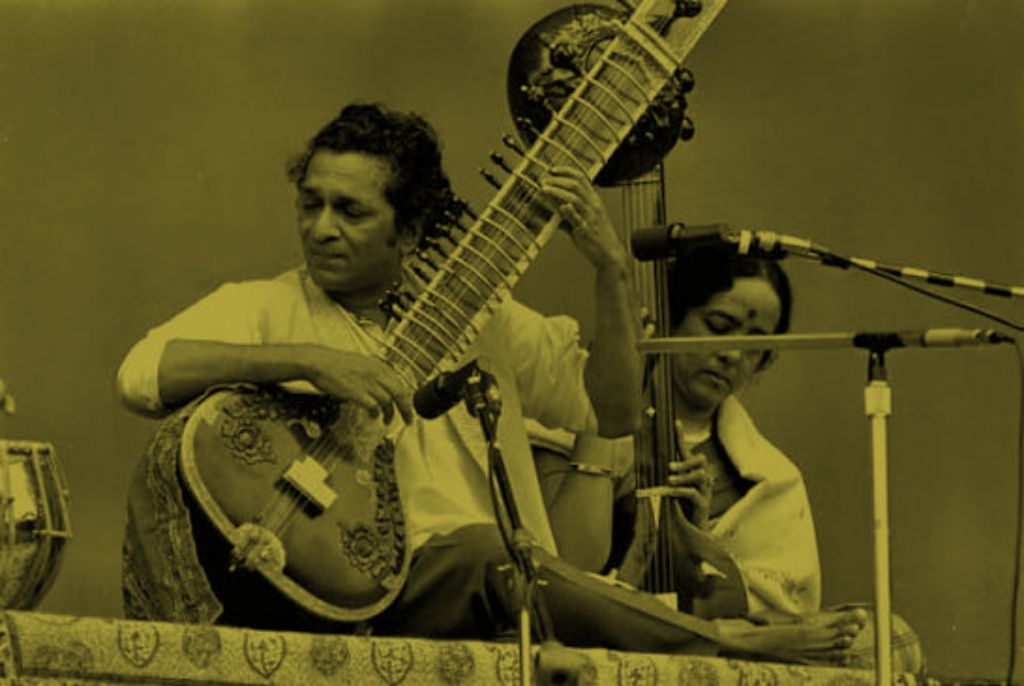
Ravi Shankar with Maya Kulkarni
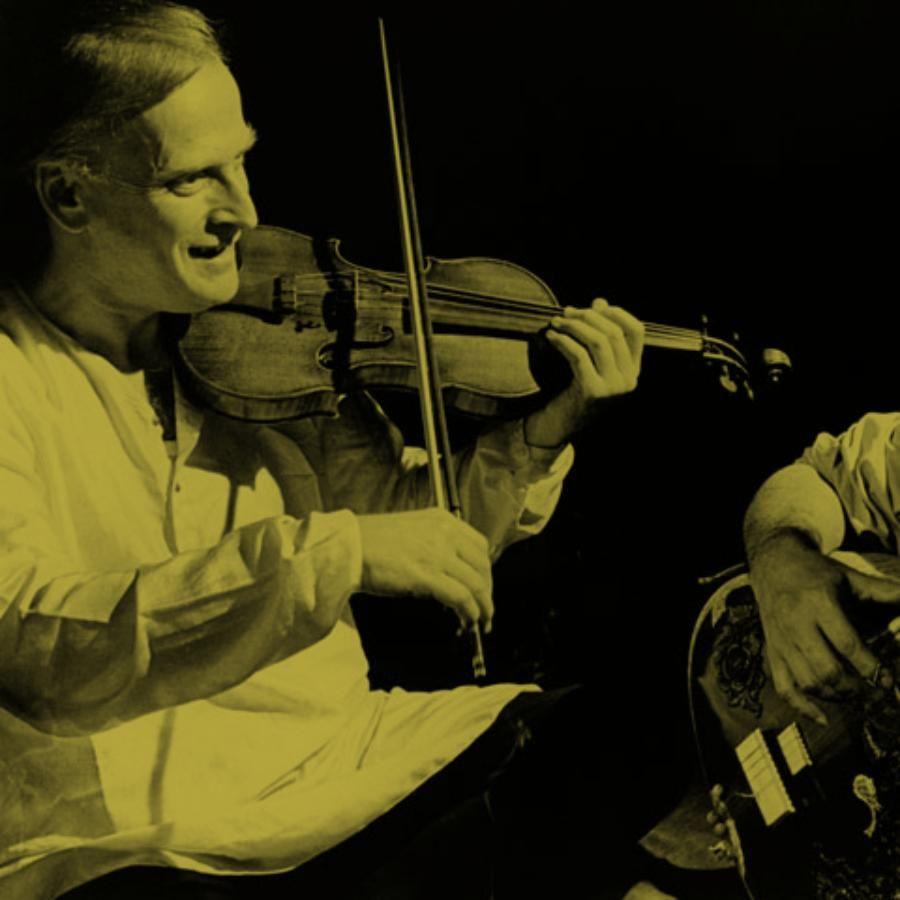
The story begins with sitar virtuoso Ravi Shankar, unquestionably the most influential ambassador for Indian classical music in the West. Although violinist Yehudi Menuhin had already become fascinated with Indian music, helping introduce Shankar to European audiences during the 1950s, Shankar's first significant tours of Europe and North America from the mid-1950s onwards, followed by well promoted commercial album releases on labels such as Columbia and World Pacific proved the key turning point.
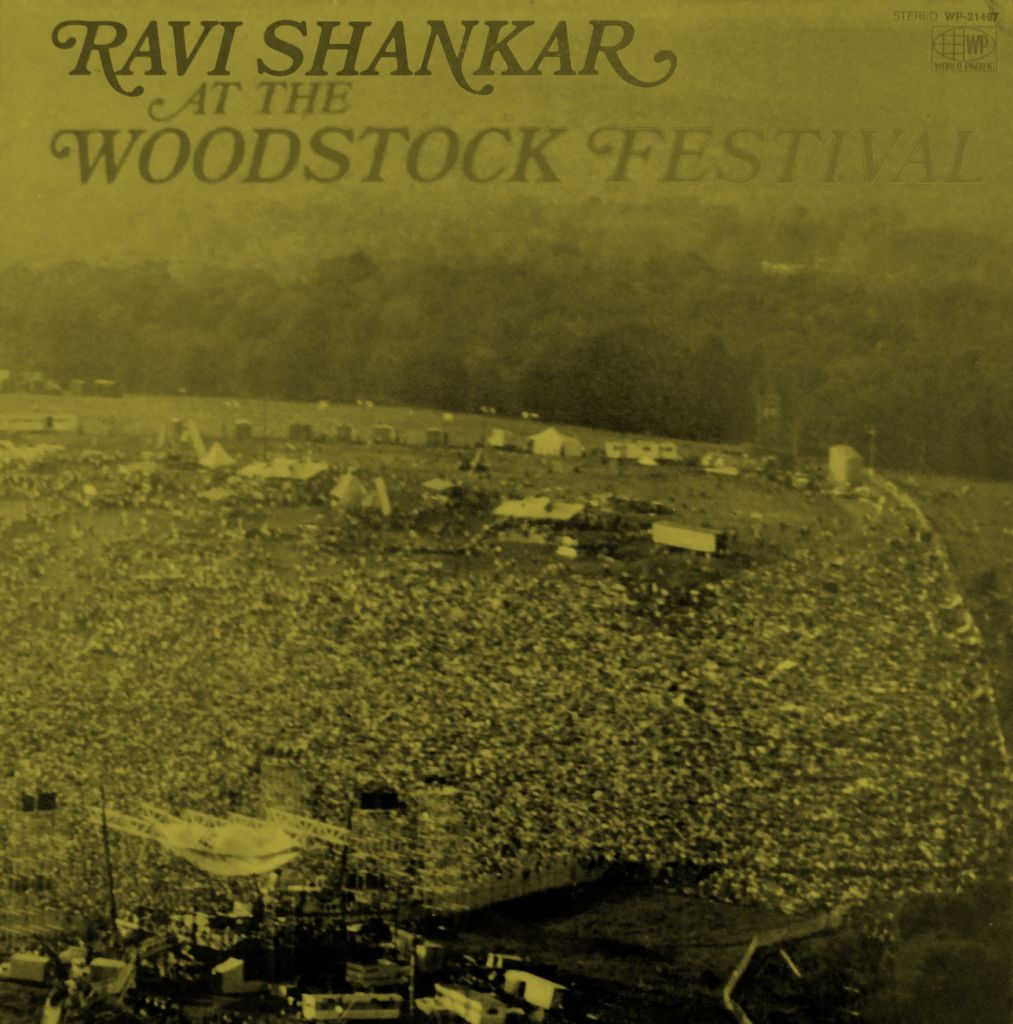
Rather than presenting Indian music as an exotic curiosity, Shankar insisted audiences experience it as a sophisticated classical tradition equal to that of Europe. His concerts introduced Western listeners to the intricate rhythmic cycles—or talas—and the improvised melodic structures known as ragas, opening ears to an entirely different conception of harmony, rhythm and musical development.
Jazz musicians were among the first to recognise the possibilities. Unlike Western classical music, jazz already embraced improvisation, advanced time signatures, uncommon scales and modes making Indian music feel a natural direction for exploration. Two of the earliest pioneers were baritone saxophonist and composer John Mayer, who was himself born in Calcutta, and British jazz guitarist Joe Harriott.
Mayer & Harriot formed the Indo-Jazz Fusions group in the mid-1960s, creating one of the earliest genuine syntheses of Indian classical music and modern jazz. Rather than merely adding a sitar to a jazz rhythm section, their compositions carefully integrated Indian rhythmic structures with jazz harmony and improvisation. Their recordings remain milestones in cross-cultural composition and demonstrated that Indian music and jazz were perfectly compatible traditions.
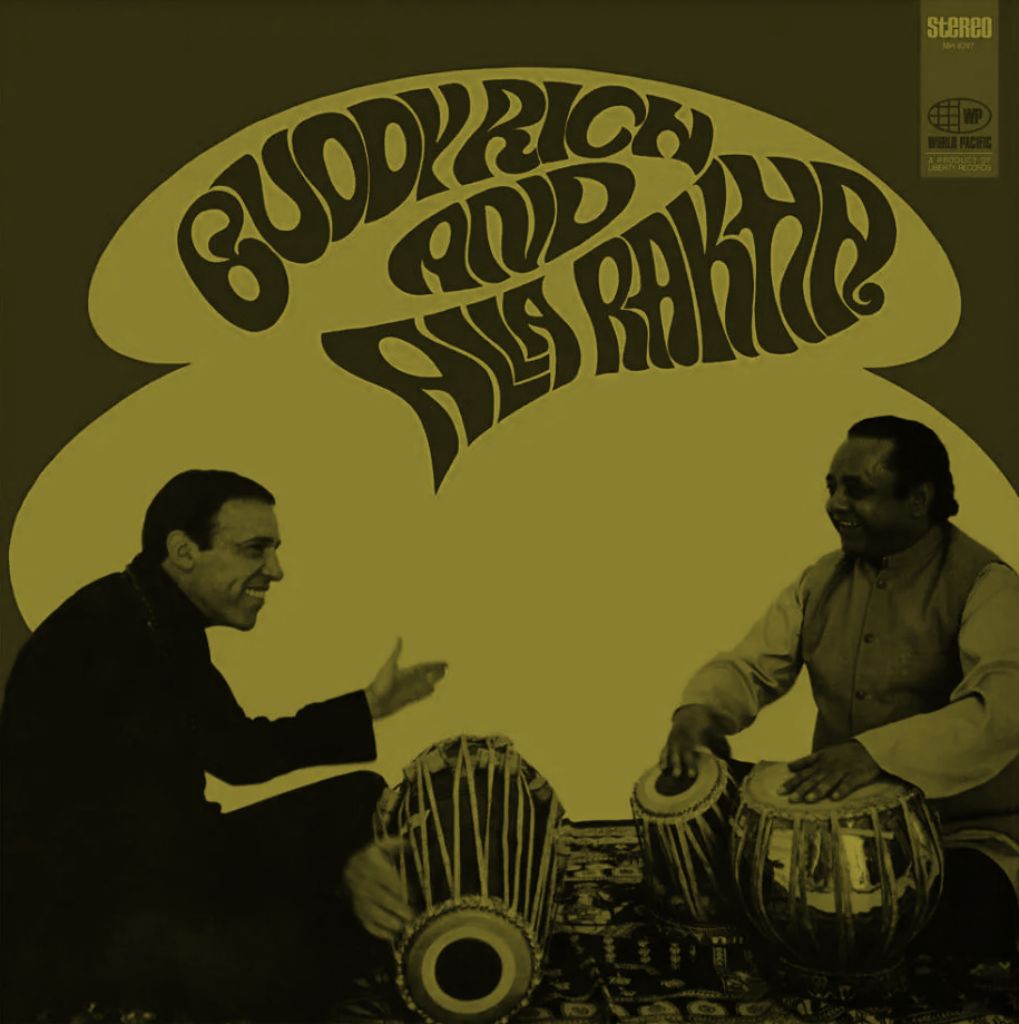
Buddy Rich with Alla Rakha
.
The wider public, however, discovered Indian music through rock. George Harrison first encountered the sitar while filming Help! in 1965 and his growing friendship with Ravi Shankar inspired a lifelong study of Indian philosophy and music. Harrison became Shankar's student, learning not only the instrument itself but also the spiritual ideas underpinning Indian classical performance, as evidenced by The Beatles classic “Dear Prudence” - an ode to Mia Farrow’s sister Prudence Farrow, in an attempt to coax her out of intense study at Maharishi Mahesh Yogi's ashram in Rishikesh, India.
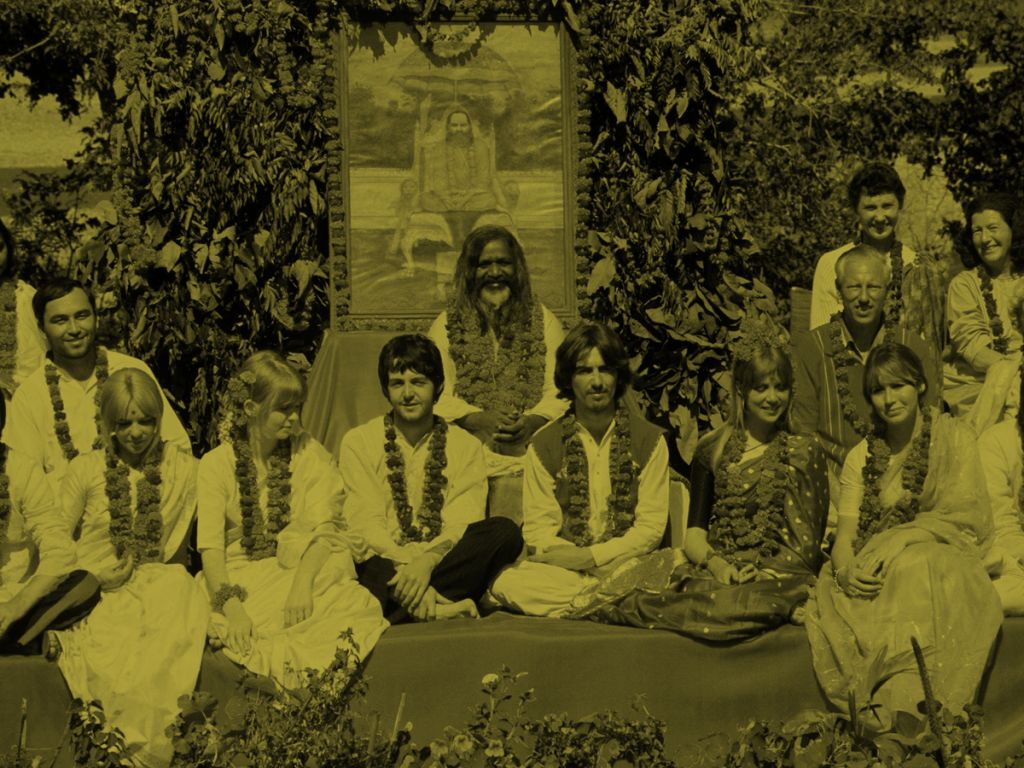
The Beatles with Maharishi Yogi
Harrison’s education reached its creative peak with "Within You Without You," recorded for Sgt. Pepper's Lonely Hearts Club Band in 1967. Remarkably, none of the other Beatles perform on the recording as can be heard on the recently released Indian section isolated from the original multitrack tape.
Harrison worked with London-based Indian classical musicians playing sitar, dilruba, tabla, tambura and swarmandal, alongside a Western string ensemble arranged by producer George Martin. Rather than forcing Indian and Western traditions together, the arrangement allows both to coexist naturally, while Harrison's lyrics explore illusion, ego and universal consciousness—ideas directly inspired by Hindu philosophy. The result remains one of the most successful fusions of Indian classical music and Western popular music ever recorded.
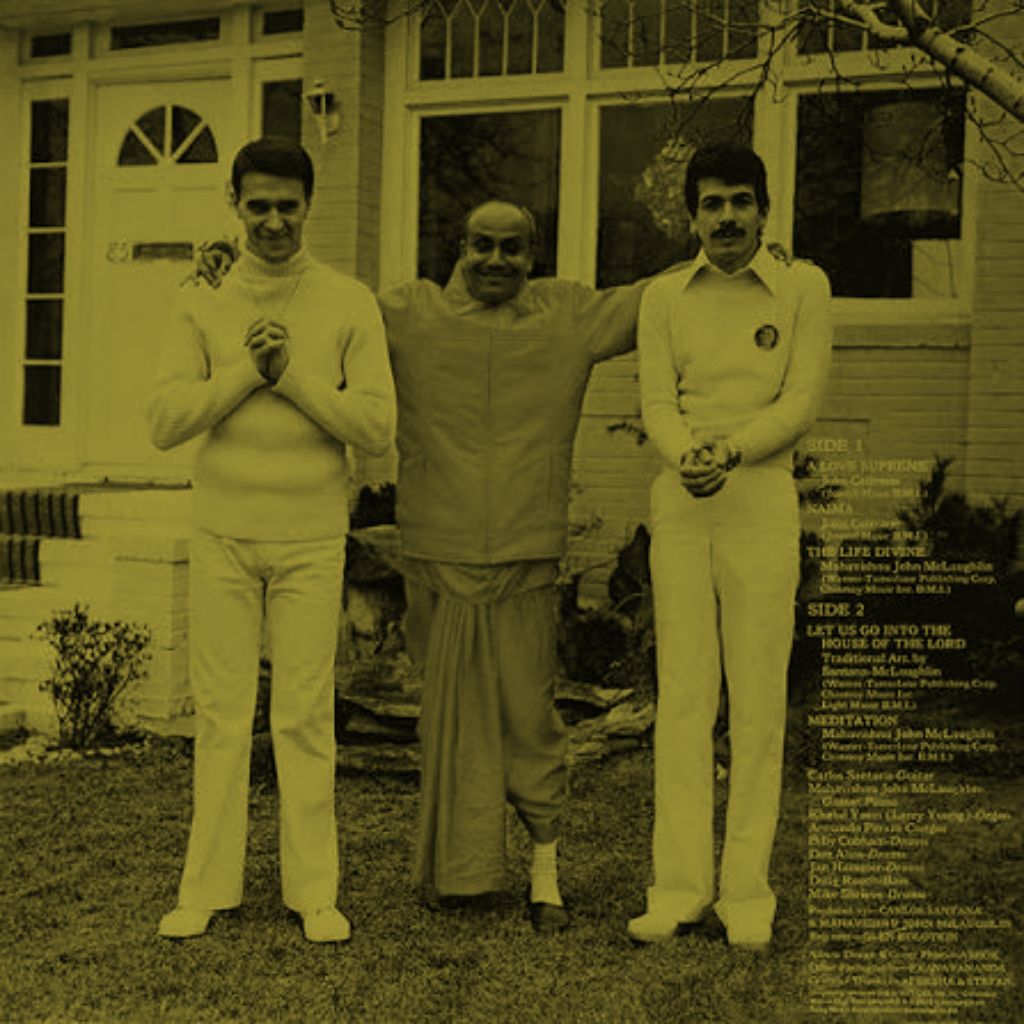
Mahavishnu John McLaughlin, Sri Chinmoy and Devadip Carlos Santana - early seventies.
By the early 1970s, Indian spirituality had become equally influential in jazz with guru's such as Sri Chinmoy becoming popular. Mahavishnu John McLaughlin, Devadip Carlos Santana, Narada Michael Walden were all disciples yet perhaps no jazz artist embraced spirituality more completely than Alice Coltrane. Following the death of her husband John Coltrane, Alice immersed herself in Vedantic philosophy, eventually becoming known as Swamini Turiyasangitananda. Her music increasingly combined her usual acoustic piano and harp with Indian devotional traditions.
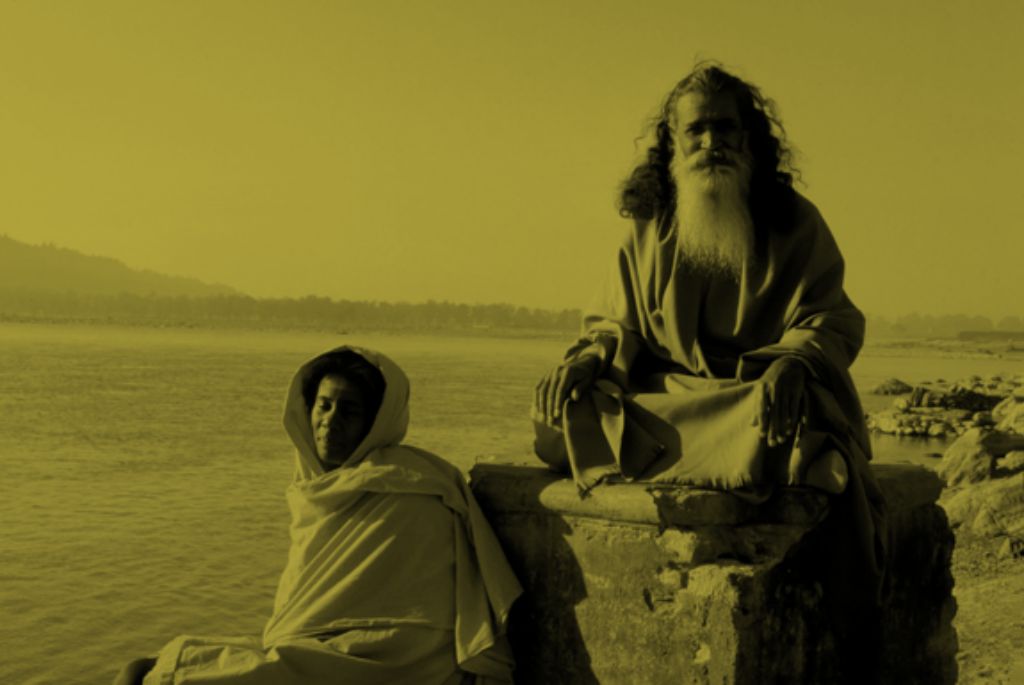
Alice Coltrane and Swami Satchidananda
Albums such as Journey in Satchidananda had already hinted at these influences, but her later recordings, particularly those made for her California ashram, moved fully into devotional music. What makes Alice Coltrane unique is her seamless blending of Indian spiritual themes with African-American gospel traditions. Rather than using traditional Indian singers, she often worked with Western vocalists performing devotional chants in Sanskrit alongside jazz musicians. These recordings created a musical bridge between Black American spiritual traditions and Hindu philosophy, producing an entirely new form of sacred music that continues to inspire contemporary jazz, ambient and electronic artists.
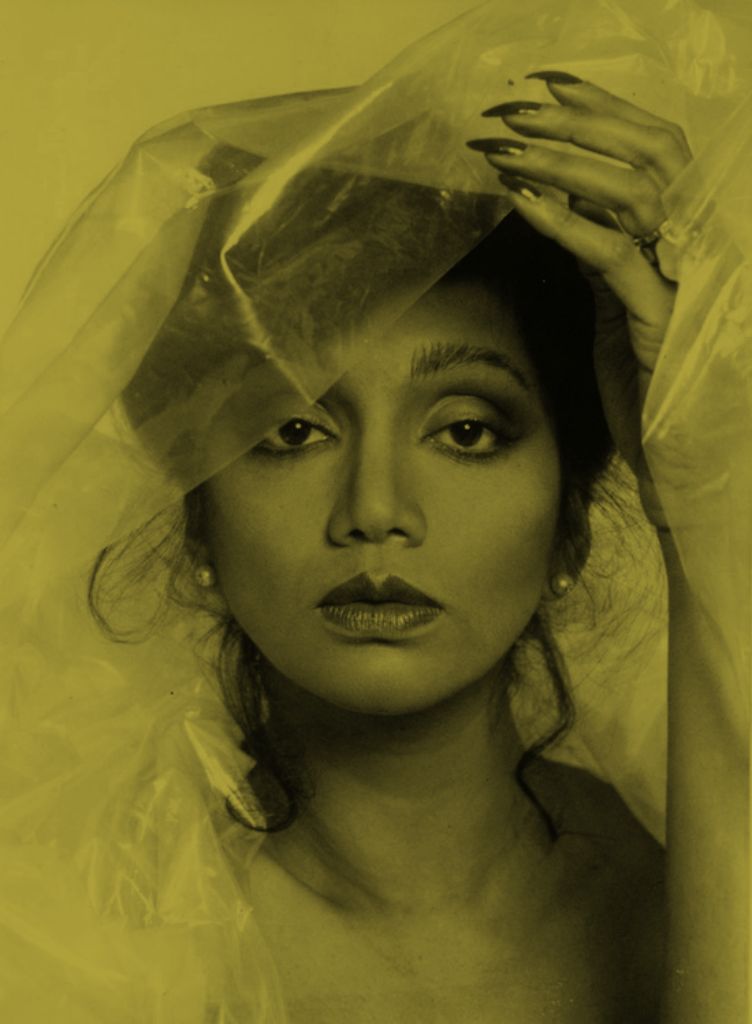
Asha Puthli
The influence of Indian music also extended into unexpected areas of popular music. One remarkable example is vocalist Asha Puthli. Born in Bombay, she originally trained in Indian classical music before moving to New York, where she became involved with the city's vibrant jazz scene. Her distinctive voice first gained international attention through collaborations with Ornette Coleman on his classic Science Fiction album before embarking on to a solo career.
Unlike many Indian artists working internationally, Puthli refused to be confined by expectations of "world music." Signing with CBS, she recorded albums that mixed jazz, soul, funk and electronic music while retaining subtle Indian vocal inflections. Right Down Here and Space Talk remain rare groove anthems to this day. During the late 1970s Puthli also became closely associated with Miami's legendary TK Records, one of disco's defining labels.
Another fascinating cultural exchange came from Bollywood itself. During the 1980s, Indian film music enthusiastically absorbed Western electronic music, reversing the direction of influence from West to East. Perhaps no composer represented this era more vividly than Bappi Lahiri, often dubbed the "Disco King" of Bollywood. His productions fused disco, funk and Indian film music into a uniquely exuberant hybrid that dominated Indian cinema throughout the decade.
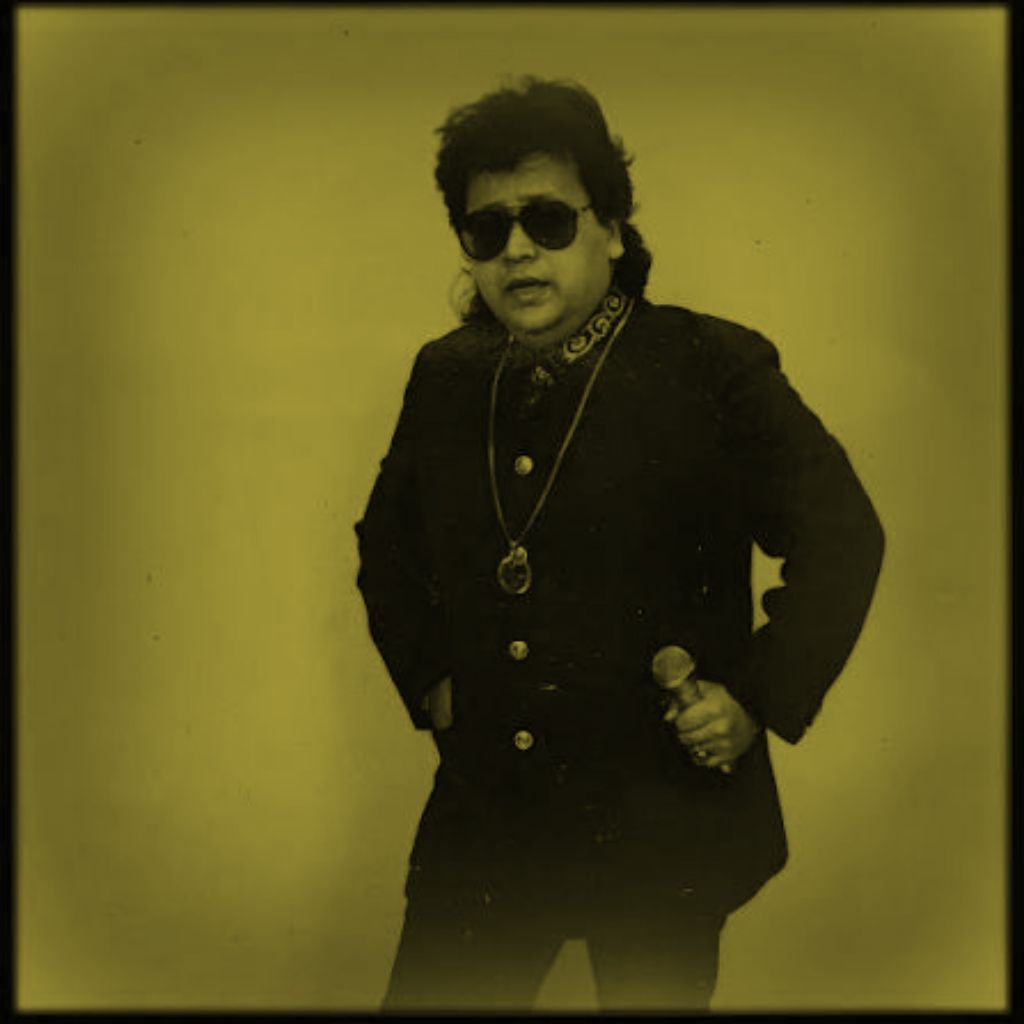
Bappi Lahiri
Among the most extraordinary examples of this cross-pollination is Lahiri's interpretation of Herbie Hancock's groundbreaking electronic hit "Rockit." Rather than simply reproducing the original, Lahiri reimagined it through the lens of Bollywood, adding Hindi lyrics, Indian melodic ideas and the exuberant orchestration typical of commercial Indian cinema. The result is both oddly familiar and completely transformed - a perfect example of cultural exchange flowing in both directions.
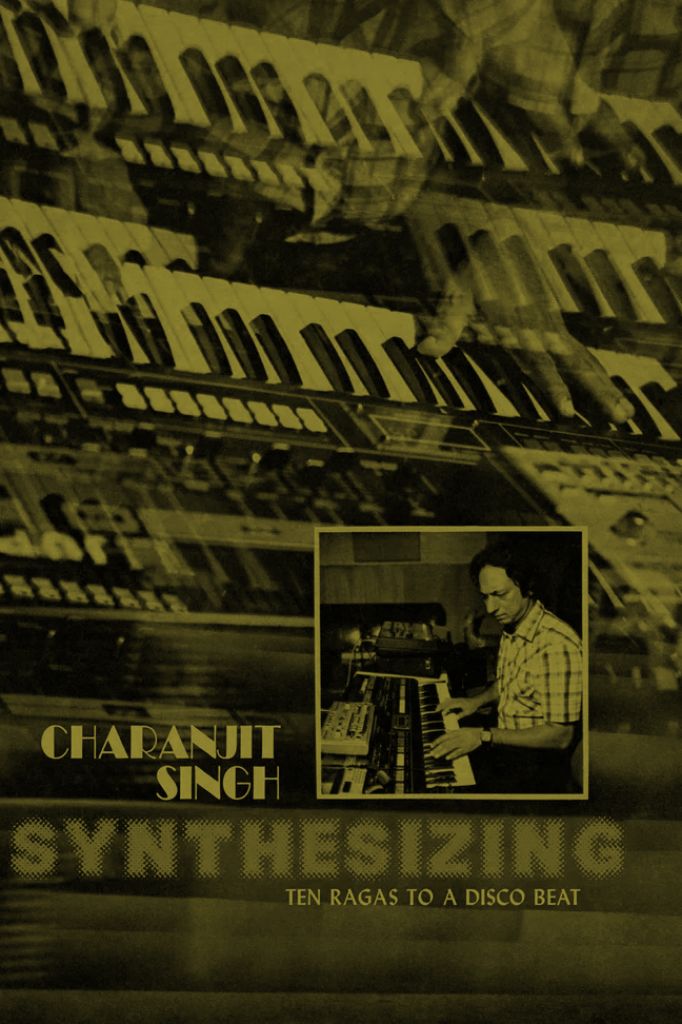
Perhaps the most infamous India meets Electronica example is Charanjit Singh's Ten Ragas To A Disco Beat. It's Roland TB303 plus TR808 drum machine rhythms making it remarkably prescient of Acid House invented in Chicago half a decade later.
“
There was lots of disco music in films back in 1982, so I thought why not do something different using disco music only. I got an idea to play all the Indian ragas and give the beat a disco beat – and turn off the tabla. And I did it. And it turned out good.”
Charanjit Singh
Indian influence has rarely been about imitation. Western musicians seldom mastered the complexities of raga performance in the traditional sense. Instead, they borrowed ideas and adapted them to entirely new musical settings. Sometimes the results were profound, as with Ravi Shankar, Alice Coltrane, Paul Horn and George Harrison. At other times they produced unexpected hybrids spanning disco, jazz fusion, electronic music and film soundtracks.
“
it was a process of discovery of my own heritage and my own identity. I think music allowed me to do that”
Nitin Sawney
“
A lot of my music is just about growing up in London. My Indian classical roots, my dance roots, that whole mod underground vibe, it's all part of me.”
Talvin Singh
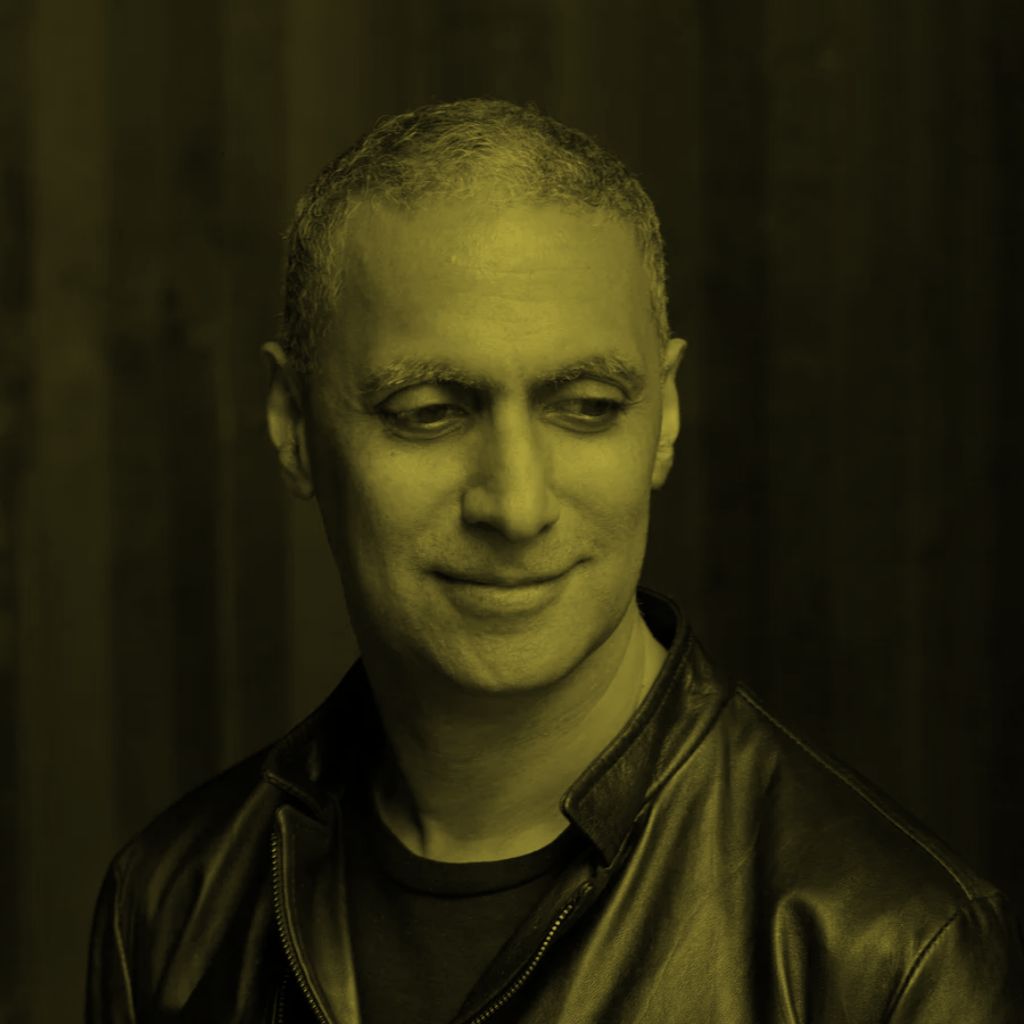
Nitin Sawney
One of the most fruitful scenes to emerge from the UK to merge classical Indian traditions with modern experimental techniques has been termed the ‘Asian Undergound’ scene - with British born artists with Indian heritage creating an astonishing array of contemporary releases. From Talvin Singh to Nitin Sawney, Punjabi MC and more - the Indian Influence continues to resonate across the globe.