

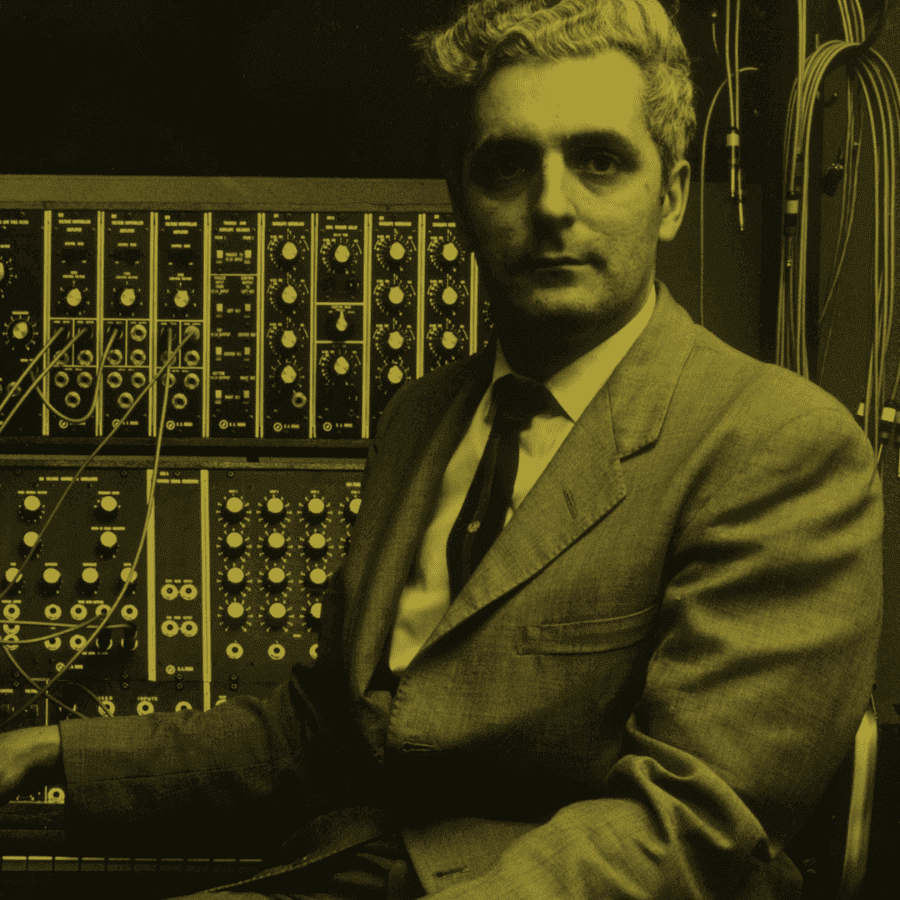
“
I was never worried that synthesizers would replace musicians. First of all, you have to be a musician in order to make music with a synthesizer.”
Bob Moog
The Moog Modular began life in 1964, when engineer Robert Moog introduced the world's first commercially available voltage-controlled modular synthesizer. Early systems were huge, expensive and custom-built, finding homes in universities, research studios and the hands of experimental composers. By 1967 however, the instrument had begun appearing on commercial records.
Then everything changed in 1968 with Wendy Carlos's Switched-On Bach. Recorded painstakingly, one monophonic part at a time on a custom Moog Modular system built in collaboration with Bob Moog, the album became an unexpected international hit, won three Grammy Awards, and introduced synthesizer music to a mass audience. Its success inspired a generation of musicians and established the Moog Modular as one of the most influential instruments in the history of electronic music.
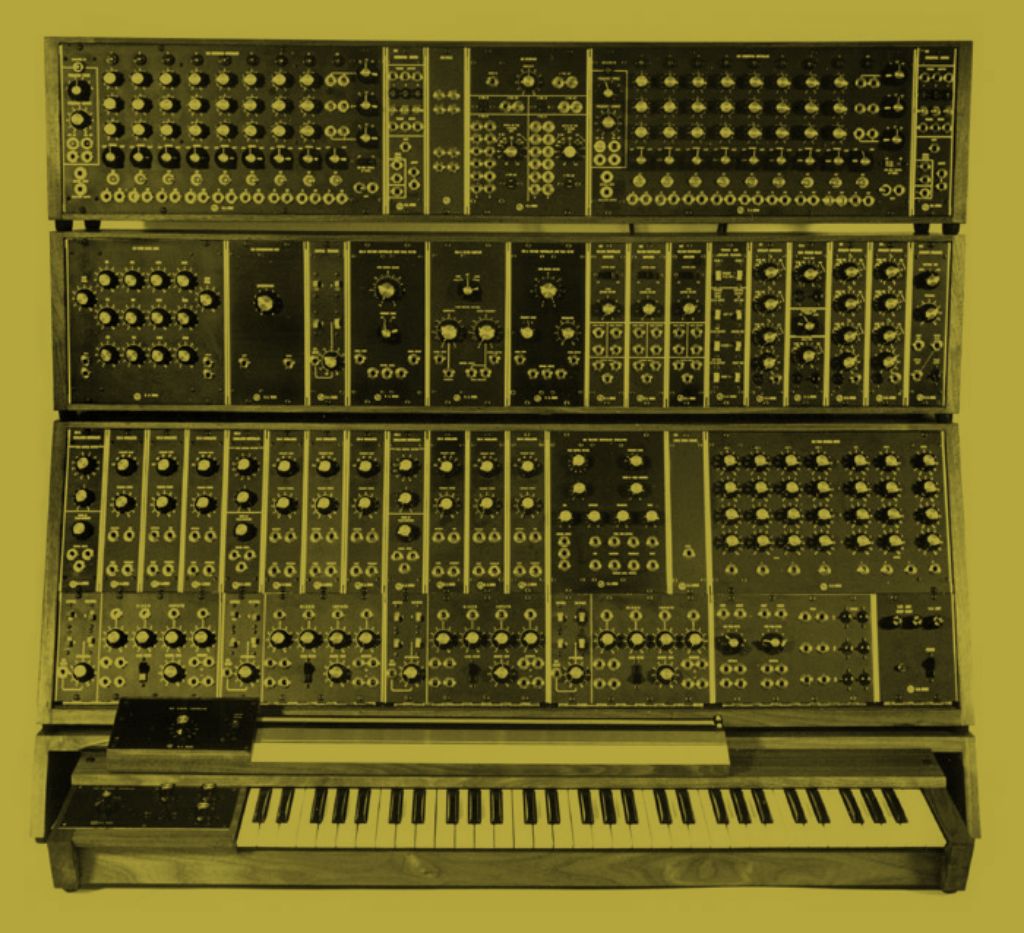
Large Moog 3C (cabinet) System with additional Sequencer Row (top)
The first commercially released recordings featuring the Moog synthesizer appeared in 1967, only a short time after Robert Moog began supplying his modular systems to adventurous musicians. At this stage the Moog was neither portable nor easy to operate. It consisted of separate modules connected with patch cables, required constant tuning, and usually demanded the assistance of specialist programmers such as Paul Beaver. Yet within just four years it had moved from an experimental studio device to the defining sound of a new musical era.
Possibly the earliest commercially issued Moog-based LP was Emil Richards' New Sound Element: Stones, released in June 1967. Although Paul Beaver programmed the synthesizer, Richards himself played many of the electronic parts alongside his extraordinary collection of percussion instruments. Tracks such as "Emerald (May)" demonstrated that the Moog could blend naturally with jazz textures rather than merely producing science-fiction sound effects. It is generally regarded as the first album to credit the "Moog Synthesizer" by name and remains one of the earliest examples of electronic jazz.
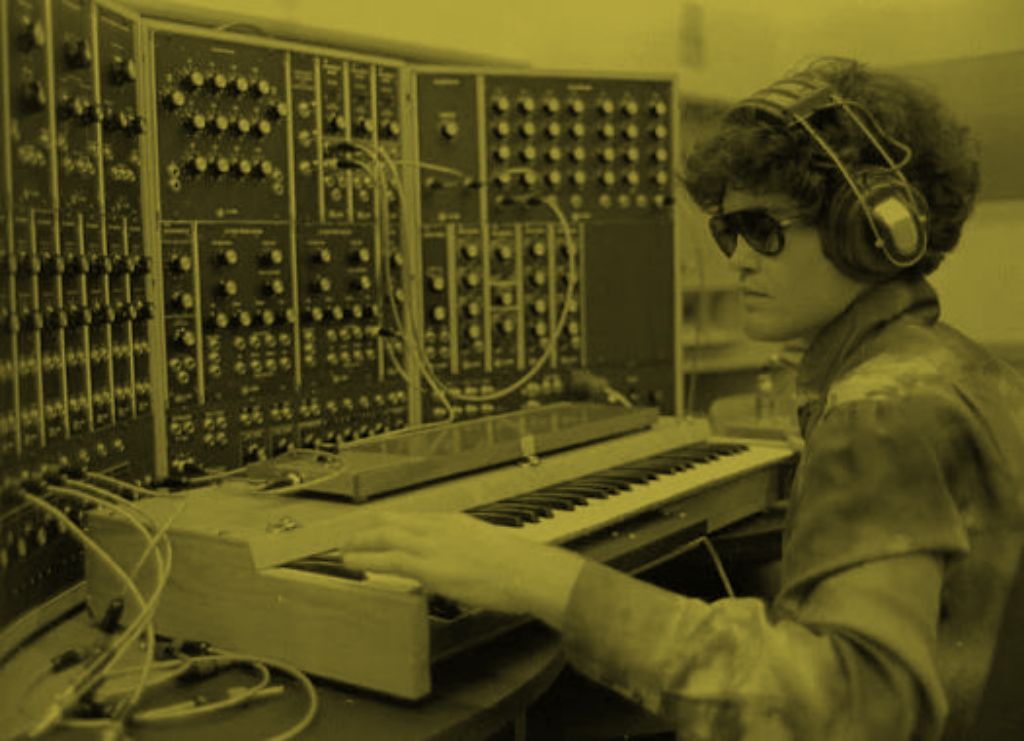
Mickey Dolenz of The Monkees with Moog Modular
Released almost simultaneously was Hal Blaine's Psychedelic Percussion. Blaine, already America's most famous session drummer, worked with Paul Beaver to integrate Moog sounds into an album of colourful percussion pieces. The single "Wiggy (November)" became the first commercially released 45 rpm record featuring the Moog synthesizer, preceding many better-known electronic recordings. Rather than dominating the arrangements, the instrument bubbles underneath the percussion, acting as an exotic colour within the mix.
In hindsight it seems somewhat ironic that the Moog is now considered the “classic” synthesizer of the East Coast philosophy and approach to synthesis as opposed to the Buchla West Coast designs which were also invented around the same timeframe - yet these earliest Moog-based albums were released by stalwarts of the West Coast session player world - Hal Blaine being the drummer in the Wrecking Crew collective.
The same year saw the release of The Zodiac: Cosmic Sounds, credited to The Zodiac Cosmic Sounds, with music largely composed by Mort Garson and Jacques Wilson. Paul Beaver again handled Moog programming, while the album mixed spoken-word astrology with orchestral arrangements and electronic textures. Tracks such as "Aquarius – The Lover of Life" introduced many listeners to the synthesizer in a conceptual rather than purely experimental context. Although initially overlooked, the album has since become recognised as one of the great psychedelic electronic records.
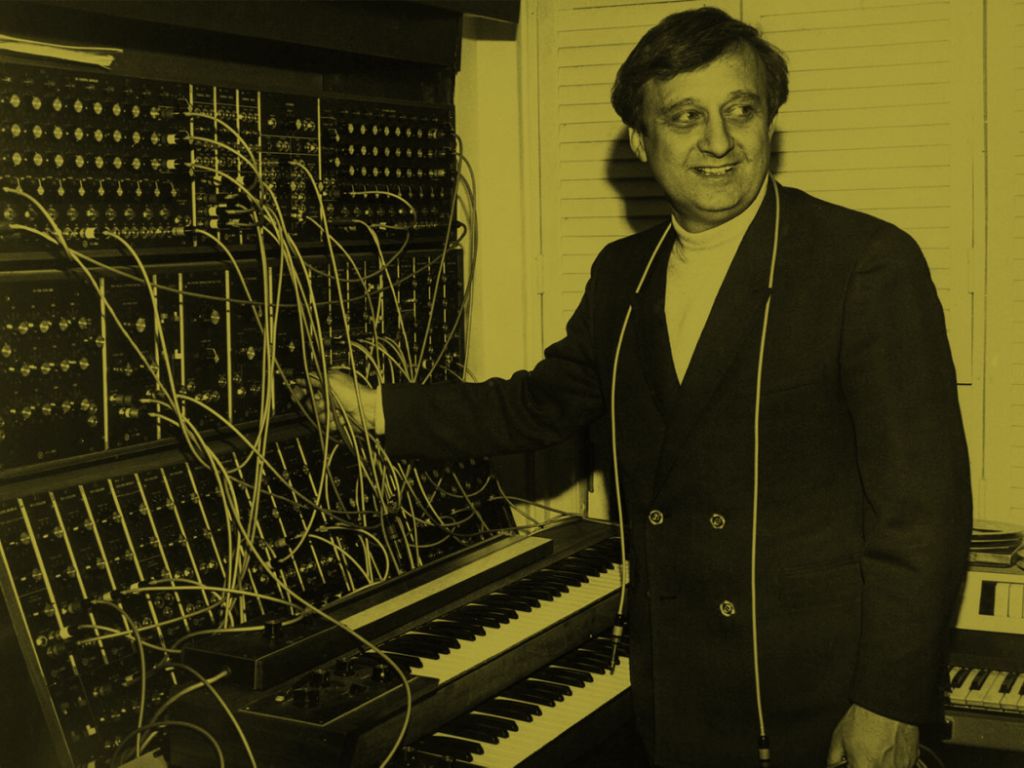
Gershon Kingsley
“
I have always been sitting between two chairs in my music. I try to bring classical and pop together”
Gershon Kingsley
Another overlooked landmark is Jean-Jacques Perrey and Gershon Kingsley's collaboration Kaleidoscopic Vibrations. The track "The Savers", released as a single before the album, was especially significant because it represented one of the first important Moog recordings produced outside the Los Angeles circle dominated by Paul Beaver. Perrey and Kingsley developed a lighter, melodic approach that would eventually lead Kingsley toward his famous composition "Popcorn."
No discussion of early Moog recordings is complete without Wendy Carlos' Switched-On Bach, released in October 1968. More than any other album, it transformed public perception of the synthesizer. Carlos had worked closely with Bob Moog during the instrument's development, helping refine both its musical capabilities and practical operation.
Every note of Bach's music was painstakingly recorded individually onto multitrack tape using a custom modular Moog system. The process required extraordinary patience because the synthesizer was monophonic, drifted out of tune, and lacked memory for storing sounds.
“
The Moog Modular is much more naturally a mere noisemaker than an expressive musical instrument—it has to be forced to be one!”
Wendy Carlos
The result was astonishing. Switched-On Bach became a huge commercial success, winning three Grammy Awards and becoming the first million-selling classical album. More importantly, it demonstrated that the Moog was not merely capable of producing novel noises but could perform sophisticated, expressive music with remarkable precision. Its success persuaded musicians throughout rock, jazz and pop that the synthesizer represented the future rather than a passing curiosity.
By 1969 the floodgates had opened. Christopher Scott's Switched-On Bacharach applied Carlos' meticulous multitrack technique to the sophisticated pop songs of Burt Bacharach. Tracks such as "Walk On By" revealed how elegantly contemporary songwriting could translate to synthesizer performance.
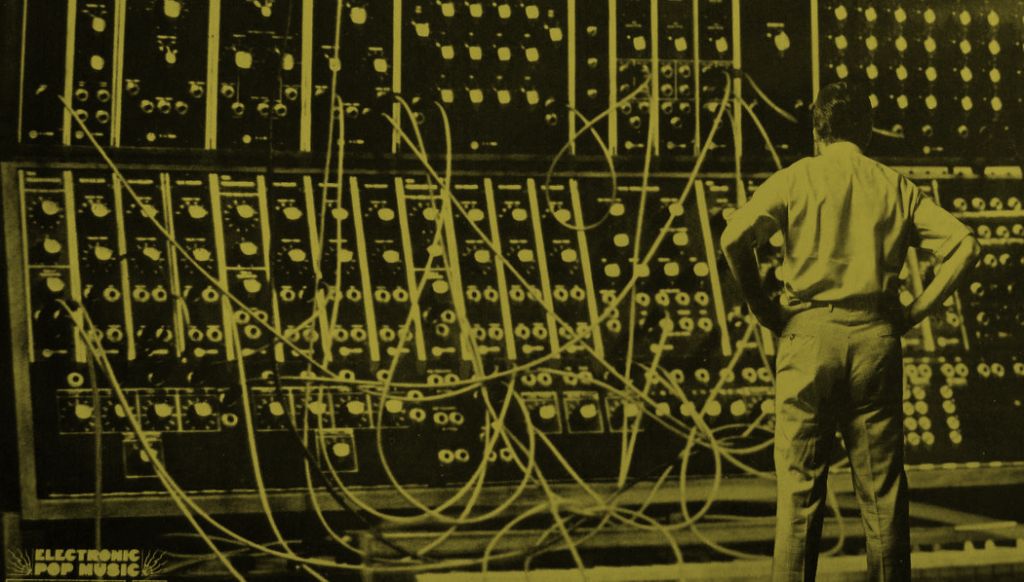
Dick Hyman
Jazz pianist Dick Hyman became one of the instrument's most accomplished interpreters. On albums including The Age of Electronicus, Moog: The Electric Eclectics of Dick Hyman, and The Electric Eclectics, tracks such as "Kolumbo," "The Minotaur," and "Strobo" balanced humour, virtuosity and adventurous programming. Hyman avoided treating the Moog as a novelty, instead integrating it into sophisticated jazz and easy-listening arrangements.
Strobo in particular is a remarkable release - being available only on 7” single and sounding thoroughly proto-techno it is perhaps the earliest 45 dedicated to a Moog-based composition.
Also appearing in 1969 was Hugo Montenegro's Moog Power, represented by "Moog Power." Montenegro, already famous for his arrangement of Ennio Morricone's music from The Good, the Bad and the Ugly, embraced the synthesizer as another orchestral colour rather than replacing conventional instruments altogether. Most famously the title track is now recognisable as the cut up vocal stab on Malcolm McLaren & The World Famous Supreme Team’s hip-hop classic ‘Buffalo Gal’s’.
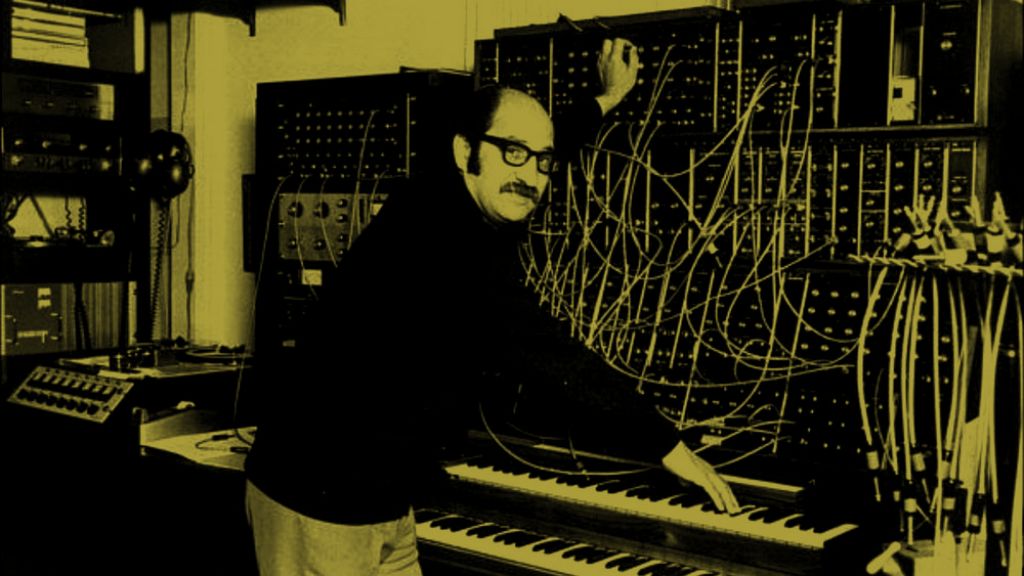
Mort Garson
“
When my dad found the synthesizer, he realized he didn't want to do pop music anymore”
Day Darmet (daughter of Mort Garson)
One of the most imaginative early adopters was Mort Garson, who had already participated in The Zodiac: Cosmic Sounds. During 1969 and 1970 he released a remarkable sequence of albums including Electronic Hair Pieces, The Wizard of Iz, Didn't You Hear?, and later Lucifer: Black Mass. Pieces such as "Walking in Space," "I've Been Over the Rainbow," "Sail! Sail!," "Walk to the Other Side of the Island," and "Black Mass" showed extraordinary stylistic range, from Broadway reinterpretations to occult-themed electronic soundscapes. Garson possessed an exceptional gift for making the modular Moog sound lyrical and approachable while retaining its unmistakably electronic character.
The period also witnessed increasingly adventurous uses of the instrument. Ramsey Lewis - with guidance from legendary producer-arranger Charles Stepney - incorporated Moog introductions into Mother Nature's Son, while Ruth White used it extensively on Flowers of Evil and 7 Trumps from the Tarot Cards and Pinions, creating some of the era's darkest electronic poetry. White's work alongside the Mort Garson Zodiac releases remains among the earliest examples of spoken word fused with synthesizer performance.
By 1970 the Moog had spread across multiple musical genres. Ananda Shankar's self-titled album combined Indian classical traditions with rock instrumentation and Moog synthesizer, heard on "Dance Indra." Beaver & Krause continued expanding electronic environmental music with In a Wild Sanctuary, while Bruce Haack's The Electric Lucifer fused children's music, philosophy and electronic experimentation into one of the decade's most distinctive records.
The very earliest Moog records rarely featured the synthesizer alone. Instead, they blended it with percussion, orchestras, jazz ensembles or spoken word while musicians gradually learned how to exploit its unique possibilities. Only with Wendy Carlos did the Moog become the entire musical voice of an album. After Switched-On Bach, the instrument rapidly evolved from an exotic studio experiment into a legitimate solo instrument and pioneered the way to the later Isao Tomita classical Moog albums in the seventies.
Within barely four years—from Emil Richards' Stones in 1967 to TONTO's Expanding Head Band's Zero Time in 1971—the Moog synthesizer had travelled from an obscure laboratory invention into one of the defining sounds of modern music. These pioneering vinyl releases document that extraordinary journey, capturing the moment electronic music first entered the mainstream while laying the foundations for progressive rock, ambient, synth-pop, techno and countless other genres that followed.