

PPG SYNTH SPECIAL
“
The PPG was the first instrument where we had the feeling that the sound was not finished when you pressed a key.”
Edgar Froese, Tangerine Dream
In the world of classic synthesis, various manufacturers grab the headlines: ARP, Moog, Korg, Roland, Sequential Circuits, Oberheim, Yamaha, etc. The early eighties however saw a digital revolution with Yamaha introducing FM synthesis, Casio its phase distortion CZ range and German company PPG a unique wavetable approach.
PPG began life as a one-man outfit. Wolfgang Palm grew up in West Germany studying physics including acoustics and electronics. After hearing the famous ‘Lucky Man’ Moog solo by Emerson, Lake & Palmer - Palm became an avid Emerson fan.
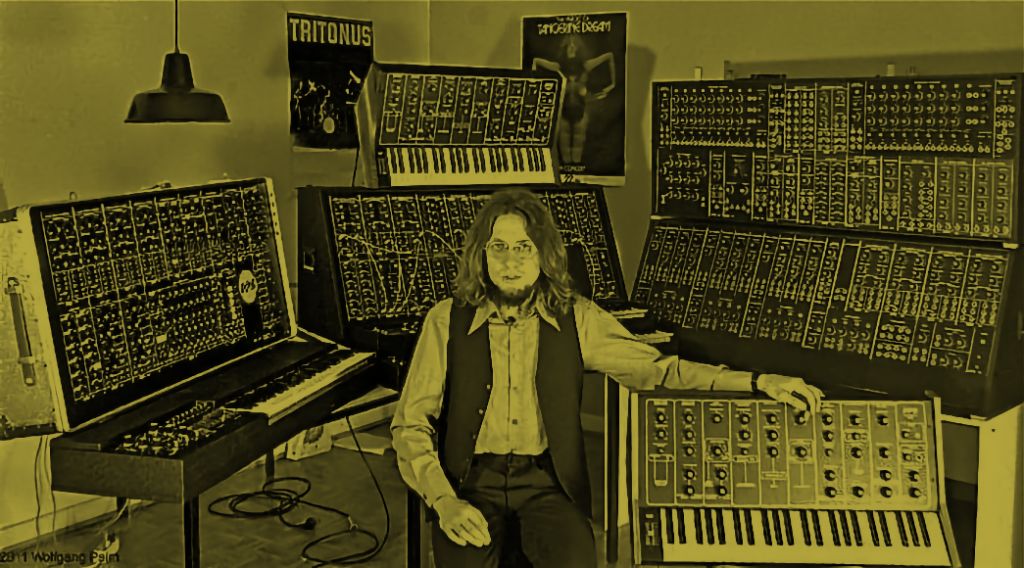
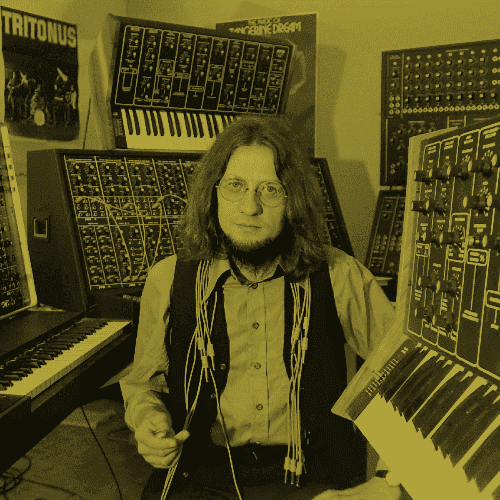
Wolfgang Palm and PPG range, 1974.
Palm immediately put his electronic studies to good use and built a VCO controlled by the pitch of an organ, using his own pitch-to-voltage converter. Performing with bands on stage, he now had his organ, a home-made Leslie rotating speaker and expanded his VCO into a rudimentary synthesiser with a VCA and envelope - all controlled by a home-assembled keyboard from an organ building kit.
Using newly acquired FET technology (Field Effect Transistors) Palm went on to design a sequencer completely different from the Moog 960 available at significant cost at that time in the early seventies. After a friend requested a custom sequencer for his Minimoog, Palm had the opportunity to study the circuits and realised he needed a filter for his basic synthesiser voice.
Admitting to having ‘a weird feeling’ due to the patented design, Palm nevertheless had no other alternative at that time to re-creating the transistor-ladder 4 pole filter - something other manufacturers had also done with various revisions following law-suits from Moog being key developments in synthesiser design history.
PPG produced synth voice units in very small amounts and seemed to fly under the radar, avoiding any serious repercussions for the filter design in these early PPG days. Fully licensed chip designs were soon incorporated once production moved on to the series of Wave designs.
These ‘compact synthesiser’ units sold for a quarter of the cost of importing a Minimoog and attracted enough interest to convince Palm to pursue synthesis design rather than commit to full-time musicianship after his studies ended in 1974.
Palm had to idea to include pull-out and retractable patch cables on his first major design - the PPG 1002 effectively being a Minimoog-like semi-modular synth. Modules based on Moog modular offerings were also built and a Pitch-to-voltage unit put to effective usage by Toto Blanke on the album ‘Electric Circus’.
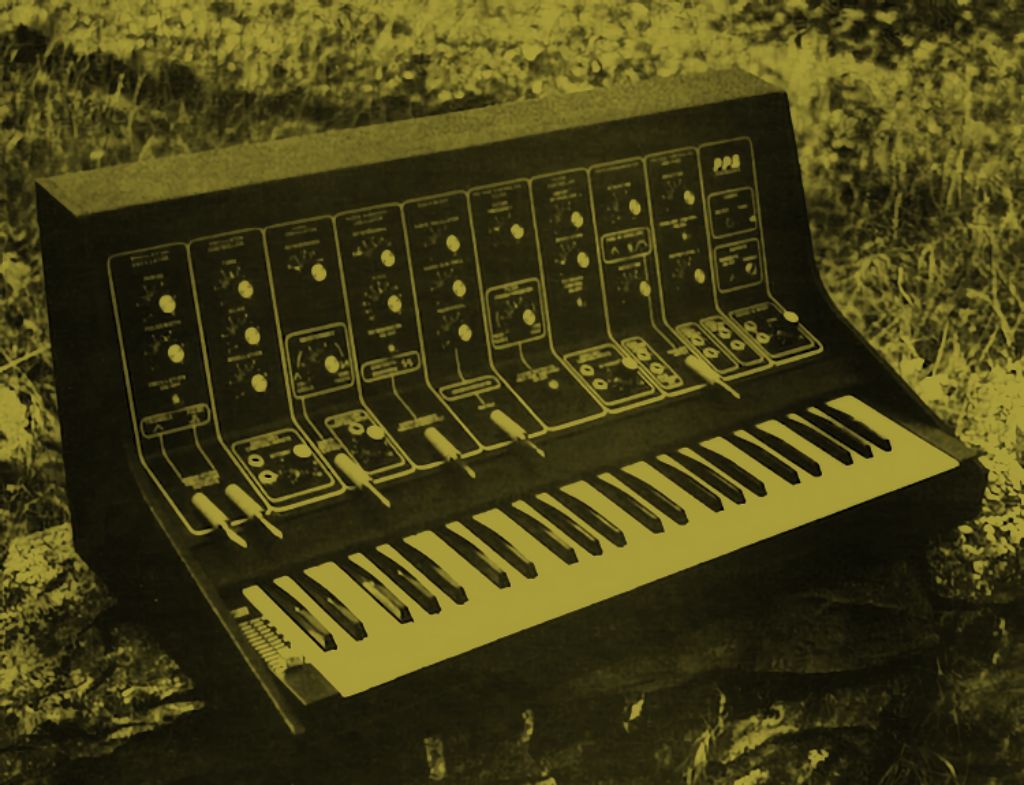
PPG 1002
PPG had enough orders to pay a few staff and make a living from an unheated fifth floor old mechanics workshop. Eventually and perhaps inevitably, Palm received calls from Tangerine Dream members Chris Franke and Peter Baumann looking for custom designs to augment their live performances.
Palm made custom devices such as an eight-wheeled expander for keyboards to have more hands-on control over synth parameters on stage. Electronic bands performing on stage had also become frustrated by pitch instability due to temperature changes and inherent design choices on the large Moog 3C/P systems which were never the most stable in frequency.
Palm responded to this by producing the 1020 digital oscillator module - adding more wave shapes than offered on the Moog design also. Next Palm tackled the issue of storing settings by creating a synth using digital pushbuttons enabling storing of parameters. The technology was pre-microprocessor and way ahead of its time. Called the PPG 1003 ‘Sonic Carrier’ - its large bulk prohibited large sales and only 16 pieces were manufactured, but Palm’s visionary inventiveness in the world of synthesis was clear to all.
After forming a company with proper distribution for PPG products, Palm entered the highly competitive global synth market. Competing with the cheaper, more portable Japanese synths and the raw economic power of the US companies with their large polysynth offerings was no easy feat, yet PPG had a great reputation amongst musicians such as Klaus Schulze, TG, Jasper van’t Hot, etc.
In 1979, Palm came up with the innovation that sealed his reputation - wavetable based synthesis. Instead single waveforms such as sine, pulse, saw, triangle - Palm expanded upon the idea of morphing thru such waveforms by creating wavetables. Each wavetable would contain 64 waveforms which could be dynamically moved through using manual control (a mod wheel, or knob) or an envelope or LFO, etc.
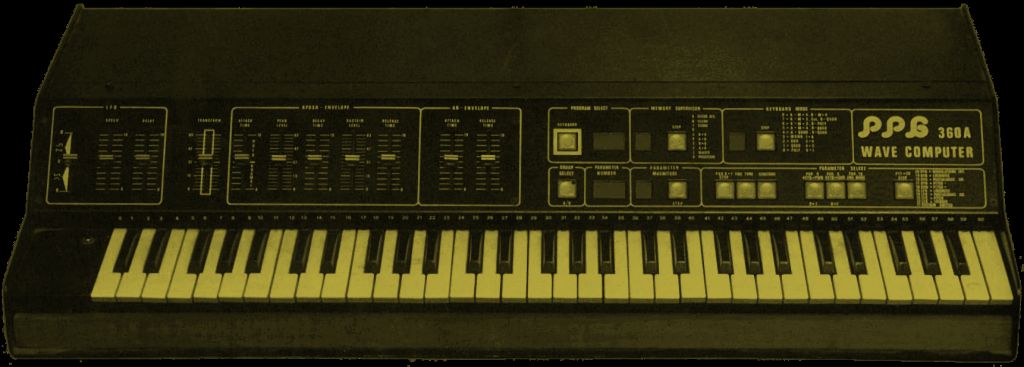
PPG 360A
Next came the large PPG 360, 340/380 systems - with microprocessor storage and sequencer technology, computer monitor. Digital synthesis was fast developing and soon PPG was competing with Fairlight, Synclavier and others. The Wave 2 came on the heels of the larger system and sold very well - eventually updating to become the famous Wave 2.2.
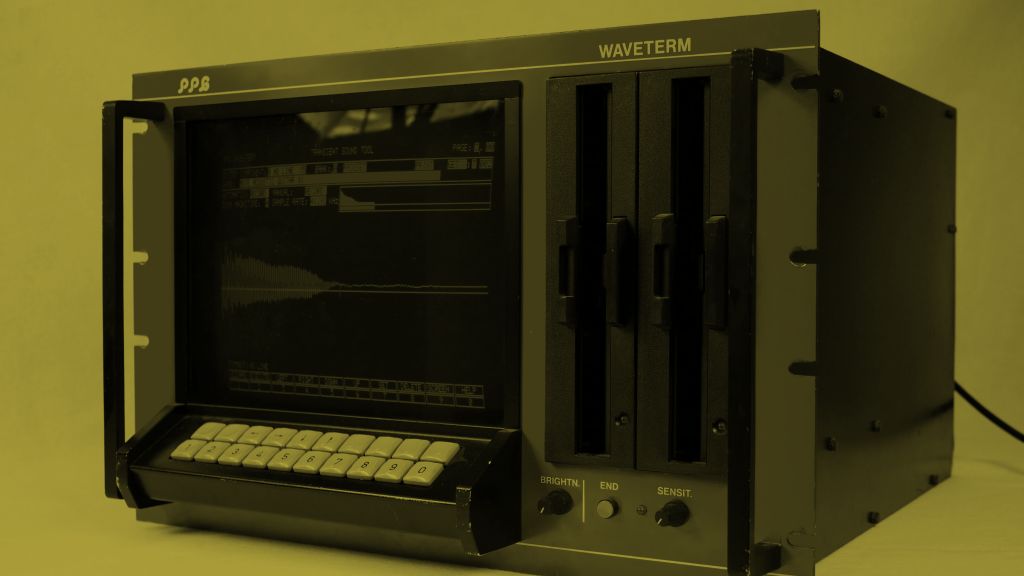
PPG Waveterm
The classic PPG wavetables developed for the original Wave 2 and 2.2 - became classic building blocks of wavetable synths. After ceasing operation in the eighties despite selling a healthy amount of Wave synths to musicians such as Gary Numan, Thomas Dolby, Depeche Mode, Trevor Horn, etc - the German Waldorf company continued the PPG legacy in their Microwave range and flagship Wave synth in the nineties.
“
Large numbers were still being sold and subsequently many hits of the time were produced using the Wave 2.3 and Waveterm B, (the ones that spring to mind are "Two Tribes" by FGTH, the Propaganda pieces and Robert Palmer's "You are in my system"). In retrospect, I would say that this was the highlight of my career, I was 35.”
Wolfgang Palm
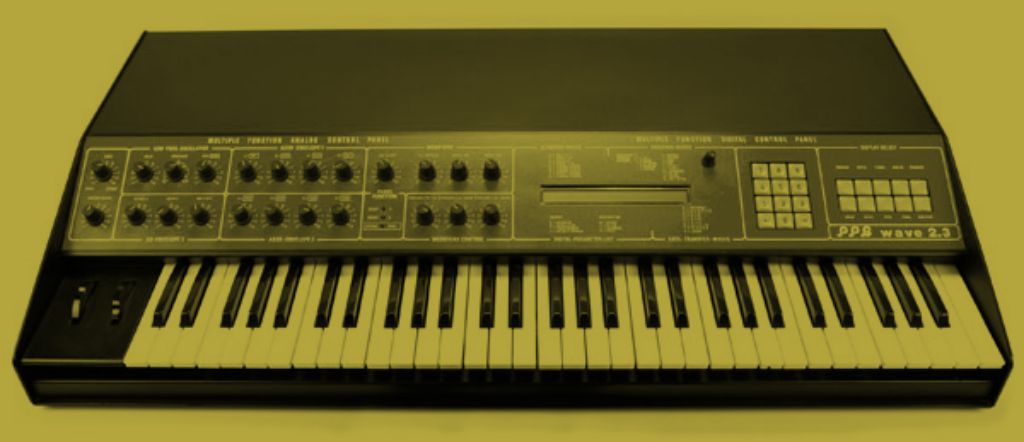
PPG Wave 2.3
The lo-fi digital artefacts inherent in the design, gave the PPG Wave series of synths a distinctive sound ranging from thin and glassy to gritty and aliasing. The hybrid digital thru analog filters approach with high voice counts also made it a pad machine.
Palm’s designs have proved so popular that Behringer have cloned the PPG Wave using the exact same wavetables and even retained its rather arcane data entry system, the 3rd Wave synth takes the PPG Wave as its inspiration, Waldorf continue to mine the wavetable popularity with its M synth and PPG 3.0 VST.
ROVR Research takes a deep dive into the music made with Wolfgang Palm’s legendary designs from the analog days to digital wavetables.