

“
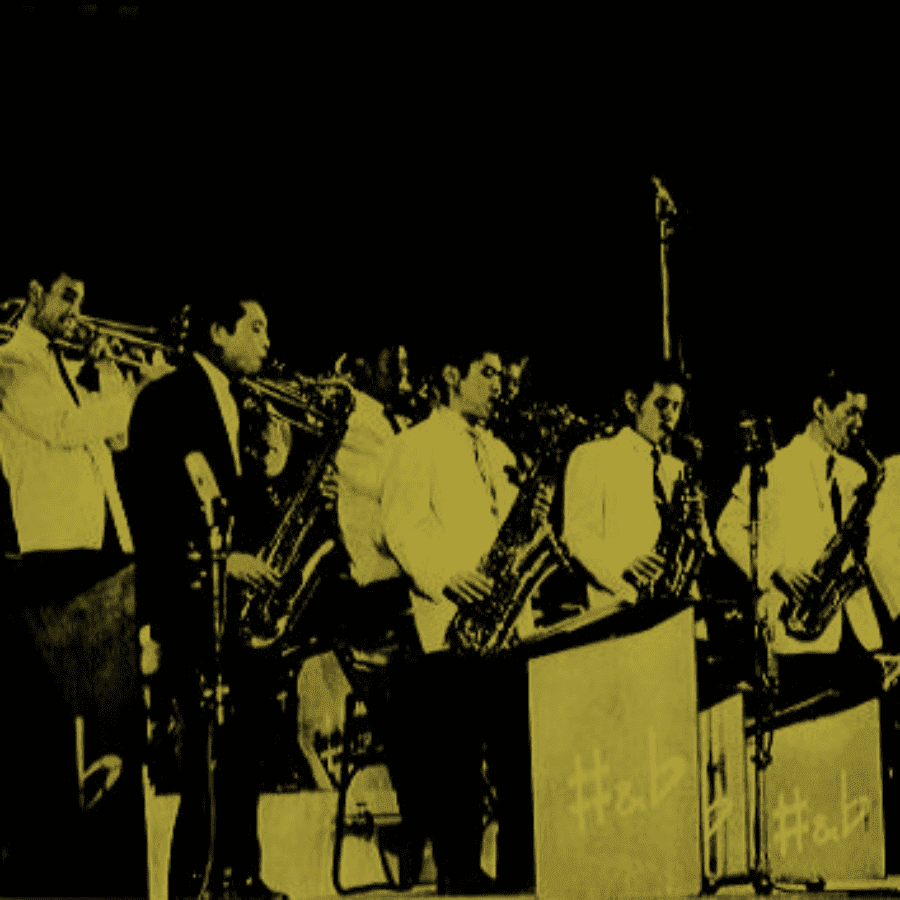
At Newport in 1967, I was thinking that I wanted to create 'Japanese jazz.'”
Nobuo Hara
The history of Japanese big-band jazz is, in many ways, the story of how American music was absorbed, transformed and given a distinctly individual Japanese character. After the Second World War, jazz became one of the most important channels through which Japanese musicians encountered contemporary American popular culture.
The foundations were laid during the American Occupation. US military bases, clubs and entertainment venues created an enormous demand for musicians who could play swing, dance music and popular American songs. Many Japanese musicians who had played in military bands during the war found themselves working in these clubs after 1945.
One of the musicians who emerged from this environment was Nobuo Hara, a tenor saxophonist from Toyama. Hara had himself played in a naval band during the war, and in 1951 he founded the Sharps & Flats. What began as a ten-piece group quickly expanded into a full seventeen-piece big band modelled on the great American orchestras of Duke Ellington, Count Basie and others.
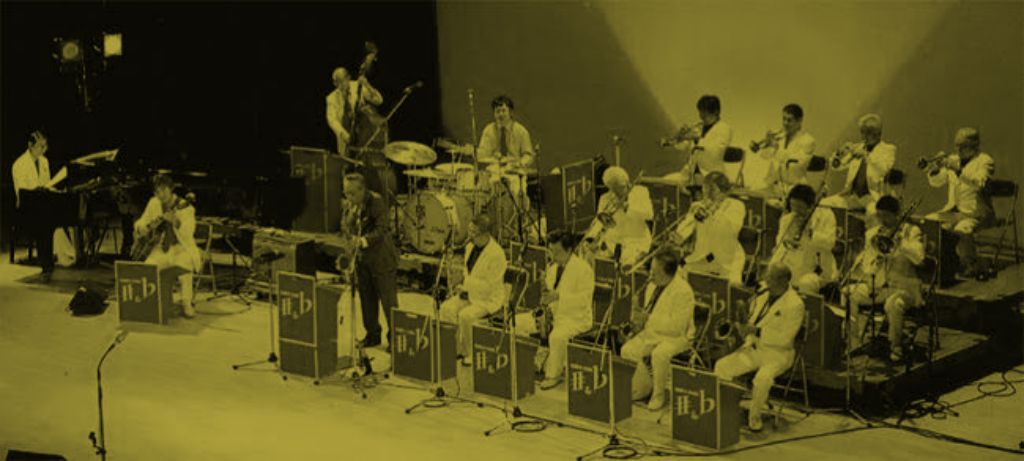
The Sharps & Flats became one of the central institutions of Japanese jazz and a crucial moment of international recognition came in 1967, when the Sharps & Flats became the first Japanese big band to appear at the Newport Jazz Festival.
Their Newport programme was particularly significant because it consisted largely of Japanese traditional material arranged for big band with songs such as “Sakura Sakura” and “Soran-Bushi”, transformed into modern jazz arrangements. The band also performed with the shakuhachi player Hozan Yamamoto, placing the sound of the traditional bamboo flute against a large jazz orchestra.
“
with anything less than this orchestration, you cannot achieve a sufficiently thick ensemble or rich, full-bodied harmonies”
Toshiyuki Miyama
Another major figure was Toshiyuki Miyama, whose career demonstrates the movement from postwar swing into modern jazz. Miyama formed the Jive Aces in 1950; the group expanded and was renamed Toshiyuki Miyama and the New Herd in 1958 and quickly developed a reputation for modern jazz. Japanese Popular Music Association describes the two groups as effectively representing two poles of the country's big-band scene during its 1970s golden period: the Sharps & Flats associated with a more traditional if adventurous be-bop sound and New Herd with modern jazz.
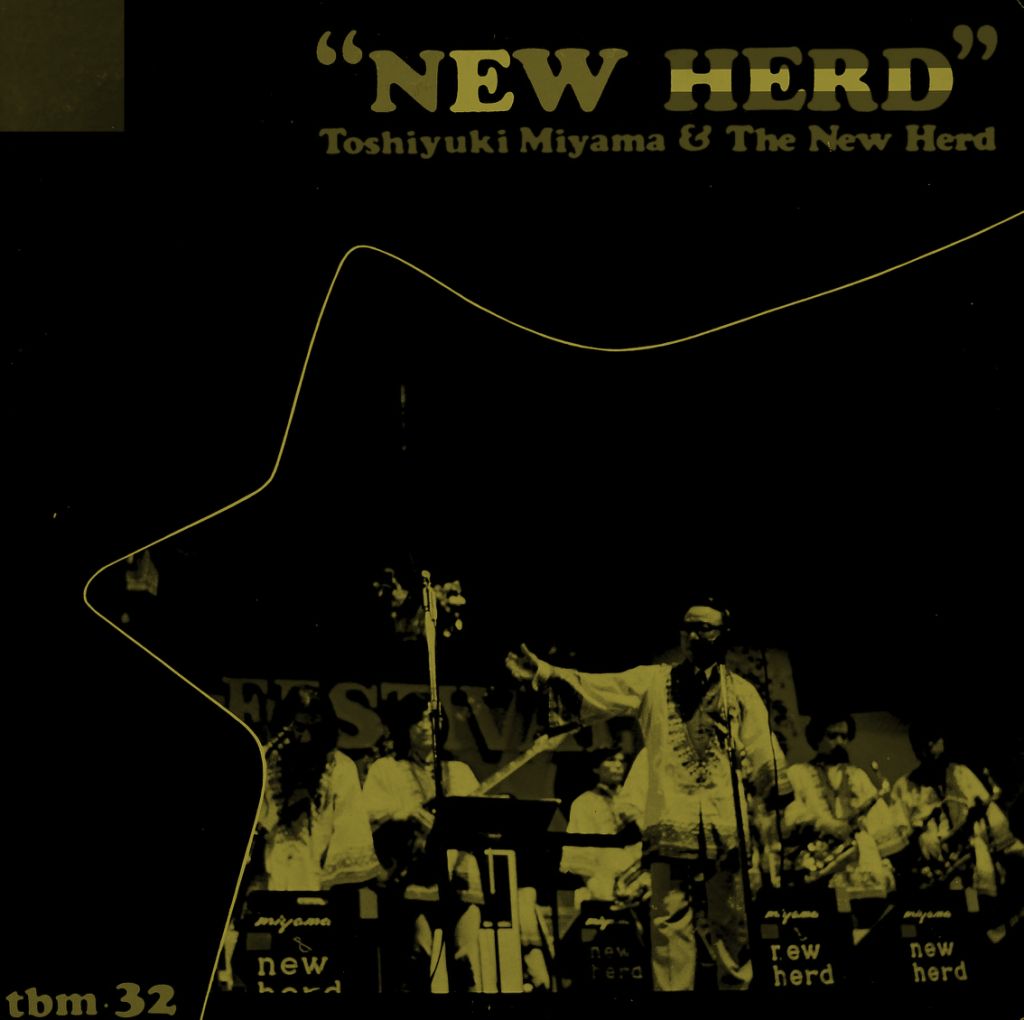
Miyama's band was also exceptionally adventurous in its choice of arrangers. Musicians including Kozaburo Yamaki, Norio Maeda and Masahiko Satoh contributed to the development of a sophisticated Japanese big-band culture, combining American jazz techniques with contemporary composition and increasingly adventurous harmony with influence from American arrangers such as Gil Evans - particularly his work with Miles Davis - Oliver Nelson, Don Sebesky, etc.
By the 1970s, New Herd was moving comfortably between straight-ahead jazz, jazz-rock and contemporary orchestral writing. The band performed at the Monterey Jazz Festival in 1974, followed by appearances at major international festivals including Newport. “Furioso Girl,” “Adult's Day,” “Scrollin'” and the extended “Kappa Torainochi” demonstrate how enormous and flexible the New Herd sound could become.
“
A musician's sound is their true face. Your tone should tell the listener exactly who you are, where you've been, and what you feel, without a single word being spoken”
Tatsuya Takahashi
A third important strand came through Tatsuya Takahashi and Tokyo Union. Takahashi had begun his professional career playing on US military bases in the early 1950s and subsequently became one of Japan's leading tenor saxophonists. Tokyo Union was established in 1964 and Takahashi became its leader in 1966.
Tokyo Union had a particularly muscular sound, with strong rhythmic emphasis and powerful brass writing. Their repertoire could encompass conventional big-band material, contemporary jazz and arrangements of compositions by major American jazz musicians - a perfect example being “Maiden Voyage”. Herbie Hancock's composition had become a modern jazz standard, but in the hands of Tokyo Union it becomes a large-scale orchestral interpretation. Likewise, their album The Rock Seasons points directly towards the growing intersection between jazz, rock and Japanese studio music.
“
As for technique, Japanese Latin bands are mostly superior to Cuban ones. But Cuban bands have a certain atmosphere or taste.”
Tadaaki Misago
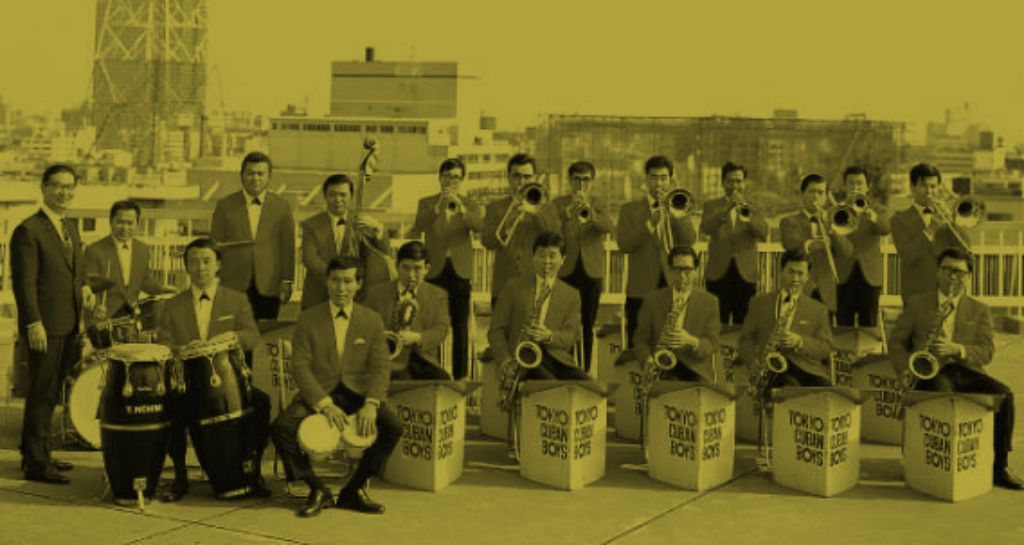
Tadaaki Misago's Tokyo Cuban Boys, founded in 1949, became one of Japan's great Latin big bands. The postwar Japanese public developed an enormous enthusiasm for mambo and other Latin styles, and Misago's orchestra became one of the country's principal vehicles for that music. The group remained active for more than three decades and reportedly released more than a staggering 300 albums.
In the mid-seventies Japanese jazz-funk began to increasingly impact the big-band sound. This transition towards funk is especially apparent in the work of Jiro Inagaki. Inagaki had been a professional musician since his high-school years and worked with many of the leading Japanese jazz musicians of the 1950s and 1960s. He formed his own quintet in 1962 and also worked with the American drummer Lionel Hampton during Hampton's Japanese tour. In 1969 he formed Jiro Inagaki & Soul Media, deliberately combining jazz with the emerging language of rock.
This was happening at exactly the right moment. American groups such as Blood, Sweat & Tears and Tower of Power were demonstrating how horn sections could become an integral part of rock and soul rather than simply providing jazz-style decoration. Inagaki absorbed these developments and translated them into the Japanese big-band milieu.
The result was a series of remarkable records. Head Rock, In the Groove and Funky Stuff progressively move from jazz-rock towards something much closer to jazz-funk. By 1973, In the Groove was incorporating the hard-edged guitar, electric keyboards, horn arrangements and rhythmic emphasis associated with American funk and soul-jazz.
Japan had developed an extraordinarily sophisticated studio system, and big-band musicians could move between jazz albums, television, film, advertising, pop records and soundtrack work. The same instrumentalists and arrangers could therefore encounter an extraordinary range of musical styles. The Richard Gold Orchestra and other pseudonymous studio-oriented ensembles crossed the boundaries between jazz, soundtrack music, television music, rock and funk.
Much of this music subsequently became obscure outside Japan. But from the 2000s onwards, collectors, DJs and specialist reissue labels began rediscovering the catalogue under the broad banner of WaJazz with Japanese and European reissues bringing Japanese Big-Band back to a new audience.