

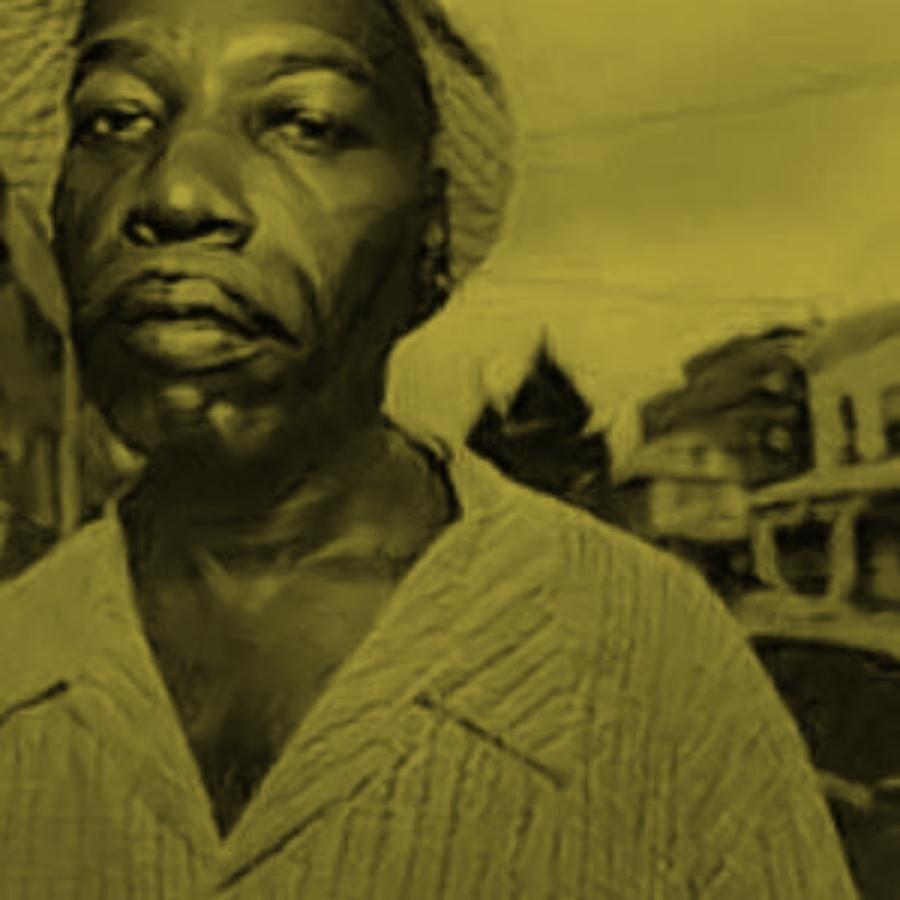
“
People used to say, you can't make dub music in America, make it in Jamaica. I said, I don't understand; it's the same electricity, the same frequency, the same as in Jamaica”
Lloyd Barnes
Among the many legendary labels in reggae history, Wackies occupies a unique place. Unlike Studio One, Treasure Isle, Channel One or Black Ark, Wackies was not based in Kingston, Jamaica. Instead, it emerged from the Bronx, New York, where Jamaican producer Lloyd Barnes built what became the most important reggae studio and label in the United States. Although Wackies never achieved the commercial success of Jamaica’s biggest labels, its influence on reggae, dub, and later electronic music has proven enormous.
The story begins with Barnes, known throughout the reggae world as “Bullwackie.” Born in Kingston and raised in the famous Trench Town district, he grew up around many of reggae’s future stars. Before emigrating to New York in 1967, he worked within Jamaica’s music industry, including time associated with producer Prince Buster and engineer work connected to the legendary Treasure Isle studio of Duke Reid. These experiences gave him a deep understanding of recording and production long before he established his own operation in America.
“
We used to have gangs, and I used to be a 'Bull Wackie' boy. The only difference was that we wasn't street fighting. The name 'Wacky' really comes from 'Cocky'. It was like saying 'Cocky Boys'. Then the name just stick”
Lloyd Barnes
By the mid-1970s, New York had become home to a growing Jamaican diaspora. It’s important to remember the founding father of Hip-Hop Kool DJ Herc was also originally from Jamaica whereas Barnes recognized that reggae music needed its own infrastructure in the city.
Barnes first operated Bullwackie’s Disco, a sound system that played at dances throughout New York. Eventually he shifted his attention toward recording. Around 1974 he opened a modest four-track studio in the Bronx, and in 1977 established Wackie’s House of Music, a combination record shop, studio and community hub on White Plains Road. The facility became a gathering place for Jamaican musicians living in New York or passing through the city.
Whilst many reggae labels sought polished productions that could compete on Jamaican radio, Barnes went in a different direction. Working with limited resources and often homemade technical solutions, he developed a style that was bass-heavy, spacious, mysterious and slightly rough around the edges. Listeners often describe it as “lo-fi,” but that term can be misleading. The recordings were not simply low-budget; they possessed a deliberate atmosphere, full of shadowy echoes, deep bass lines and unusual sonic textures. The resulting music felt simultaneously Jamaican and distinctly New York.
“
Wackies was like a school – this is why the music was different. It wasn’t just coming in to record, and then come out. It was like hanging together, kind of thing”
Lloyd Barnes
The Wackies catalogue became a meeting point between Jamaican roots reggae and the realities of life in the Bronx. While many recordings reflected the spiritual concerns of roots reggae, they also carried the tension and urban grit of New York during the late 1970s and early 1980s. Critics have often noted the haunting quality of the label’s productions, which sounded unlike anything emerging from Kingston at the time.
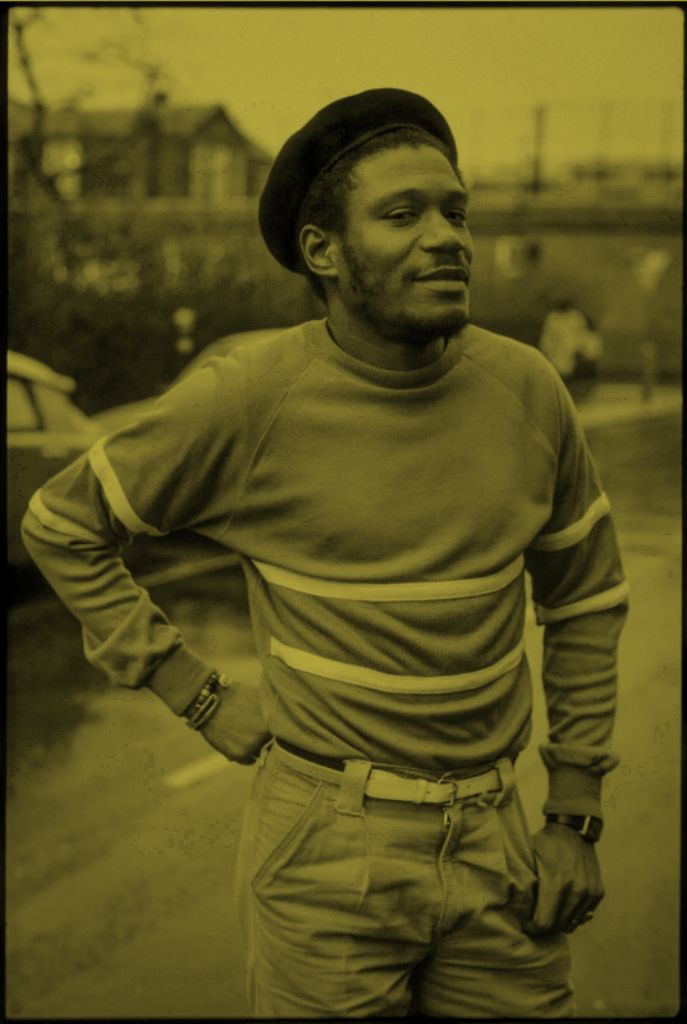
Horace Andy
A remarkable range of artists recorded for Wackies. Established Jamaican performers such as Horace Andy, Sugar Minott, Leroy Sibbles, Junior Byles and Lee Scratch Perry all worked with Barnes at various times. Yet Wackies was equally important for lesser-known artists who might never have found opportunities elsewhere. Singers such as Wayne Jarrett, Noel Delahaye, Jerry Harris, Milton Henry and the duo Love Joys produced some of the label’s most celebrated recordings. Wackie's also had a small number of subsidiary labels such as Hardwax (interesting in respect to the labels later involvement with Berlin technoi duo Basic Channel) and Senrab (Barnes backwards).
The house band, often known as Wackies Rhythm Force and of course with the often used Jamaican house band suffix All-Stars to become the Bullwackie’s All-Stars, was central to the label’s identity. Rather than relying entirely on musicians from Jamaica, Barnes cultivated a pool of players based in New York. This gave Wackies recordings a character different from contemporary productions coming out of Kingston. The music retained authentic reggae rhythms while absorbing influences from the city’s multicultural environment.
One of the most fascinating aspects of Wackies is its relationship with early hip-hop. With The Bronx also the birthplace of hip-hop culture and its Jamaican connection via Kool DJ Herc, Barnes was operating in the middle of this creative explosion. In 1979 he recorded “Wack Rap” by Solid C., Bobby D. and Kool Drop, one of the earliest rap records connected to a reggae producer. Although Wackies remained primarily a reggae label, this crossover illustrates how closely reggae and hip-hop were intertwined in New York during the late 1970s.
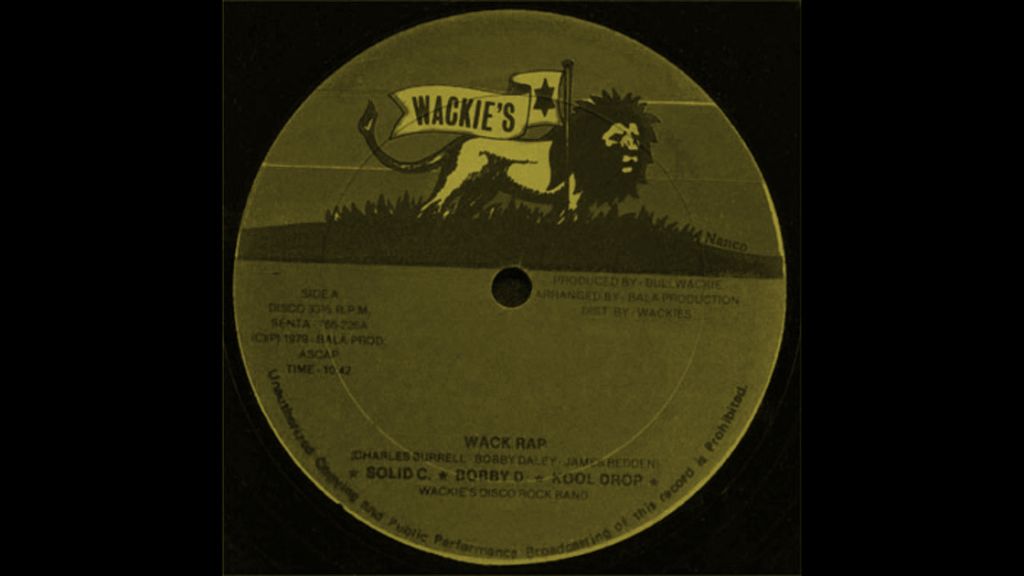
'Wack Rap'
Commercially, Wackies remained a cult operation. Its records were often pressed in small quantities and distributed through specialist channels. As a result, many original releases became highly sought-after collector’s items. Throughout the 1980s and 1990s, however, the label’s reputation continued to grow among dedicated reggae fans, DJs and record collectors.
The label’s influence expanded dramatically during the 1990s and 2000s thanks to the admiration of German producers Moritz von Oswald and Mark Ernestus. Through their influential electronic music project and label family, Basic Channel, they launched an extensive programme of Wackies reissues. These releases introduced a new generation of listeners to Barnes’s catalogue and highlighted the connections between dub reggae and dub techno. Many listeners discovered that the spacious production techniques associated with modern electronic music had clear precedents in Wackies recordings from decades earlier.
“
The Wackies sound was about treating the mixing board as an instrument, but doing it with an extreme focus on the essentials. It showed that you don't need a pristine, high-tech studio to create an immersive universe. The imperfections and the tape hiss became part of the musical fabric.”
Moritz Von Oswald - Basic Channel
The relationship between Wackies and Basic Channel is particularly significant. Von Oswald and Ernestus openly acknowledged their debt to reggae’s studio innovators, and the Wackies catalogue became a bridge linking Jamaican dub traditions with contemporary European electronic music. Artists associated with dub techno, ambient techno and experimental electronic music frequently cite Wackies as a major influence.
Today, Wackies is regarded as one of the most important independent reggae labels ever created outside Jamaica. Its importance lies not only in the music it released but also in what it represented: the transplantation of reggae culture into the heart of New York City. Barnes built a community, nurtured artists, preserved Jamaican musical traditions and simultaneously created something entirely new. The label demonstrated that reggae was not confined to Kingston but could thrive anywhere its cultural roots were planted.
Nearly fifty years after its founding, Wackies remains a symbol of creative independence and artistic vision. Its records continue to inspire reggae musicians, dub producers and electronic artists around the world. What began as a small Bronx studio run by Lloyd “Bullwackie” Barnes has become one of the most respected and influential catalogues in the history of Jamaican music